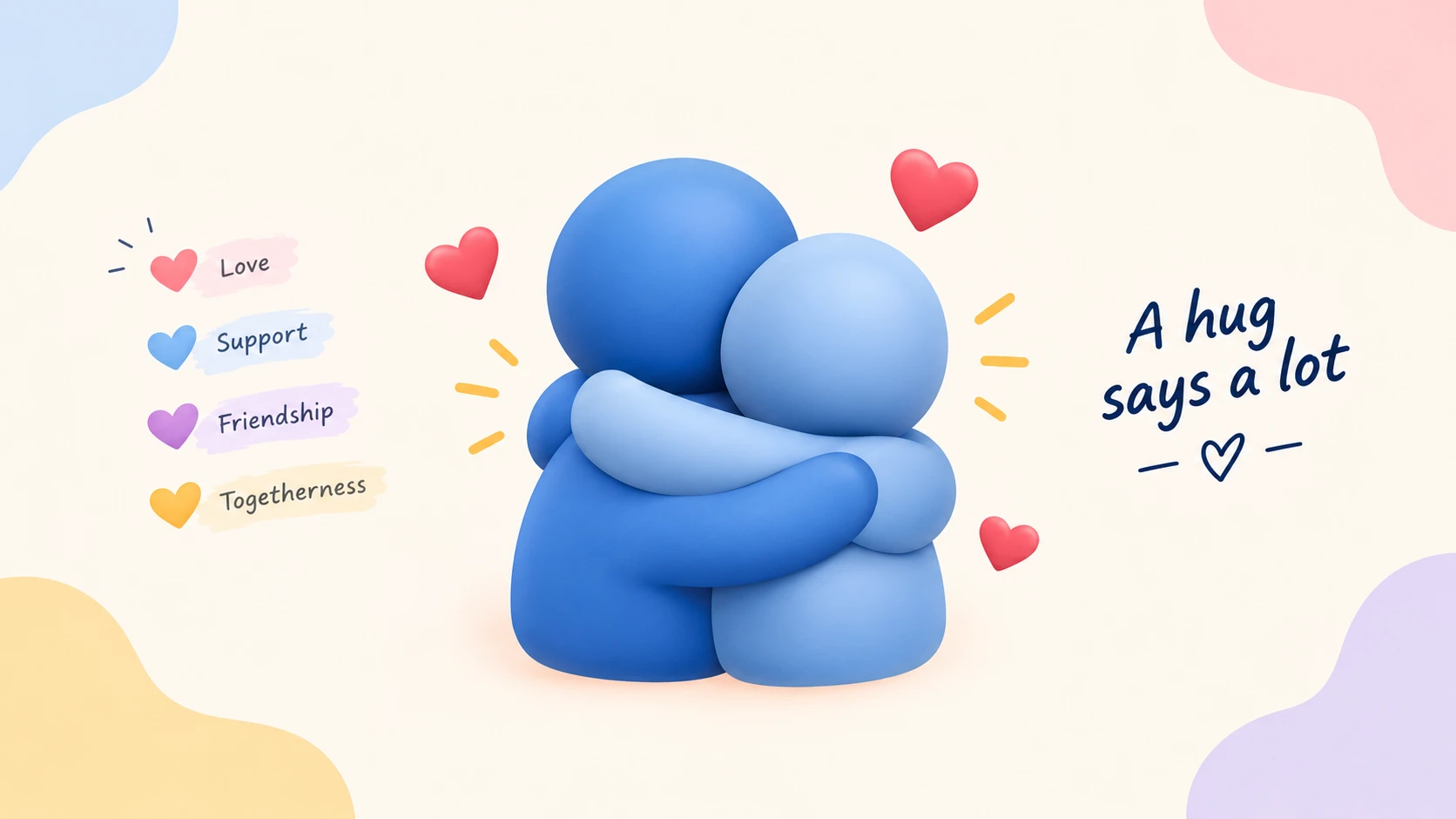
A little hug can make a digital message feel much warmer.
You send a quick “I’m here for you,” add 🫂, and suddenly the message feels more personal. That is why people search for hugging emoji images when they want to find a visual way to show comfort, affection, friendship, or emotional support. The main emoji, 🫂, shows two people embracing, making it useful when words alone do not quite express the feeling. You may also see it paired with 🤗, ❤️, 🥰, 🫶, or 🤍 to make the message softer or more affectionate. On WhatsApp, Instagram, TikTok, Facebook, and text messages, the same emoji can carry slightly different feelings depending on the conversation. A hug from a close friend may feel supportive, while the same symbol in a romantic chat may feel loving. Context matters, and the relationship between the people sending and receiving the message matters too.
Sometimes a simple 🫂 can say, “I’m here with you,” without needing many words.
What Do Hugging Emoji Images Mean? 🫂
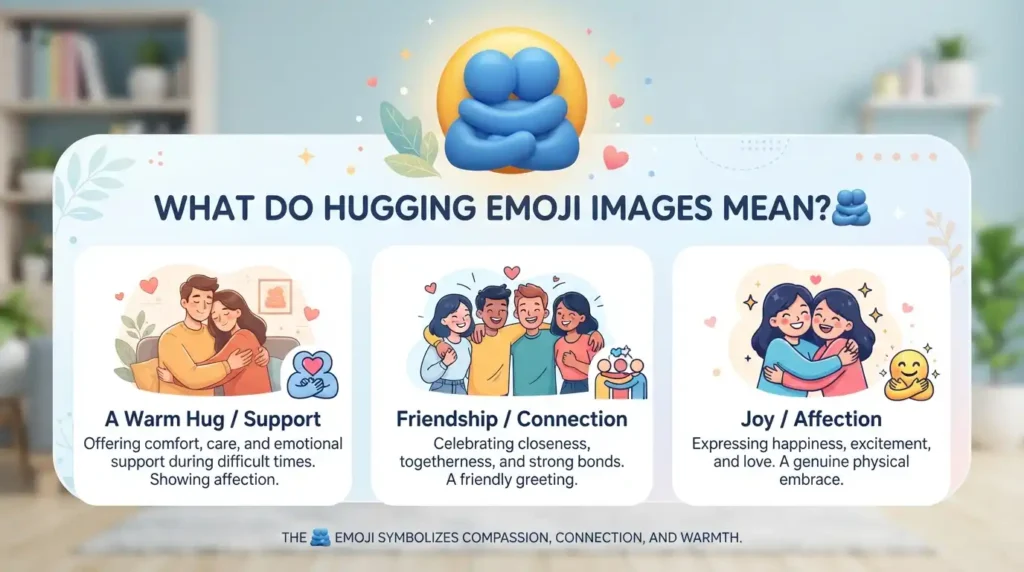
The main emoji behind hugging emoji images is 🫂, officially representing people hugging. Its basic visual idea is simple: two people are embracing. In everyday messaging, that image can communicate warmth, comfort, support, affection, reassurance, or a friendly greeting. It does not have one fixed emotional meaning, so the surrounding words are important. A message such as “I’m sorry you’re going through this 🫂” usually feels comforting, while “Good to see you again 🫂” can feel like a warm greeting.
The emoji can also become more affectionate when paired with emojis such as ❤️, 🥰, or 🫶. A heart can make the message feel more loving, while a smiling or affectionate face can make it feel gentle and caring. 🤍 may give the message a calm, tender tone, while 💕 can make a friendly or romantic message feel sweeter.
In texting, 🫂 often works as a digital substitute for an actual hug. Someone might send it after an emotional conversation, during a difficult day, or simply when they want to remind another person that they care. On social media, it can appear in comments supporting someone, captions about friendship, or posts expressing gratitude.
Context can change everything. Between romantic partners, 🫂 may suggest closeness. Between friends or family members, it may simply mean emotional support. In a casual conversation, it can even function as a warm goodbye. Culture, personal communication style, wording, and platform design can also influence how the emoji is received. That is why reading the whole message is more useful than assigning one automatic meaning to the symbol.
Meaning Table:
| Emoji | Core meaning | Possible misread | Best used when |
|---|---|---|---|
| 🫂 | Hug, comfort, support | Too intimate in some chats | Emotional support or warmth |
| 🤗 | Warmth, friendliness | Can feel overly cheerful | Friendly messages |
| ❤️ | Love, care, affection | May seem romantic | Close relationships |
| 🥰 | Affection, fondness | May seem strongly romantic | Sweet personal messages |
| 🫶 | Care, appreciation, support | Can feel expressive | Friendship or affection |
| 💕 | Sweet affection | May seem romantic | Cute or loving chats |
| 💗 | Growing affection | Can feel romantic | Warm personal messages |
| 💖 | Excitement and affection | May feel extra enthusiastic | Celebrations or sweet posts |
| 💞 | Mutual affection | Can seem romantic | Close relationships |
| 🤍 | Gentle care and support | May feel emotionally serious | Comfort and kindness |
🫂 People Hugging
Meaning: Comfort, support, warmth, and a literal or symbolic hug.
Example 1: I’m always here for you 🫂
Example 2: Sending you a big hug today 🫂
🤗 Hugging Face
Meaning: A friendly, welcoming, affectionate expression with open hands.
Example 1: So happy to hear from you 🤗
Example 2: Thanks for checking on me 🤗
❤️ Red Heart
Meaning: Love, deep care, affection, or strong emotional connection.
Example 1: Thank you for always being there ❤️
Example 2: Sending you lots of love ❤️
🥰 Smiling Face with Hearts
Meaning: Warm affection, fondness, happiness, or feeling loved.
Example 1: That message made my day 🥰
Example 2: You are so sweet 🥰
🫶 Heart Hands
Meaning: Love, appreciation, support, or heartfelt care.
Example 1: Thank you for everything 🫶
Example 2: Sending you love and support 🫶
💕 Two Hearts
Meaning: Sweet affection, closeness, tenderness, or caring feelings.
Example 1: You two are adorable 💕
Example 2: Have a beautiful day 💕
💗 Growing Heart
Meaning: Warm affection, increasing fondness, or emotional sweetness.
Example 1: That was such a kind thing to say 💗
Example 2: I appreciate you more every day 💗
💖 Sparkling Heart
Meaning: Cheerful affection, excitement, appreciation, or loving energy.
Example 1: Congratulations on your big day 💖
Example 2: You deserve all the happiness 💖
💞 Revolving Hearts
Meaning: Mutual affection, emotional closeness, or loving connection.
Example 1: We always have each other’s backs 💞
Example 2: Sending some love your way 💞
🤍 White Heart
Meaning: Gentle love, kindness, peace, sympathy, or quiet emotional support.
Example 1: Thinking of you today 🤍
Example 2: You don’t have to face it alone 🤍
How to Use Hugging Emoji Images the Right Way?
The easiest way to use 🫂 is to match it with the emotional tone of your message. You do not need a long explanation. Sometimes the emoji works best on its own, and sometimes it adds warmth to a sentence.
WhatsApp 💬
On WhatsApp, 🫂 works naturally in personal chats, family groups, friendship conversations, and emotional messages. You can use it when comforting someone, saying goodbye, welcoming someone back, or showing that you care.
Examples:
“I know today was hard. I’m here for you 🫂”
“Take care and text me when you get home 🫂”
It can also work in a WhatsApp Status when you want to share a short message about support or friendship.
Instagram 📸
Instagram emojis often appear in captions, comments, bios, and Reels. 🫂 can make a supportive comment feel warmer without requiring a long response.
For example:
“Proud of you for getting through this 🫂”
“You deserve so much happiness 🫂”
It can also fit friendship photos, emotional posts, reunion pictures, or captions about appreciation.
TikTok 🎵
On TikTok, 🫂 may appear in comments and captions as a genuine reaction or a softer emotional response. The tone can be supportive, playful, or affectionate depending on the video.
A viewer might comment:
“Sending you a virtual hug 🫂”
In humorous or ironic content, the surrounding caption is especially important because the same symbol can be interpreted differently.
On Facebook, 🫂 can work in posts, comments, and Messenger conversations. It is particularly useful for supportive comments, family posts, friendship updates, and emotional conversations.
The key is simple: let the message establish the context and let the emoji reinforce it.
Do’s
- Use 🫂 to support a caring or comforting message.
- Consider your relationship with the receiver.
- Match the emoji with the tone of your words.
- Remember that people may interpret emojis differently.
- Check how the design appears across devices.
Don’ts
- Do not assume 🫂 automatically means romance.
- Do not use several emotional emojis when a message is serious.
- Do not add unrelated emoji combinations just for decoration.
- Do not assume every person reads an emoji exactly the same way.
- Do not let emojis replace important words when clarity matters.
Why Do Hugging Emoji Images Look Different on iPhone and Android? 📱
If you have ever compared an emoji sent from an iPhone with one displayed on an Android phone, you may notice small visual differences. That is normal.
Emojis are encoded using Unicode standards, which give devices a shared character system. Companies then create their own artwork for those characters. Apple, Google, Samsung, Microsoft, and other technology companies can therefore display the same Unicode emoji with different visual designs.
The 🫂 emoji may have slightly different shapes, colors, proportions, or details depending on the platform. Other related emojis can also have noticeably different facial expressions or visual styles.
This matters when you are looking at hugging emoji images online. An image showing an emoji may represent a specific platform’s artwork rather than one universal design. The underlying Unicode character can still be the same.
For example, you may copy 🫂 from one device and send it to someone using another device. The recipient can see the same emoji concept rendered in that platform’s style. The difference is visual, not necessarily a difference in the intended Unicode character.
This is also why an emoji screenshot and an actual copy-paste emoji are not always the same thing. An image is a fixed graphic, while the Unicode emoji can be rendered differently by the receiver’s device or app.
So, if your friend says an emoji looks different on their phone, that does not automatically mean they received a different emoji. The platform’s emoji artwork is usually responsible for the visual variation.
Best Hugging Emoji Images Combos, Copy & Paste 🫂
Romantic ❤️
1.👉 🫂❤️, Use this for a warm and affectionate hug.
2.👉 🥰🫂❤️, Use this when sending a loving virtual hug.
3.👉 🫂💕, Use this for a sweet message between close partners.
Cute 🥰
1.👉 🫂🥰, Use this for a gentle, adorable hug.
2.👉 🤗🫂💕, Use this for a cheerful and affectionate greeting.
3.👉 🫂💗, Use this for a soft and caring message.
Flirty 😉
1.👉 🥰🫂💖, Use this for a playful affectionate message.
2.👉 🫂💕🥰, Use this when a conversation feels sweet and personal.
3.👉 ❤️🫂💞, Use this for a warm message with a hint of romance.
Missing Someone 💭
1.👉 🫂🤍, Use this when you wish you could give someone a real hug.
2.👉 🫂❤️, Use this when telling someone you miss their closeness.
3.👉 🥰🫂🤍, Use this for a tender message to someone far away.
Good Night 🌙
1.👉 🫂🤍, Use this for a gentle good-night goodbye.
2.👉 🥰🫂❤️, Use this for a loving bedtime message.
3.👉 🫂💕💗, Use this for a sweet good-night text.
Trending Hugging Emoji Images in 2026
In 2026, hugging and affection-focused emojis continue to fit naturally into casual digital communication because they can add emotional warmth without requiring a long message. The exact popularity of individual emojis can vary by community, platform, age group, and conversation style, so it is better to think of these as commonly useful choices rather than a fixed ranking.
🫂 is especially useful when the main purpose is comfort or emotional support. It often appears in personal chats, supportive comments, and messages where someone wants to offer a virtual hug.
🤗 can feel more cheerful and welcoming. It may work well when someone is saying hello, thanking another person, or reacting positively.
🥰 adds a stronger feeling of affection and is often suitable for sweet personal messages. 🫶 can communicate appreciation or support without necessarily making the message romantic.
| Emoji | Why trending | Who uses it | Platform |
|---|---|---|---|
| 🫂 | Easy way to show comfort | Friends, family, couples | WhatsApp, Instagram, TikTok |
| 🤗 | Friendly and welcoming | Everyday users | Messaging and social media |
| 🥰 | Sweet and affectionate tone | Close friends and partners | Instagram, WhatsApp, TikTok |
| 🫶 | Support and appreciation | Friends, creators, communities | Instagram, TikTok, messaging |
Creators may use these emojis in captions and comments because a small visual symbol can reinforce the emotional tone of a post. Everyday users use them in much the same way, especially when a written sentence feels too formal or incomplete on its own.
Emoji use keeps evolving as online communities develop their own communication habits, so the surrounding message remains more important than any fixed list of meanings.
Hugging Emoji Images Meaning in Different Contexts
The same 🫂 emoji can communicate different feelings depending on who sends it and why.
Romantic conversations
Between partners or people who are romantically interested in each other, 🫂 can express closeness, affection, reassurance, or a wish for physical affection.
“Wish I could be there with you 🫂”
The surrounding words make the romantic meaning clearer. The emoji alone does not prove romantic intent.
Friendship
Among friends, 🫂 can simply mean support or a virtual hug.
“You handled that so well. Proud of you 🫂”
Here, the main feeling is encouragement rather than romance.
Family
Family members can use 🫂 when checking on one another, celebrating a reunion, or offering emotional support.
“Safe travels. Love you 🫂”
Professional or casual communication
In a professional conversation, the emoji can be more context-sensitive. A supportive personal exchange may make it appropriate, while a formal business message may call for a more restrained tone.
Texting
In texting, 🫂 often works as an emotional shortcut. It can soften a serious sentence, add warmth to a goodbye, or acknowledge someone’s difficult experience.
Social media comments
In comments, it can show support without requiring a long reply. A simple “Sending you a hug 🫂” can feel more personal than a generic reaction.
Captions
In captions, 🫂 can support themes of friendship, family, gratitude, emotional healing, or togetherness. The words should still carry the main message.
How to Copy and Paste Hugging Emoji Images
If you want the actual emoji character rather than a screenshot, you can copy and paste this symbol:
🫂
On a computer, select the emoji, copy it, and paste it wherever you want. On a phone, press and hold the emoji or select it from your keyboard, depending on the device.
You can paste 🫂 into WhatsApp messages, Instagram captions, TikTok captions, Facebook posts, comments, Messenger chats, text messages, and many other apps.
Remember that copied emoji characters may appear slightly different on another person’s device because platforms use their own artwork.
FAQs
1. What is the most popular hugging emoji image?
🫂 is the main emoji representing people hugging. 🤗 is another familiar option for warmth and friendliness, while related heart emojis can add affection or emotional emphasis.
2. What does 🫂 mean when someone sends it?
It can mean a hug, comfort, support, affection, or warmth. The intended meaning depends on the words, relationship, and situation rather than automatically indicating romance or any particular gender.
3. Why do emojis look different on iPhone vs Android?
Unicode provides the shared emoji character standard, but Apple, Google, Samsung, Microsoft, and other platforms create their own visual designs. The same emoji can therefore look different while representing the same character.
4. Are hugging emoji images used differently in other countries?
Emoji interpretation can vary between communities and cultures, but there is no single rule for every country. Personal communication style, local online habits, and the surrounding conversation can all influence how 🫂 is understood.
Conclusion
Hugging emoji images are a simple way to add warmth, comfort, affection, or support to digital conversations. 🫂 can work with friends, family, partners, and supportive social media messages when the context fits.
Choose the emoji based on the feeling you want to communicate, and remember that the same symbol can be read differently by different people.
A thoughtful emoji can make a short message feel a little more human. 🤍

Nasrullah — Emoji Strategist & Content Writer
Nasrullah is a passionate emoji enthusiast and content writer who loves exploring the meanings, uses, and cultural context behind emojis. He creates simple, helpful, and easy-to-understand guides that help readers choose the right emoji for WhatsApp, Instagram, Facebook, texting, and everyday conversations.
With a focus on emoji meanings, combinations, social media usage, and modern digital communication, Nasrullah aims to make every emoji easier to understand and use with confidence. His content combines practical examples with clear explanations so readers can quickly find the meaning and usage they are looking for.
When he’s not researching emojis, Nasrullah enjoys exploring digital trends, writing useful online content, and learning about how people communicate in the digital world. 😊