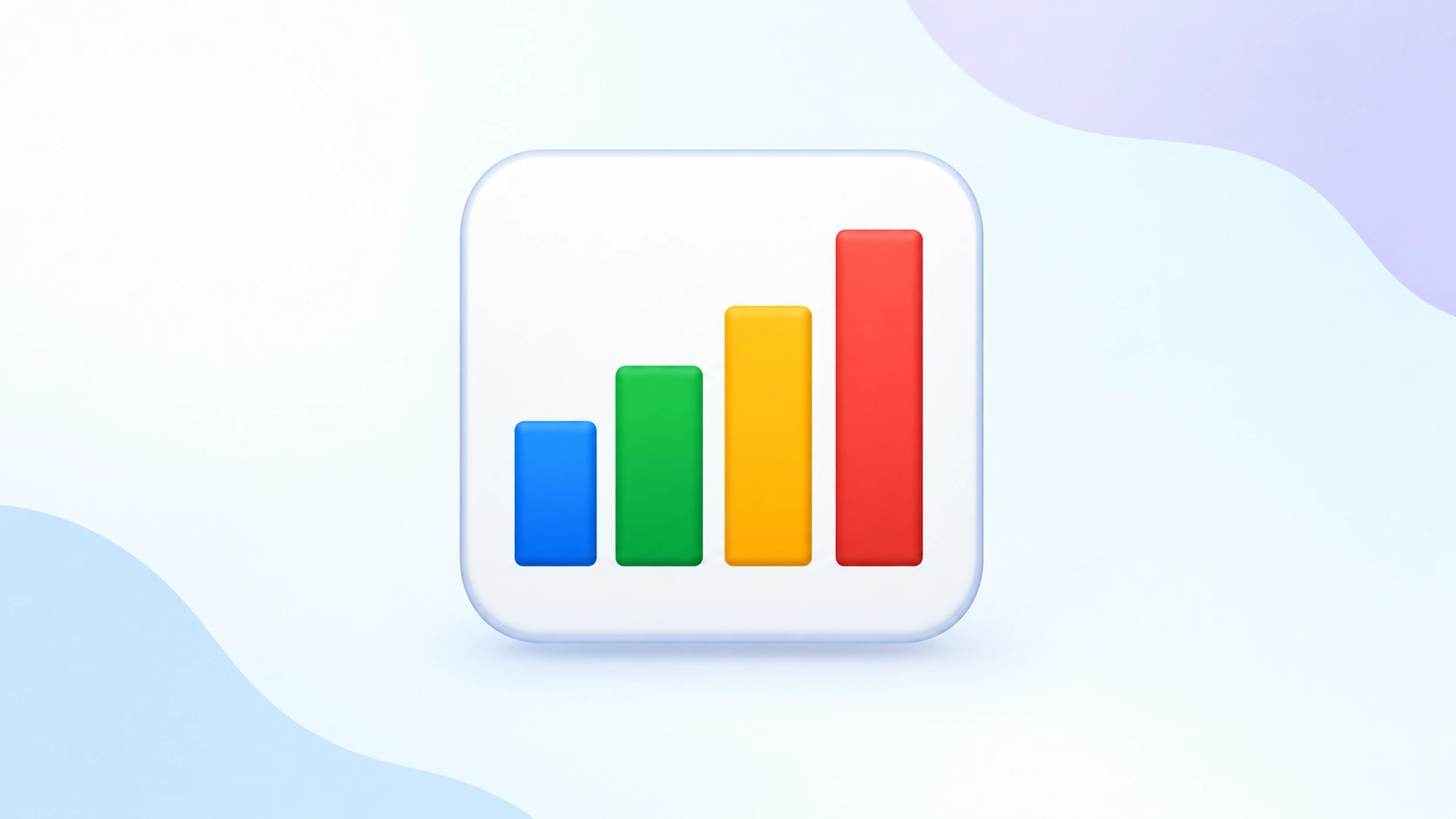
One tiny chart can turn an ordinary message into a quick visual update. 📊
When someone sends the bar chart emoji 📊, they are usually talking about data, numbers, comparisons, results, progress, or something being measured. You might see it beside a work update, school result, sales figure, social media performance, poll result, or personal goal. But its use is not always serious. In a casual chat, 📊 can also make a simple comparison sound funny or overly professional.
The bar chart emoji is especially useful when a message involves growth, performance, statistics, or tracking something over time. On WhatsApp, it can make an update feel more visual. On Instagram or TikTok, it can support captions about growth, engagement, or performance. In texting, it may simply mean, “Here are the numbers.”
Still, context matters. The same 📊 can feel professional, informative, playful, or ironic depending on the words around it and the relationship between the people chatting.
Sometimes 📊 says, “Let’s look at the numbers,” without needing a whole spreadsheet.
What Does the Bar Chart Emoji 📊 Mean?
The bar chart emoji 📊 generally represents a chart, graph, data, statistics, figures, comparisons, or measurable information. Its most direct use is to signal that numbers or results are being discussed. For example, “Sales are up this month 📊” makes the emoji work like a visual label for performance data.
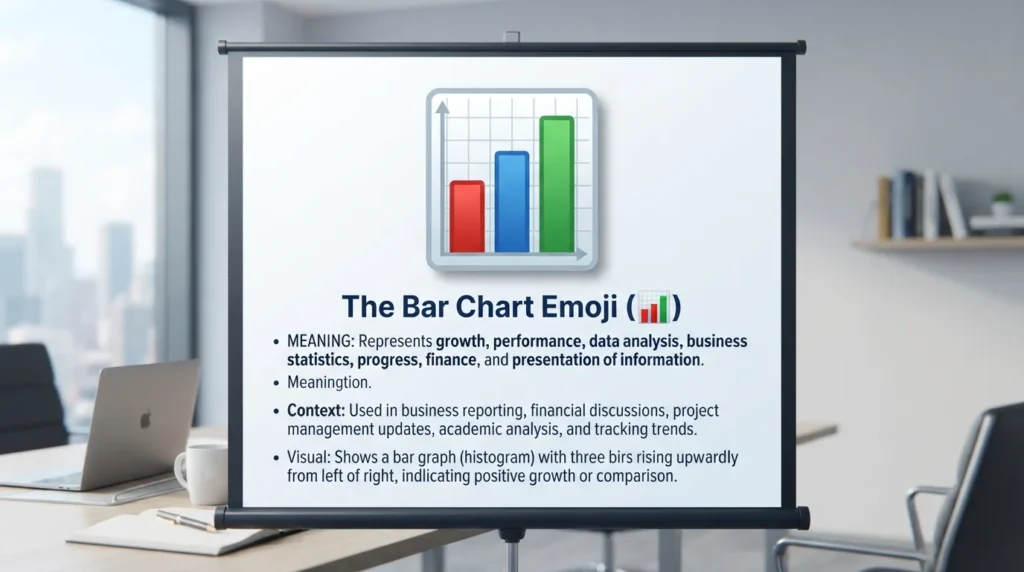
In texting, 📊 can mean “the numbers tell the story.” A student might use it while discussing test results, while a creator could use it when talking about views or followers. At work, it can accompany a report, target, survey, or performance update. On social media, it can also give an ordinary statement a data-driven tone.
The emoji can have a positive emotional meaning when it represents progress or improvement. “Finally seeing results 📊” can suggest satisfaction or motivation. However, it does not automatically mean success. It can just as easily accompany disappointing numbers, a comparison, or a joke about tracking something.
Context changes the interpretation. With 📈, the message can emphasize growth or an upward trend. 📈With 📉, it can suggest decline or disappointing performance. With 💹, the tone may lean toward markets or financial activity. 🧮With 🧮 or 🔢, it can emphasize calculations and numbers.
Relationship also matters. A manager sending 📊 may sound practical, while a friend using it after a silly comparison may be joking. Someone you like could even use it playfully, but 📊 by itself is not a standard romantic symbol.
Unicode gives 📊 the short name “bar chart,” but emoji meaning is broader than a character’s official name. In real conversations, people use emoji symbols according to context, tone, and personal habits. So the safest interpretation is to read 📊 together with the surrounding message rather than treating it as a fixed code.
Bar Chart Emoji Meaning Table:
| Emoji | Core meaning | Possible misread | Best used when |
|---|---|---|---|
| 📊 | Data, charts, comparison | Too formal | Discussing numbers or results |
| 📈 | Growth, rising trend | Guaranteed success | Showing improvement |
| 📉 | Decline, falling trend | Something is permanently bad | Discussing a drop |
| 💹 | Financial or market activity | Generic money | Talking about finance |
| 🧮 | Calculation, mathematics | Too academic | Discussing calculations |
| 🔢 | Numbers, counting | Simple numbering only | Talking about figures |
| 📝 | Notes, records, written information | Formal paperwork | Sharing or recording information |
| 📋 | List, report, organized information | Strictly office-related | Organizing details |
| 💼 | Work, career, business | Only corporate use | Discussing professional topics |
| 💰 | Money, financial results | Always about wealth | Talking about money or earnings |
10 Bar Chart Emoji Cards:
📊 Bar Chart
Meaning: Data, statistics, comparisons, and measurable results.
Example 1: The numbers are finally looking better 📊
Example 2: I finished the report and checked everything twice 📊
📈 Chart Increasing
Meaning: Growth, improvement, or an upward trend.
Example 1: Our views are finally moving up 📈
Example 2: This month has been much better 📈
📉 Chart Decreasing
Meaning: A decline, drop, or downward trend.
Example 1: Engagement took a little dip this week 📉
Example 2: Those numbers were lower than expected 📉
💹 Chart Increasing with Yen
Meaning: Financial activity, markets, or money-related charting.
Example 1: Time to review the market numbers 💹
Example 2: The financial report is ready 💹
🧮 Abacus
Meaning: Calculations, mathematics, or working through numbers.
Example 1: Give me a minute to calculate it 🧮
Example 2: I need to check those figures again 🧮
🔢 Input Numbers
Meaning: Numbers, counting, figures, or numerical information.
Example 1: Send me the final numbers 🔢
Example 2: I am still checking the figures 🔢
📝 Memo
Meaning: Notes, written information, or recording an important detail.
Example 1: I made a quick note of the results 📝
Example 2: Writing down the key points before I forget 📝
📋 Clipboard
Meaning: A list, report, organized information, or task tracking.
Example 1: I have the full checklist ready 📋
Example 2: Let me organize these details first 📋
💼 Briefcase
Meaning: Work, business, career, or professional activity.
Example 1: Another busy day at work 💼
Example 2: The business report is almost finished 💼
💰 Money Bag
Meaning: Money, earnings, financial results, or wealth.
Example 1: Let’s see what the final earnings look like 💰
Example 2: Tracking the budget again today 💰
How to Use the Bar Chart Emoji 📊 the Right Way?
The best use of 📊 is simple: let it reinforce an idea involving numbers, comparison, measurement, progress, or organized information. It works particularly well when the surrounding text already gives the reader the context.
WhatsApp 💬
On WhatsApp, 📊 can work in personal chats, family conversations, friend groups, work chats, and status updates. A friend might send, “My study hours this week 📊,” while a coworker could write, “Here are the final results 📊.”
It can also be playful. If friends are comparing how many movies they watched, someone might jokingly present the count like a serious report: “Our weekend productivity 📊.”
For emotional messages, keep the emoji secondary to the words. 📊 is not naturally affectionate, so it should not be expected to carry warmth by itself.
Instagram captions can use 📊 when discussing growth, performance, business results, polls, audience feedback, or personal goals. A creator might write, “A month of consistent posting 📊,” followed by a sentence explaining the result.
It can also work in comments when someone posts a comparison or progress update. Used lightly, it gives a caption a clear data-focused feel without requiring a full chart.
TikTok
On TikTok, 📊 can add a data or “let’s analyze this” feeling to captions and comments. It can support jokes about views, trends, rankings, comparisons, or personal statistics.
It can also be ironic. Someone might describe a completely ordinary activity as if they were presenting a research report, then add 📊 for comic effect.
Facebook posts can use 📊 for business updates, polls, community information, progress reports, school discussions, and personal goals. It can also appear in Messenger when friends are comparing numbers or keeping track of something together.
The key is relevance. When the message has no connection to data, using 📊 may feel confusing or overly formal.
Do’s and Don’ts
Do:
- Use 📊 to support a message involving data or comparison.
- Consider your relationship with the receiver.
- Match the emoji with the tone of the message.
- Use it naturally in captions, chats, and updates.
- Pay attention to how the emoji appears on different devices.
Don’t:
- Add 📊 randomly to every message.
- Assume everyone reads it exactly the same way.
- Use it to make a serious message seem like a joke.
- Combine it with unrelated emoji symbols without a reason.
- Assume 📊 has a romantic meaning just because someone you like sends it.
Why Does the Bar Chart Emoji Look Different on iPhone and Android?
The bar chart emoji can look slightly different from one device or platform to another because the underlying emoji character and its visual design are separate things.
Unicode provides the standardized character that devices can recognize. Companies then create their own emoji artwork. Apple, Google, Samsung, Microsoft, and other platforms may therefore show the same 📊 character with different colors, proportions, shading, bar heights, or visual details.
One version might make the bars look more three-dimensional, while another may use a flatter design. The colors can also vary. These differences do not normally mean that the emoji has changed meaning.
This distinction matters when someone sends 📊 from an iPhone to an Android phone, or the other way around. The receiver may see a different-looking chart, but the underlying emoji character is still the same.
The same principle applies to other emoji symbols. A platform’s artwork is its own visual interpretation, not a completely separate emoji.
So if 📊 looks slightly different on your phone than in a screenshot from another device, there is usually no need to worry. The visual style has changed, not necessarily the message.
Best Bar Chart Emoji 📊 Combos: Copy & Paste
Because 📊 is mainly a data and comparison symbol, these combinations work best as playful or contextual combinations rather than standard romantic emoji phrases.
Romantic ❤️
1.👉 📊❤️ — Use this playfully for “our relationship is growing.”
2.👉 📊💰❤️ — Use this as a humorous “valuable relationship” joke.
3.👉 📊📈❤️ — Use this for a playful message about feelings growing.
Cute 🥰
1.👉 📊📝❤️ — Use this for a cute “noted and appreciated” message.
2.👉 📊📈🥰 — Use this jokingly when something is getting cuter.
3.👉 📊❤️📝 — Use this when saving a sweet little memory.
Flirty 😉
1.👉 📊📈❤️ — Use this for “the chemistry is increasing.”
2.👉 📊💹😉 — Use this for playful, over-the-top confidence.
3.👉 📊💰😉 — Use this as a joking way to call someone valuable.
Missing Someone 💭
1.👉 📊💭❤️ — Use this when you have been thinking about someone a lot.
2.👉 📊📝💭 — Use this for a note about someone you miss.
3.👉 📊📈💭 — Use this when thoughts about someone keep increasing.
Good Night 🌙
1.👉 📊📝🌙 — Use this for a playful “final update before bed.”
2.👉 📊💭🌙 — Use this when ending the day thinking about someone.
3.👉 📊❤️🌙 — Use this for a warm good-night message.
Trending Bar Chart Emoji 📊 in 2026
In 2026, 📊 fits naturally into the wider language of online communication because people regularly talk about performance, numbers, growth, engagement, results, rankings, and comparisons.
Its appeal is not limited to formal data. A creator can use it in a caption about account growth. A student can use it while discussing grades. A worker can use it beside a project update. Friends can even use it sarcastically when turning a simple comparison into a fake “official report.”
The important point is that 📊 is flexible without becoming meaningless. The surrounding words usually tell the reader whether the chart is literal, informative, playful, or ironic.
| Emoji | Why trending | Who uses it | Platform |
|---|---|---|---|
| 📊 | Represents data and comparisons | Creators, students, workers | Instagram, TikTok, WhatsApp |
| 📈 | Shows growth and improvement | Creators, businesses, casual users | Social media, chats |
| 📉 | Shows a decline or drop | Commenters, creators, coworkers | Social media, messaging |
| 💹 | Adds a financial angle | Business and finance audiences | Chats, posts, professional content |
In everyday online communication, chart-related emojis are useful because they turn an abstract idea such as growth or decline into a quick visual signal. Their tone can shift from serious to humorous depending on the surrounding message.
Bar Chart Emoji Meaning in Different Contexts
The meaning of 📊 changes most noticeably with context.
Romantic conversations:
📊 is not a traditional romantic emoji. If someone uses it with affectionate wording, it can become a playful metaphor for growing feelings. “My love for you 📊” is clearly different from “Monthly sales 📊.”
Friendship:
Friends may use it to make ordinary comparisons funny. “Who has watched more episodes? 📊” gives a simple question a mock-serious analytical tone.
Family:
A family group might use 📊 for practical topics such as expenses, schedules, school results, or comparing plans. The emoji helps organize the message visually.
Professional communication:
This is one of its most natural settings. 📊 can accompany reports, targets, performance discussions, survey results, and business information. Still, the exact tone depends on the workplace and conversation.
Texting:
In casual texting, 📊 often acts like a quick label for “numbers,” “results,” or “comparison.” It can also be used humorously when no real chart exists.
Social media comments:
A commenter might use 📊 to react to a growth claim, comparison, ranking, or performance update. Sometimes the use is deliberately exaggerated for humor.
Captions:
In captions, 📊 can make a post feel analytical or progress-focused. “Three months of practice 📊” suggests that the person is looking at measurable improvement.
The safest approach is to read 📊 with the full message. An emoji rarely tells the whole story on its own.
How to Copy and Paste the Bar Chart Emoji?
Copy this emoji:
📊
Then select it and choose Copy on your phone or computer. Open WhatsApp, Instagram, TikTok, Facebook, a text message, or another app and paste it where you want it.
You can use 📊 in a message, comment, caption, status, profile text, or social media post. If you want a quick data-related symbol without creating an actual graph, this emoji is an easy option.
FAQs
1. What is the most popular bar chart emoji?
The main bar chart emoji is 📊. It is commonly used to represent charts, data, statistics, comparisons, and measurable information.
2. What does 📊 mean when someone sends it?
It usually points to numbers, results, data, comparison, or performance. The exact meaning depends on the words around it and the context of the conversation.
3. Why do emojis look different on iPhone vs Android?
Unicode standardizes the underlying emoji character, while individual platforms create their own visual artwork. That is why 📊 can have slightly different colors, shapes, or styling across devices.
4. Are bar chart emojis used differently in other countries?
They can be. Emoji interpretation can vary with language, community habits, culture, and context. However, 📊 generally remains connected with charts, data, numbers, and comparison.
Conclusion:
The bar chart emoji 📊 is a practical symbol for data, results, comparisons, and measurable progress.
It can sound professional in one message and playful in another, depending on context.
Use it when the chart idea genuinely supports your words, and let the surrounding message provide the real meaning.
When in doubt, keep it simple and let 📊 do the visual work.

Nasrullah — Emoji Strategist & Content Writer
Nasrullah is a passionate emoji enthusiast and content writer who loves exploring the meanings, uses, and cultural context behind emojis. He creates simple, helpful, and easy-to-understand guides that help readers choose the right emoji for WhatsApp, Instagram, Facebook, texting, and everyday conversations.
With a focus on emoji meanings, combinations, social media usage, and modern digital communication, Nasrullah aims to make every emoji easier to understand and use with confidence. His content combines practical examples with clear explanations so readers can quickly find the meaning and usage they are looking for.
When he’s not researching emojis, Nasrullah enjoys exploring digital trends, writing useful online content, and learning about how people communicate in the digital world. 😊