You are planning an outfit, sharing a shopping haul, or asking a friend what to wear, and you want a quick way to express your idea. That is where clothing-related emojis can help. But when you search for the hanger emoji, there is one important detail to know: the standard emoji keyboard does not currently include a dedicated clothes hanger emoji.
People sometimes use 🧥, the coat emoji, or 👕, the T-shirt emoji, when discussing clothes, wardrobes, fashion, and outfit choices. A hanger symbol may also appear as a text character, sticker, custom icon, or image, depending on the app. These options are related, but they are not identical.
Understanding the difference helps you choose the right symbol for WhatsApp messages, Instagram captions, TikTok comments, and everyday conversations. The meaning also depends on context. A clothing emoji might suggest shopping, personal style, a seasonal outfit, or simply a conversation about getting dressed. 🧥👕✨
The hanger emoji idea is all about clothing, personal style, and keeping your outfit conversations simple. 🧥
8. What Does the Hanger Emoji Mean?
The hanger emoji usually refers to clothing, fashion, outfit planning, or organizing a wardrobe. However, there is an important distinction: there is no dedicated standard Unicode clothes hanger emoji in the regular emoji keyboard. When people search for this symbol, they may mean a hanger graphic, a custom sticker, or a clothing emoji used to represent the same idea.
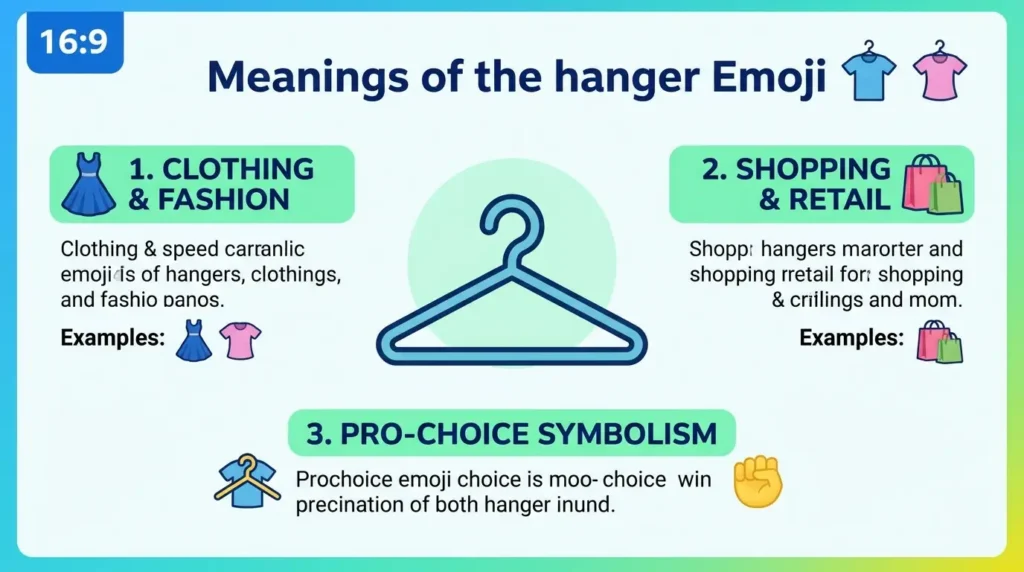
The 🧥 coat emoji is one practical alternative. It can suggest outerwear, winter outfits, or choosing something to wear. The 👕 T-shirt emoji works well for everyday clothing, while 👗 is useful for dresses, formal outfits, and fashion discussions. Each symbol has its own visual meaning, so the best choice depends on what you want to communicate.
In texting, clothing emojis make ordinary conversations quicker. You might send 🧥👕 to discuss what you should pack for a trip or use 👗 when asking a friend for an opinion about a dress. In a shopping conversation, 🛍️ can help communicate that you are browsing stores or buying new clothes.
On social media, these symbols often appear in outfit-of-the-day posts, fashion inspiration, shopping hauls, wardrobe organization videos, and styling tips. Creators can use them to label content or make captions easier to scan. Their meaning remains flexible rather than fixed.
Clothing symbols can also carry an emotional tone. Sharing an outfit with a friend may express excitement, confidence, or a desire for feedback. A message about donating clothes might communicate generosity, while a wardrobe-cleaning post may suggest organization and a fresh start.
Context matters, too. Your friend may understand a clothing emoji as a simple outfit suggestion, while a fashion creator may use it as a category marker. A romantic interpretation is possible if the surrounding conversation supports it, but clothing symbols do not automatically imply attraction. The words, relationship, and situation provide the real clues.
If you need to represent an actual hanger, a text drawing, custom sticker, or image of a hanger may be more accurate than a coat emoji. Choose the symbol that best matches your intended message.
9. Hanger-Related Emoji Meaning Table
| Emoji | Core meaning | Possible misread | Best used when |
|---|---|---|---|
| 🧥 | Coat, outerwear, dressing for the weather | A winter-only reference | Discussing jackets or outfits |
| 👕 | Casual clothing, T-shirts | A specific uniform | Everyday outfit conversations |
| 👖 | Jeans or trousers | A general fashion statement | Talking about pants or denim |
| 👗 | Dress, occasion wear | A particular event or style | Sharing dress ideas |
| 👚 | Women’s clothing, blouse | A narrow clothing category | Discussing tops and styling |
| 🥼 | Lab coat or professional coat | Ordinary outerwear | Workwear or uniforms |
| 🦺 | Safety vest, protective clothing | Everyday fashion | Discussing safety gear |
| 🩳 | Shorts | A specific sport or activity | Summer outfits |
| 🧦 | Socks | A small clothing detail | Packing or wardrobe chats |
| 👟 | Sneakers, athletic footwear | Exercise only | Shoes and casual outfits |
| 🛍️ | Shopping bags, purchases | Clothing shopping specifically | Shopping hauls and fashion finds |
10. Ten Hanger-Related Emoji Cards
The following cards cover useful clothing and shopping symbols. They are alternatives for discussing a hanger or wardrobe, not ten different hanger designs.
🧥 Coat
Meaning: Outerwear, layering, and choosing clothes for the weather.
Example 1: Should I take my coat tonight? 🧥
Example 2: This jacket completes the whole outfit 🧥
👕 T-Shirt
Meaning: Casual outfits, everyday clothing, and simple styling.
Example 1: Keeping today’s outfit comfortable 👕
Example 2: Which T-shirt looks better with these jeans? 👕
👖 Jeans
Meaning: Denim, trousers, and everyday wardrobe choices.
Example 1: These jeans go with almost everything 👖
Example 2: Help me choose between these two pairs 👖
👗 Dress
Meaning: Dresses, special occasions, and dress styling.
Example 1: Finally found the dress for Saturday 👗
Example 2: Does this color work for the party? 👗
👚 Blouse
Meaning: Tops, blouse styling, and outfit coordination.
Example 1: This blouse would look lovely with black trousers 👚
Example 2: Adding this top to my wardrobe 👚
🥼 Lab Coat
Meaning: Professional coats, laboratory clothing, and certain uniforms.
Example 1: Getting my work clothes ready for tomorrow 🥼
Example 2: The uniform is ready for the new shift 🥼
🦺 Safety Vest
Meaning: Protective clothing, visibility, and worksite safety.
Example 1: Remember your safety vest before heading out 🦺
Example 2: Safety gear is packed and ready 🦺
🩳 Shorts
Meaning: Casual summer clothing and warm-weather outfits.
Example 1: Shorts and a T-shirt are enough for today 🩳
Example 2: Packing light for the beach trip 🩳
🧦 Socks
Meaning: Socks, small wardrobe essentials, and packing clothes.
Example 1: I still need to pack my socks 🧦
Example 2: Finally organizing the last drawer 🧦
🛍️ Shopping Bags
Meaning: Shopping, purchases, and bringing home new items.
Example 1: Found a few great pieces on sale 🛍️
Example 2: Time to update my wardrobe 🛍️
11. How to Use the Hanger Emoji the Right Way
Since a dedicated hanger emoji is not available on standard emoji keyboards, use a clothing emoji or a hanger image according to your message. Here is how to make clothing symbols useful across popular platforms.
WhatsApp 💬
WhatsApp conversations are usually personal, so clothing emojis work naturally when you are asking for advice, planning an event, or talking about shopping.
- Personal chats: Send 👕 when asking which shirt to wear.
- Family conversations: Use 🧥 when reminding someone to bring a coat.
- Friendships: Share 👗 when asking for an opinion about a dress.
- Emotional messages: Pair a clothing emoji with a supportive message about getting ready for an important day.
- Status updates: Use 🛍️ for a shopping trip or a new wardrobe addition.
Example: “Help me choose an outfit for tomorrow 👕👖”
If you need to show an actual clothes hanger, send a photo or sticker instead. Your recipient will understand the object more clearly.
Instagram 📸
Instagram is a natural place for clothing-related emojis because they fit fashion photography, outfit inspiration, shopping reels, and wardrobe content.
You can add 👗 to a caption featuring a dress, use 👕 for casual styling posts, or place 🛍️ alongside a shopping haul. These symbols can make the topic of your post clear before someone reads the full caption.
Example caption: “Today’s outfit is simple, comfortable, and ready for anything 👕👖”
For wardrobe organization content, a hanger photo may communicate your topic better than a coat symbol. You can also use a clothing emoji in a bio if fashion, styling, or personal shopping is part of your content.
TikTok 🎵
On TikTok, clothing emojis can support outfit transitions, thrift-store finds, styling challenges, and humorous videos about having too many clothes.
For example, a creator could use 🛍️ in a shopping-haul caption or 👗 in a video asking viewers to vote on an outfit. The emojis can also help communicate playful frustration about choosing what to wear.
Example: “Five outfits, one event, and absolutely no decision yet 👗”
A clothing emoji does not automatically make a video trendy. The video itself, caption, and audience determine how people respond.
Facebook clothing emojis work well in personal posts, community groups, Marketplace discussions, and Messenger chats.
You could use 🧥 when discussing cold-weather clothing, 🛍️ when sharing a shopping update, or 👕 when asking friends for outfit recommendations. In a clothing-sale group, a clear photo and written product details will usually be more informative than an emoji alone.
Example: “Clearing out my wardrobe this weekend. Message me if you are interested in any items 🛍️”
The main rule across all four platforms is simple: choose a symbol that supports your words. If the exact object matters, use a picture or sticker of a hanger.
Dos and Don’ts for Clothing Emojis
Do
- Match the symbol to your actual topic, whether it is a coat, outfit, or shopping trip.
- Consider your relationship with the person receiving the message.
- Use clothing emojis to make captions and messages easier to scan.
- Check that your intended meaning is clear from the surrounding words.
- Use a real hanger image when you need to show a hanger specifically.
Don’t
- Assume 🧥 is an exact representation of a clothes hanger.
- Use a long chain of clothing symbols when one or two will do.
- Assume everyone will interpret an outfit post in the same way.
- Add fashion emojis to a serious work message if they distract from the point.
- Treat a clothing emoji as automatically romantic or flirtatious.
A little context makes a big difference. For example, “Which one should I wear? 👗” clearly asks for outfit advice, while an unexplained clothing symbol may leave the recipient guessing.
12. Why Do Hanger-Related Emojis Look Different on iPhone and Android?
Have you ever sent an emoji to a friend and noticed that it looked slightly different on their phone? That is normal. Emoji characters follow the Unicode standard, which helps devices and software recognize the same characters across platforms. However, the standard does not require every company to draw them identically.
Companies such as Apple, Google, Samsung, and Microsoft develop their own emoji artwork. As a result, a coat or T-shirt emoji can have slightly different shapes, colors, details, and proportions depending on the device or app.
For instance, the 🧥 coat emoji may look more detailed on one device and simpler on another. The 👕 T-shirt might have a different shade or outline. Those visual changes do not necessarily indicate a different underlying character.
There is another important distinction with the hanger emoji search. Because there is no dedicated standard Unicode clothes hanger emoji, a hanger graphic you find online may be a sticker, an image, a custom font symbol, or an icon supplied by a particular application. Such graphics may not transfer between devices in the same way as standard emojis.
Here is what you might notice:
- Shape: A garment may have different outlines or folds.
- Color: The same clothing item may appear in a different shade.
- Style: One platform may use a flatter illustration while another adds shading.
- Size: The displayed symbol can look larger or smaller depending on the app and text settings.
- Compatibility: Newer characters may not display correctly on older software.
If you send a standard clothing emoji, the recipient will generally see the corresponding character if their software supports it. If you send a custom hanger sticker, its appearance depends on how that graphic is shared.
Neither Apple’s nor Google’s artwork is automatically the correct visual version. They are different designs representing the same standard character when a standard emoji is involved.
For the clearest communication, use a familiar clothing emoji for general fashion conversations. If you want to identify an actual hanger, attach a picture or a compatible sticker rather than relying on a substitute.
13. Best Hanger Emoji Combos: Copy and Paste
These combinations use the established clothing and shopping emoji family. The category names describe the intended mood or situation, while the symbols focus on wardrobe-related conversations.
Romantic ❤️
For dressing up, date-night outfits, and sharing a look.
- 👉 👗🧥🛍️: Use this when planning an outfit for a special date.
- 👉 👕👖👟: Share this for a relaxed, casual look together.
- 👉 👗👚🛍️: Send this when shopping for an occasion outfit.
Cute 🥰
For playful outfits and sweet everyday fashion posts.
- 👉 👕👖🧦: Use this for a cozy, comfortable outfit.
- 👉 👗👟🛍️: Share this when you find a cute new look.
- 👉 🧥🧦👕: Send this when talking about warm, comfy clothes.
Flirty 😉
For outfit polls and playful requests for fashion advice.
- 👉 👗🛍️👟: Ask someone to help you choose your look.
- 👉 👕👖🧥: Share an outfit and invite a friendly opinion.
- 👉 👚👗🛍️: Use this for a playful shopping conversation.
Missing Someone 💭
For packing, memories of shared shopping trips, or preparing to meet.
- 👉 🧥👕👖: Send this when packing for a visit.
- 👉 👗🛍️👟: Share your plans before meeting a friend.
- 👉 🧦👕🧥: Use this while getting your travel bag ready.
Good Night 🌙
For winding down, preparing clothes, and planning tomorrow’s outfit.
- 👉 🧥👕🧦: Use this while getting tomorrow’s clothes ready.
- 👉 👗👚👖: Share this when planning the next day’s look.
- 👉 👕👖🛍️: Send this after finishing a wardrobe shopping list.
Copy-paste tip: Select any combination, copy it, and paste it into your message. These are creative clothing-themed combinations, not established emoji meanings. If your goal is to show a clothes hanger itself, a hanger picture or sticker will be more precise.
14. Trending Hanger Emoji in 2026
Clothing-related emojis remain useful in everyday digital conversations because they help people label outfit ideas, shopping experiences, and wardrobe updates. However, it is important to distinguish general fashion emoji usage from claims about a dedicated hanger emoji. There is no standard Unicode hanger emoji, so it would be misleading to describe one as an officially trending hanger character.
Instead, people can use familiar clothing symbols such as 🧥, 👕, 👗, and 🛍️ to communicate related ideas. These symbols are practical choices for fashion captions, outfit inspiration, shopping videos, and everyday chats. Their popularity in a particular community can vary, and there is no verified universal ranking that establishes which clothing emoji is the most popular in 2026.
Creators often use clothing symbols to make their content easier to identify. An outfit video may include 👗 in its caption, while a shopping haul may feature 🛍️. A person sharing winter styling tips might choose 🧥 to indicate outerwear.
The same symbol can also take on a different tone depending on the post. An outfit poll may invite feedback, a shopping caption may express excitement, and a wardrobe-cleaning post may communicate organization.
| Emoji | Why it is useful | Who uses it | Platform |
|---|---|---|---|
| 🧥 | Identifies outerwear and seasonal outfits | Fashion fans and everyday users | Instagram, WhatsApp |
| 👕 | Labels casual clothing and outfit ideas | Friends and style creators | TikTok, Instagram |
| 👗 | Highlights dresses and occasion wear | Shoppers and fashion creators | Instagram, Facebook |
| 🛍️ | Signals shopping and new purchases | Shoppers and retailers | TikTok, Instagram |
These examples describe practical uses rather than verified trend rankings. They can help you select a relevant symbol without making unsupported claims about current popularity.
As digital communication evolves, people continue to adapt familiar emoji characters to new conversations, styles, and online communities.
15. Hanger Emoji Meaning in Different Contexts
A clothing emoji does not communicate exactly the same thing in every conversation. The words around it, the relationship between the people involved, and the situation all influence how a message is understood.
Romantic conversations
When discussing a date, 🧥 or 👗 may simply refer to choosing an outfit. A partner might ask, “Which dress should I wear tonight? 👗” The romantic context comes from the conversation, not from the clothing symbol itself.
Friendship
Friends commonly exchange outfit ideas and shopping recommendations. For example, “These jeans would look great with your new shoes 👖” sounds like ordinary styling advice. A friend might also send 🛍️ to share excitement about a purchase.
Family
Family messages often involve practical clothing reminders. Someone might write, “Take your coat because it could get cold 🧥.” Here, the symbol reinforces a helpful reminder rather than expressing a fashion preference.
Professional and casual communication
In a fashion business or clothing-related work chat, 👕 can identify a product category, while 🛍️ can accompany a shopping update. In a formal workplace, use these symbols only when they fit the conversation and the organization’s communication style.
Texting and social media comments
A short message such as “New outfit?” followed by 👗 may invite a response. In a TikTok comment, the same symbol could refer to a creator’s styling choice. A caption with 🛍️ might indicate a shopping haul or a new collection.
Fashion captions
For outfit-of-the-day content, clothing emojis can act as visual labels. A caption such as “Keeping it casual today 👕👖” tells readers what kind of look to expect.
If someone sends you a hanger graphic rather than a standard emoji, interpret it in the same way you would interpret any image: consider the surrounding words and conversation. Do not assume a hidden message without supporting context.
16. How to Copy and Paste the Hanger Emoji?
If you want the exact clothes hanger symbol, remember that there is no dedicated standard Unicode hanger emoji to copy from the regular emoji keyboard. You can still copy related clothing symbols or share a hanger graphic.
Copy these clothing alternatives:
🧥 👕 👗 🛍️
Copy
Coat, T-shirt, dress, and shopping bags.
To use these symbols:
- Select the symbol or group you want.
- Copy it using your device’s copy command or the button above.
- Open WhatsApp, Instagram, TikTok, or Facebook.
- Paste the symbols into a chat, caption, comment, or status.
- Add a few words if you want to make the intended meaning clearer.
If you specifically need a hanger, use a hanger image, sticker, or custom graphic. That option communicates the object directly instead of asking the reader to interpret a clothing substitute.
17. Frequently Asked Questions
1. What is the most popular hanger emoji?
There is no dedicated standard Unicode clothes hanger emoji, so there is no single official hanger emoji to rank. The 🧥 coat and 👕 T-shirt are useful alternatives for general clothing conversations.
2. What does the hanger emoji mean when someone sends it?
A hanger graphic usually suggests clothing, dressing, or wardrobe organization, but the sender’s intention depends on the conversation. It does not automatically indicate a romantic interest or carry a gender-specific meaning.
3. Why do emojis look different on iPhone vs Android?
Apple, Google, Samsung, and other companies create their own artwork for standard Unicode emoji characters. Their colors, shapes, and details may differ, even when the underlying character is the same.
4. Are hanger emojis used differently in other countries?
Clothing symbols can be interpreted differently across communities, languages, and personal conversations. Local fashion habits and online trends may influence their use, but there is no single interpretation that applies to everyone.
18. Conclusion
The hanger emoji search is best understood as a search for a clothes hanger symbol or a clothing-related emoji. 🧥 and 👕 can help you discuss outfits, shopping, and wardrobe choices, while a hanger image is the clearest option when the object itself matters.
Choose symbols that fit your message, add context when needed, and keep your combinations simple. A thoughtful choice makes everyday conversations easier to understand. ✨

Nasrullah — Emoji Strategist & Content Writer
Nasrullah is a passionate emoji enthusiast and content writer who loves exploring the meanings, uses, and cultural context behind emojis. He creates simple, helpful, and easy-to-understand guides that help readers choose the right emoji for WhatsApp, Instagram, Facebook, texting, and everyday conversations.
With a focus on emoji meanings, combinations, social media usage, and modern digital communication, Nasrullah aims to make every emoji easier to understand and use with confidence. His content combines practical examples with clear explanations so readers can quickly find the meaning and usage they are looking for.
When he’s not researching emojis, Nasrullah enjoys exploring digital trends, writing useful online content, and learning about how people communicate in the digital world. 😊