You send a message, someone replies with just 👀, and now you’re rereading your last three texts trying to figure out what you meant by them. That’s the power of the notice emoji. It doesn’t say much on its own, but it says a lot depending on who sent it and why. People reach for 👀 when they’re curious, when they’ve spotted some drama, when they’re being playfully shy, or when they simply want to say “I see you” without typing a single word. The tricky part is that the same emoji can read as teasing in one chat and completely innocent in another. Context, tone, and the relationship between sender and receiver all shape what it’s really communicating.
Sometimes one tiny emoji can say more than a full paragraph ever could. 👀
What Does the Notice Emoji Mean?
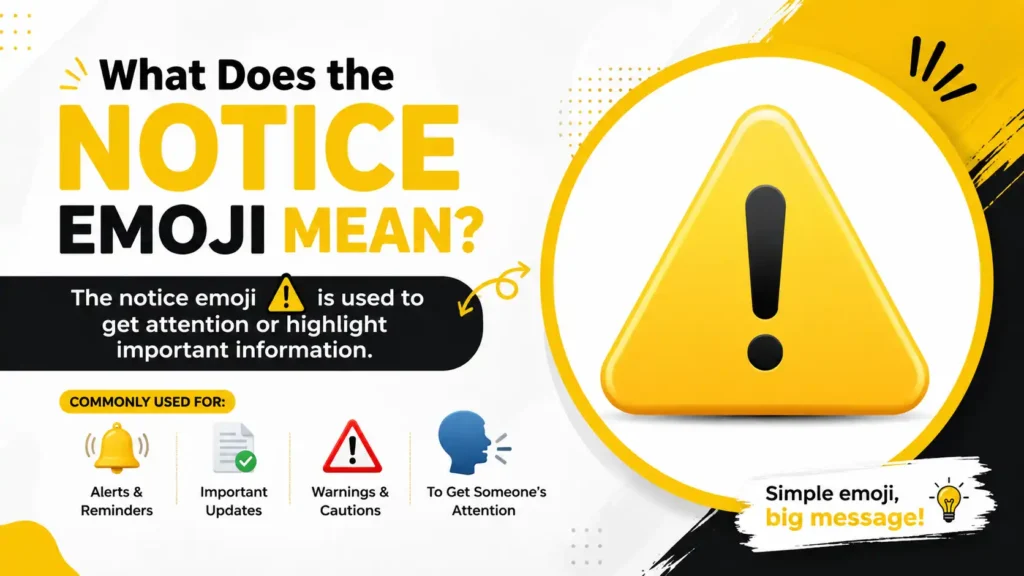
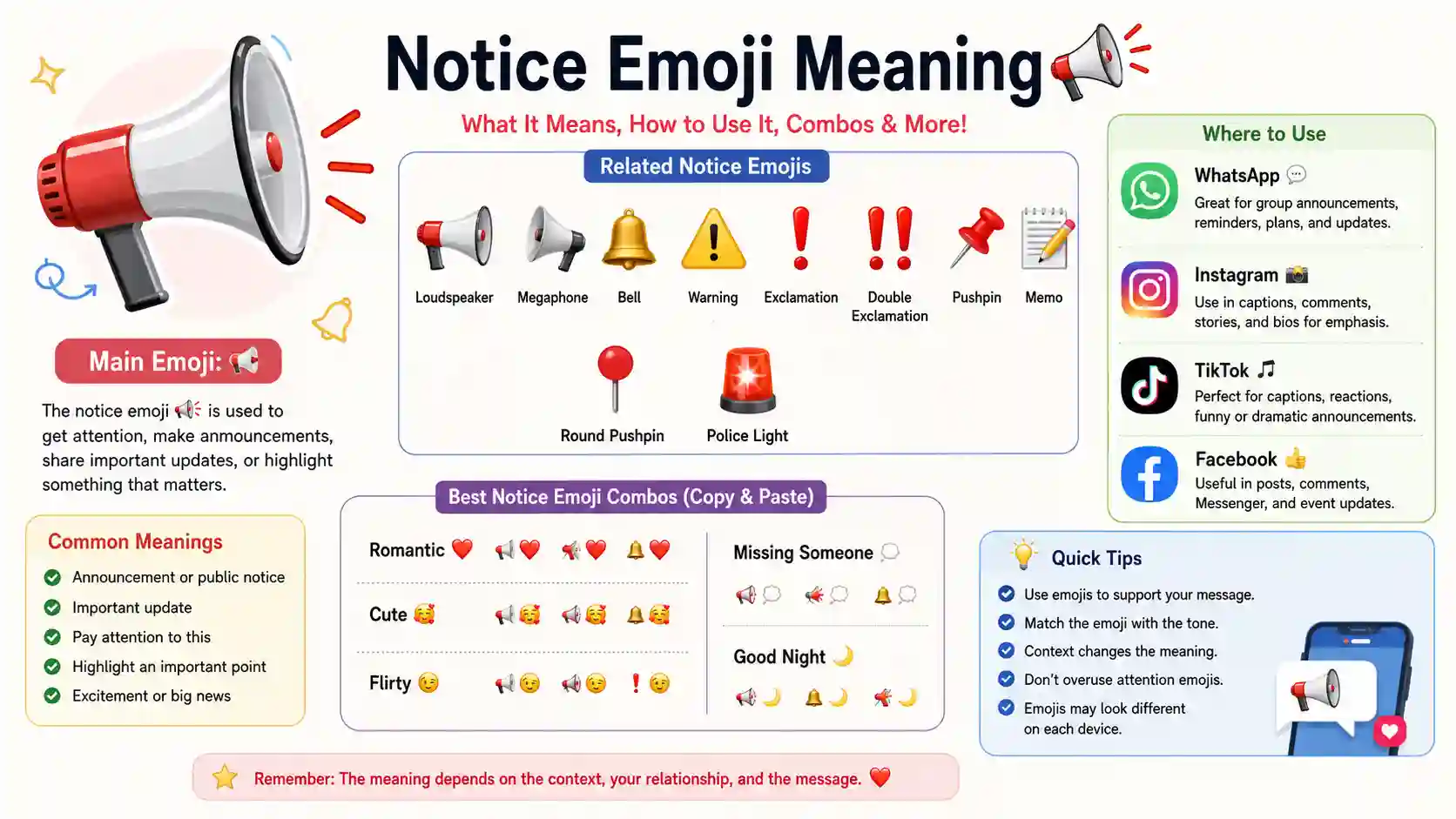
At its core, the notice emoji (👀) is a pair of wide, alert eyes, and it’s most commonly used to signal attention. It’s the digital version of leaning in and going “wait, what?” People drop it into a chat when something has caught their interest, when they want to acknowledge a message without fully replying yet, or when they’re quietly watching a situation unfold.
In everyday texting, 👀 often works as shorthand for “I’m paying attention” or “tell me more.” Someone shares a piece of gossip, and a friend responds with 👀 instead of a full sentence, it’s understood as genuine curiosity. On social media, the emoji shows up in comment sections under posts that hint at something bigger, like a teaser announcement or a subtle relationship update, where it basically means “we all see what you’re doing.”
There’s also a flirtier, shyer side to it. Sent alone after a compliment or a slightly bold message, 👀 can read as playful and a little coy, similar to how 🙈 or 🤭 might soften an admission. Paired with 😏, it leans more teasing or suggestive. Paired with 😳, it can suggest surprise or being caught off guard.
Context really does the heavy lifting here. The same 👀 that means “spill the tea” in a group chat between friends might mean “I noticed that” in a more neutral, observational way from a coworker. Between people who are into each other, it can carry a flirtatious undertone; between siblings, it’s more likely just curiosity or mild suspicion.
A few other emojis from the same family carry related but distinct shades of meaning:
- 😳 leans toward being caught off guard or flustered.
- 🙈 softens an admission with shy embarrassment.
- 🤭 suggests a giggly, secretive reaction.
- 😏 adds a knowing, teasing edge.
- 🫣 is the “I can’t believe this is happening” peek.
None of these have one fixed meaning. Wording, platform, and the history between the two people talking all shift the tone, so it’s worth reading the whole message, not just the emoji, before deciding what someone meant.
Meaning Table:
| Emoji | Core meaning | Possible misread | Best used when |
|---|---|---|---|
| 👀 | Curiosity, attention, “I see this” | Could seem judgmental or nosy | Reacting to gossip, teasers, or interesting news |
| 😳 | Surprise, being caught off guard | Might look like embarrassment or discomfort | Reacting to something unexpected or bold |
| 🙈 | Shy embarrassment, playful denial | Can seem like avoidance | Softening a confession or a compliment |
| 🤭 | Giggly, secretive amusement | Might read as mocking if tone is unclear | Reacting to something funny or a little scandalous |
| 😏 | Teasing, knowing smirk | Can come across as smug or suggestive | Playful flirting or gentle teasing |
Emoji Cards:
👀 Eyes (Notice Emoji):
Meaning: Curiosity, attention, or quietly watching a situation unfold.
Example 1: Wait, what happened next? 👀
Example 2: I saw that story you posted 👀
😳 Flushed Face:
Meaning: Being caught off guard, surprised, or a little embarrassed.
Example 1: You actually said that to him? 😳
Example 2: I was NOT expecting that plot twist 😳
🙈 See No Evil Monkey:
Meaning: Shy embarrassment or playful avoidance of admitting something.
Example 1: Okay fine, I like you 🙈
Example 2: I may have texted him first 🙈
🤭 Hand Over Mouth:
Meaning: A giggly, slightly secretive reaction, like holding back a laugh.
Example 1: He has no idea we’re planning this 🤭
Example 2: I might have told her already 🤭
😏 Smirking Face:
Meaning: A knowing, teasing expression, often playful or a little flirty.
Example 1: Oh, you noticed my outfit? 😏
Example 2: Someone’s been thinking about me 😏
👉👈 Shy Pointing Fingers:
Meaning: Nervous, shy hesitation, often used when admitting a crush or a small confession.
Example 1: So um, I kind of like you 👉👈
Example 2: Can we talk later maybe 👉👈
🫣 Peeking Eye:
Meaning: Watching something unfold while bracing for the outcome.
Example 1: Waiting for their reply be like 🫣
Example 2: I sent the risky text 🫣
😅 Sweat Smile:
Meaning: Awkward relief or nervous laughter after a tense moment.
Example 1: That was close, glad she didn’t see it 😅
Example 2: I panicked and said something random 😅
👋 Waving Hand:
Meaning: A friendly greeting or a light way to get someone’s attention.
Example 1: Hey, noticed you’re online 👋
Example 2: Just checking in 👋
🙄 Rolling Eyes:
Meaning: Mild annoyance, sarcasm, or playful disbelief.
Example 1: Sure, “just friends” 🙄
Example 2: Here we go again 🙄
How to Use the Notice Emoji the Right Way:
WhatsApp 💬
In personal chats, 👀 works well when you want to react to news without writing a whole response yet, like a quick “I’m listening, keep going.” In family group chats, it often shows curiosity about plans or updates. Between close friends, it’s common in emotional or dramatic conversations, sent alone to say “wait, what?” On status updates, someone might reply with 👀 to a vague or mysterious post, hinting they want details.
Instagram 📸
On Instagram, 👀 shows up a lot in captions that hint at something coming soon, like “big news 👀” or “you’ll see 👀.” In comments, it’s a quick way to react to a teaser post or a subtle change, such as a new haircut or a cryptic caption. In bios, it’s less common but can add a playful, curious tone. On aesthetic posts, it’s used more sparingly since it fits attention-grabbing content better than calm, visual ones. In reels, creators sometimes add 👀 as text overlay to build suspense before a reveal.
TikTok 🎵
TikTok comments lean into 👀 for reacting to plot twists, unexpected reveals, or anything slightly dramatic in a video. It’s often used with humor, like reacting to a relatable or chaotic moment with just the emoji and nothing else. In captions, creators use it to hint that something interesting is about to happen. It also fits trends where users react to a situation with exaggerated, playful suspicion.
On Facebook, 👀 tends to show up in comments on posts about announcements, relationship updates, or local news. In Messenger, it works similarly to WhatsApp, as a quick way to acknowledge something interesting. As a reaction, some people use it informally by typing it under a post instead of choosing a built-in reaction, especially when they want to signal curiosity without fully commenting.
Dos and Don’ts:
Do:
- Use 👀 to show genuine curiosity or interest.
- Think about your relationship with the person before assuming a flirty meaning.
- Pay attention to the words around the emoji, not just the emoji itself.
- Match it to the tone of the conversation.
- Check how it might render differently across devices before sending something important.
Don’t:
- Send 👀 randomly without context, since it can confuse the other person.
- Assume everyone reads it the same way, especially across different friend groups.
- Overload a serious or sensitive message with it.
- Combine it with unrelated emojis just to fill space.
- Assume it’s always flirtatious, since it’s often just curiosity.
Why Does the Notice Emoji Look Different on iPhone and Android?
Emojis are technically built on a shared Unicode standard, which means 👀 represents the same underlying character everywhere. However, companies like Apple, Google, Samsung, and Microsoft each design their own visual version of that character. That’s why the eyes emoji can look slightly rounder on one phone and slightly more angular or shaded differently on another.
The shape, color tone, and even the spacing between the two eyes can vary. On some platforms the eyes look more cartoonish, while on others they appear more realistic or flat in style. None of these versions is the “correct” one; they’re just different design interpretations of the same Unicode character. This is worth knowing because a combo that looks balanced on your phone might look slightly different when your friend opens it on theirs, though the meaning stays the same.
Best Notice Emoji Combos: Copy & Paste
Romantic ❤️
1.👉 👀❤️ — Use this when you notice someone you’re into and want to be subtle about it.
2.👉 👀😳❤️ — Use this for a flustered, “I saw that and I’m not okay” moment.
3.👉 🙈👀❤️ — Use this when admitting you’ve been paying attention to someone.
Cute 🥰
1.👉 👀🥰 — Use this to react to something adorable someone shared.
2.👉 👀🤭 — Use this when reacting shyly to a sweet message.
3.👉 👋👀 — Use this as a cute way to say you noticed them online.
Flirty 😉
1.👉 👀😏 — Use this for a teasing, knowing reaction.
2.👉 👉👈👀 — Use this when hinting at a crush without saying it outright.
3.👉 👀😏🔥 — Use this for a bolder, more confident flirty reply.
Missing Someone 💭
1.👉 👀💭 — Use this when you keep thinking about someone and finally check in.
2.👉 👀😅 — Use this to lightly admit you’ve been checking their profile.
3.👉 🙈👀 — Use this when you’re shy about admitting you miss them.
Good Night 🌙
1.👉 👀🌙 — Use this as a playful “I see you’re still up” message.
2.👉 👀😴 — Use this when teasing a friend who won’t go to sleep.
3.👉 👋👀🌙 — Use this as a light, friendly goodnight check-in.
Trending Notice Emoji in 2026:
The eyes emoji continues to be a common go-to for reacting without writing a full sentence, especially in fast-paced comment sections and group chats. It’s frequently used by younger users on TikTok and Instagram as a quick way to flag something interesting, dramatic, or suspicious happening in a video or caption. Creators often lean on it in captions to build anticipation before a reveal, since it signals “pay attention” without giving anything away.
Paired emojis like 👀😳 and 👀😏 are commonly seen in comment sections reacting to unexpected news, relationship reveals, or plot twists in short-form videos. In more casual texting, 👀 alone remains popular as a fast reply that keeps a conversation going without committing to a full response yet.
| Emoji | Why trending | Who uses it | Platform |
|---|---|---|---|
| 👀 | Quick way to react to teasers and reveals | Younger users, casual texters | TikTok, Instagram |
| 👀😳 | Reacts to surprising or bold moments | Comment section users | TikTok, Facebook |
| 👀😏 | Adds a teasing, flirty layer to a reaction | Friends, casual daters | WhatsApp, Instagram |
| 🫣 | Signals bracing for an outcome | Storytelling posters | TikTok, Instagram |
Overall, emoji usage keeps shifting as new platforms and trends emerge, and how people combine emojis like 👀 with others continues to evolve alongside everyday online conversation.
Notice Emoji Meaning in Different Contexts:
In romantic conversations, 👀 often adds a playful or curious layer, especially when paired with 😏 or 😳. Sent after a compliment, it can feel like a shy or teasing acknowledgment.
Among friends, it usually means pure curiosity, like reacting to gossip or an interesting update with genuine interest rather than any romantic undertone.
In family chats, it tends to be lighter and more observational, often used when noticing a plan change or an announcement.
In professional or semi-casual work chats, 👀 is sometimes used to acknowledge a message quickly, similar to saying “noted” or “I’ll take a look,” though it’s best kept for informal team channels rather than formal communication.
On social media comments and captions, it frequently signals anticipation or curiosity about something that’s about to be revealed, making it a favorite for teaser posts and dramatic reveals alike.
How to Copy and Paste the Notice Emoji:
If you want to use the notice emoji quickly, you can copy it directly from here:
👀
Simply select the emoji above, copy it, and paste it wherever you’re chatting. It works the same way across WhatsApp, Instagram, TikTok, Facebook, comments, and captions. On most phones, you can also access it through your keyboard’s emoji panel by searching “eyes” to find 👀 along with related expressions.
FAQs:
1. What is the most popular notice emoji?
👀 (the eyes emoji) is the most widely recognized version, often paired with 😳 or 😏 depending on the tone of the message.
2. What does 👀 mean when someone sends it?
It typically signals curiosity or attention rather than anything tied to who’s sending it. The real meaning depends on the conversation and context, not any assumption about the sender.
3. Why do emojis look different on iPhone vs Android?
Emojis share the same Unicode character across devices, but each company designs its own visual style, so the shape and color can vary while the meaning stays consistent.
4. Is the notice emoji used differently in other countries?
Cultural context and community habits can shape how playful, sarcastic, or flirty an emoji feels, so tone can shift somewhat across regions and friend groups, though the core idea of “noticing something” tends to carry across most cultures.
Conclusion:
At the end of the day, 👀 is less about one fixed meaning and more about paying attention to the moment it’s used in. A little curiosity, a little shyness, a little teasing, it can hold all of that depending on who sent it and why. Next time you reach for it, think about the context first, and you’ll always land on the right tone. 👀✨

Nasrullah — Emoji Strategist & Content Writer
Nasrullah is a passionate emoji enthusiast and content writer who loves exploring the meanings, uses, and cultural context behind emojis. He creates simple, helpful, and easy-to-understand guides that help readers choose the right emoji for WhatsApp, Instagram, Facebook, texting, and everyday conversations.
With a focus on emoji meanings, combinations, social media usage, and modern digital communication, Nasrullah aims to make every emoji easier to understand and use with confidence. His content combines practical examples with clear explanations so readers can quickly find the meaning and usage they are looking for.
When he’s not researching emojis, Nasrullah enjoys exploring digital trends, writing useful online content, and learning about how people communicate in the digital world. 😊