Sometimes one little emoji can turn an ordinary reply into a seriously savage one.
You probably know the situation. Someone sends a teasing message, drops a clever comeback, or posts something with just the right amount of attitude. Instead of writing a long response, you send 😈. Suddenly, the tone feels bolder, cheekier, and a little more mischievous.
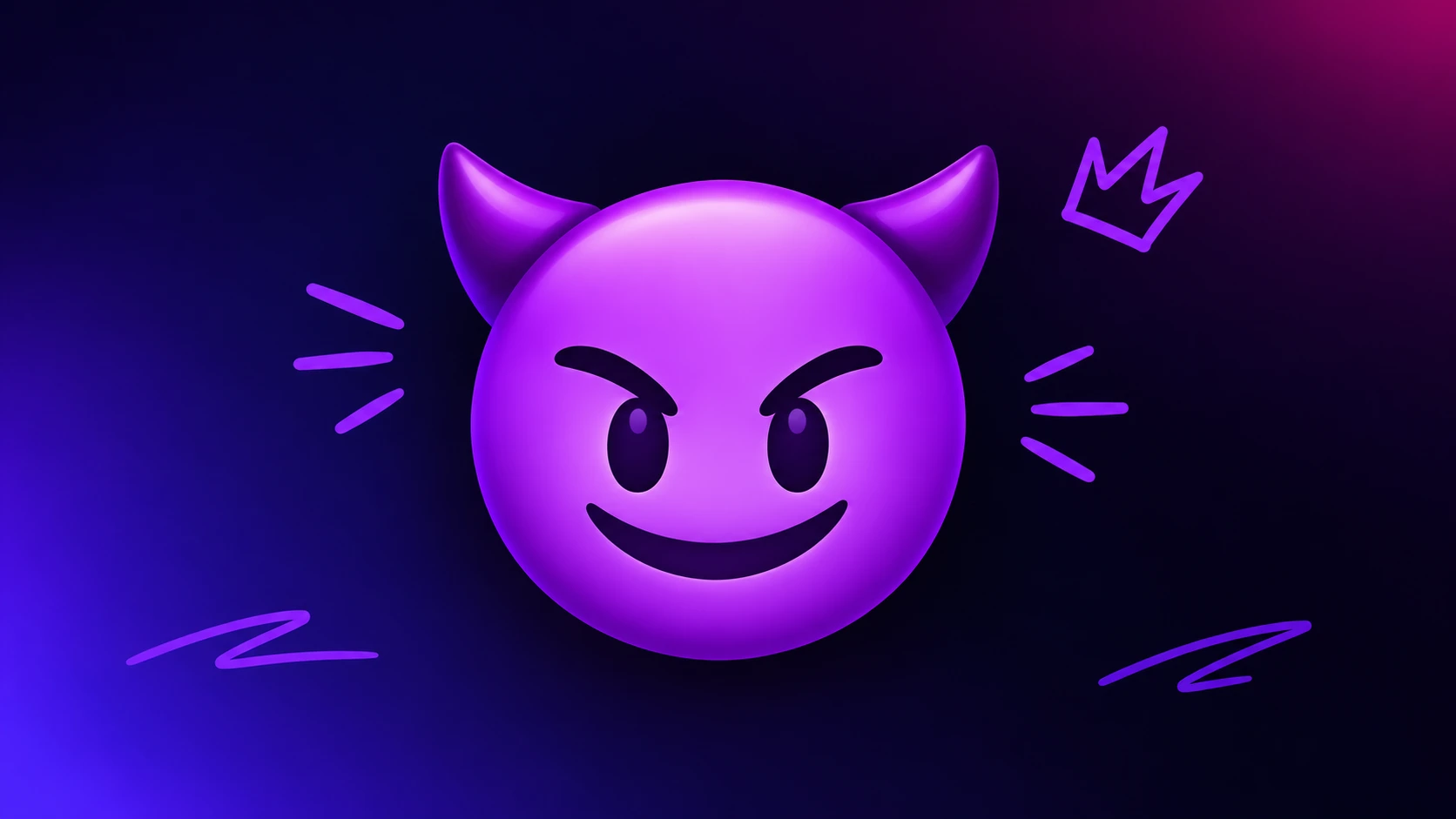
The savage emoji is commonly represented by 😈, although “savage emoji” is not an official Unicode name. People often use 😈 to show a playful evil streak, confidence, mischief, teasing, or an intentionally bold attitude. In some conversations, other emojis such as 😏, 🔥, 💀, or 😎 can also create a savage tone.
The exact meaning depends heavily on the message around it, your relationship with the other person, and the platform where you use it. A 😈 from a close friend may feel funny, while the same emoji in a romantic conversation can sound flirtier. Let’s break down how it actually works.
The savage emoji 😈 is all about adding attitude, mischief, and a playful edge to your words.
What Does Savage Emoji Mean? 😈
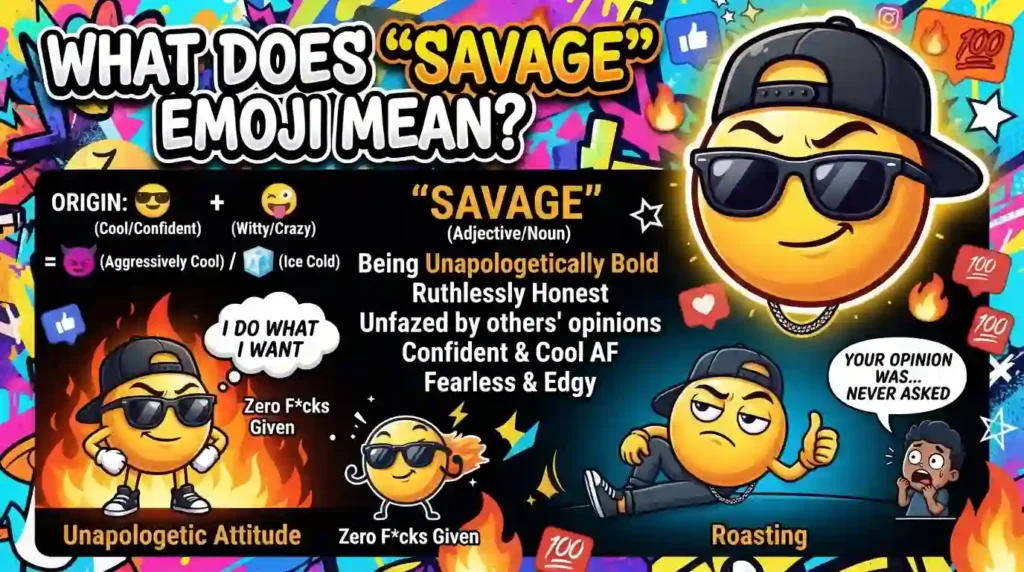
The savage emoji 😈 usually adds a mischievous, cheeky, confident, or deliberately bold tone to a message. There is no official Unicode emoji called “savage,” so people use the term to describe an emoji that captures a savage attitude rather than a fixed character name. 😈 is one of the most recognizable choices because its devilish expression naturally suggests trouble, teasing, or playful confidence. In texting, it can turn a simple sentence into something more daring, such as “I told you so 😈.” It may also appear after a clever comeback when the sender knows they have made a strong point. On social media, 😈 can signal confidence, humor, playful rebellion, or a caption with attitude. A creator might use it to make a bold statement feel less serious. Depending on the conversation, 😏 can make the same attitude feel more knowing or suggestive, while 🔥 can emphasize that something is impressive or powerful. 💀 may communicate that a savage comment was extremely funny. 😎 often adds cool confidence rather than mischievousness. The relationship between sender and receiver matters too. Between friends, these emojis can feel harmless and playful.
Savage Emoji Meaning Table
| Emoji | Core meaning | Possible misread | Best used when |
|---|---|---|---|
| 😈 | Mischief, boldness, playful attitude | Mean or overly suggestive | Teasing and confident replies |
| 😏 | Smirk, knowing confidence | Flirty or suggestive | Cheeky messages |
| 🔥 | Intense, impressive, excellent | Overly enthusiastic | Compliments and bold posts |
| 💀 | Extremely funny, shocked | Morbid or confusing | Savage jokes and reactions |
| 😎 | Cool confidence | Self-important | Confident statements |
| 👀 | Interest, curiosity, watching | Nosy or suggestive | Teasing and reactions |
| 🤭 | Playful embarrassment, holding back | Secretive | Funny or cheeky moments |
| 🙄 | Annoyance, sarcasm | Rudeness | Obvious sarcasm |
| 😂 | Strong laughter | Not serious | Funny savage comments |
| 🫢 | Shock or surprise | Dramatic reaction | Unexpected comments |
10 Savage Emoji Cards
😈 Smiling Face with Horns
Meaning: Mischief, playful confidence, or a deliberately bold attitude.
Example 1: I warned you I was competitive 😈
Example 2: You really thought I wouldn’t notice? 😈
😏 Smirking Face
Meaning: A knowing, cheeky, or slightly suggestive expression.
Example 1: Well, that worked exactly as planned 😏
Example 2: You already know what I’m thinking 😏
🔥 Fire
Meaning: Something impressive, intense, exciting, or confidently delivered.
Example 1: That comeback was 🔥
Example 2: Your new profile picture is 🔥
💀 Skull
Meaning: Extreme laughter, disbelief, or being completely finished by a funny comment.
Example 1: That reply ended the whole argument 💀
Example 2: I was not ready for that comeback 💀
😎 Sunglasses
Meaning: Coolness, confidence, or relaxed self-assurance.
Example 1: Problem solved 😎
Example 2: Walked in like I owned the place 😎
👀 Eyes
Meaning: Curiosity, attention, or watching something interesting unfold.
Example 1: Now this is getting interesting 👀
Example 2: I’m waiting for your explanation 👀
🤭 Face with Hand Over Mouth
Meaning: Playful embarrassment, suppressed laughter, or a cheeky reaction.
Example 1: I probably shouldn’t have said that 🤭
Example 2: Okay, that was a little savage 🤭
🙄 Face with Rolling Eyes
Meaning: Sarcasm, disbelief, irritation, or playful annoyance.
Example 1: You forgot again, seriously? 🙄
Example 2: Yes, because that makes perfect sense 🙄
😂 Face with Tears of Joy
Meaning: Strong amusement and laughter at something funny.
Example 1: That comeback has me crying 😂
Example 2: I cannot believe you actually said that 😂
🫢 Face with Open Eyes and Hand Over Mouth
Meaning: Surprise, shock, or a dramatic reaction to something unexpected.
Example 1: You actually sent that? 🫢
Example 2: That escalated quickly 🫢
How to Use Savage Emoji the Right Way
Using a savage emoji is less about following a strict rule and more about matching the emoji to your intended attitude. The same 😈 can be funny in one conversation and too intense in another.
WhatsApp 💬
On WhatsApp, 😈 works especially well in personal chats with people who understand your sense of humor. You can add it after a playful challenge, teasing comment, confident statement, or clever comeback.
For example:
“Go ahead, try to beat my score 😈”
With friends, it can create a competitive or mischievous mood. In family chats, use it more carefully because not everyone interprets the emoji in the same way. In romantic conversations, 😈 may sound flirtier, particularly when paired with an already playful message.
It can also work in a WhatsApp status when you want to communicate confidence or a cheeky mood without writing much.
Instagram 📸
Instagram emojis often carry a visual, caption-focused role. 😈 can work nicely with captions that have attitude, confidence, humor, or playful rebellion.
For example:
“Not here to explain myself 😈”
In comments, it can react to a friend’s bold post or a clever comeback. A combination such as 🔥😈 may make a caption feel more intense, but one or two well-chosen emojis usually look cleaner than a long string.
TikTok
TikTok conversations are especially comfortable with humor, irony, teasing, and exaggerated reactions. 😈 can fit captions, comments, and reaction-style replies where the tone is intentionally playful.
For example:
“Me pretending I didn’t know exactly what I was doing 😈”
Because TikTok trends and community language change quickly, the surrounding caption is important. Let the words establish the joke, then use the emoji to reinforce the attitude.
On Facebook, 😈 can appear in posts, comments, and Messenger conversations. It works best when the audience already understands the playful tone.
For example:
“Finally proved my point 😈”
A savage emoji can make a confident statement feel humorous rather than overly serious, but context still matters.
Do’s
- Use 😈 when the message is intentionally playful or cheeky.
- Consider your relationship with the receiver.
- Let the surrounding words establish the tone.
- Match the emoji to the mood of the conversation.
- Check how emojis may appear across different devices.
Don’ts
- Don’t use 😈 randomly in serious conversations.
- Don’t assume everyone interprets it identically.
- Don’t overload a message with several attitude emojis.
- Don’t combine emojis without knowing what tone they create.
- Don’t assume 😈 automatically means romance or flirting.
Why Does Savage Emoji Look Different on iPhone and Android?
If you send 😈 from an iPhone and your friend views it on an Android phone, you may notice that the emoji does not look exactly the same. That’s normal.
Emojis are based on the Unicode standard, which gives devices a shared character system so that the same underlying emoji can be recognized across platforms. However, Unicode does not force every company to draw the emoji in exactly the same way.
Apple, Google, Samsung, Microsoft, and other technology companies can create their own emoji artwork. As a result, 😈 may have slightly different facial details, colors, proportions, shading, or overall visual styling depending on the device and operating system.
The important point is that the underlying character remains the same. If you send 😈, your recipient can generally recognize the same Unicode emoji even though its artwork may look different.
This can sometimes affect tone. One platform’s version might appear slightly more playful, while another could look more dramatic simply because of its design. That does not mean one version is the “correct” savage emoji.
The same principle applies to other emoji symbols. A smile, hand gesture, or facial expression can have small visual differences between platforms without changing the basic character being communicated.
So, if someone says your savage emoji looks different on their phone, nothing is necessarily wrong. You’re most likely seeing different platform artwork for the same Unicode character.
Best Savage Emoji Combos: Copy & Paste
Romantic ❤️
😈🔥 — Use this for a confident, playful romantic message.
😏😈 — Use this when a romantic conversation becomes cheeky.
🔥😈 — Use this for a bold compliment with playful attitude.
Cute 🥰
🤭😈 — Use this when teasing someone in a cute way.
😂😈 — Use this after a funny little comeback.
🫢😈 — Use this for a surprised but playful reaction.
Flirty 😉
😏😈 — Use this for a knowingly cheeky message.
👀😈 — Use this when teasing someone and waiting for their reaction.
😈🔥 — Use this when you want your flirtatious message to feel more confident.
Missing Someone 💭
👀😈 — Use this playfully when checking whether someone misses you too.
🤭😈 — Use this for a teasing “I know you miss me” type of message.
😂😈 — Use this when turning a missing-you message into lighthearted teasing.
Good Night 🌙
😈😏 — Use this for a cheeky good-night message between close people.
🤭😈 — Use this for a playful bedtime tease.
😈😂 — Use this when saying good night after a funny conversation.
Trending Savage Emoji in 2026
In 2026, the idea of a “savage emoji” continues to fit naturally into casual online communication because people frequently use emojis to add personality to short messages. There is no official ranking that makes one emoji the universal savage choice, but several characters commonly appear when users want humor, confidence, teasing, or attitude.
😈 remains especially useful when the message intentionally has a mischievous edge. 😏 can make a comment feel more knowing or cheeky, while 💀 is often useful for reacting to an unexpectedly funny or brutal comeback. 🔥 can emphasize that something feels impressive, intense, or excellent.
These emoji meanings can shift quickly depending on the community and conversation. A creator may use 😈 in an Instagram caption to create attitude, while a TikTok commenter may use 💀 after a particularly funny response. On WhatsApp, the same emojis can become more personal because the relationship between the people chatting is clearer.
| Emoji | Why trending | Who uses it | Platform |
|---|---|---|---|
| 😈 | Adds playful attitude | Friends, creators, couples | WhatsApp, Instagram, TikTok |
| 😏 | Creates a cheeky tone | Friends and couples | Messaging, comments |
| 💀 | Reacts to extreme humor | Casual social users | TikTok, Instagram, messaging |
| 🔥 | Highlights something impressive | Creators and everyday users | Instagram, TikTok, Facebook |
The broader pattern is simple: emoji usage keeps evolving as online communities develop new ways to express humor, irony, confidence, and emotion in very little space.
Savage Emoji Meaning in Different Contexts
The meaning of 😈 changes depending on who sends it and what surrounds it.
Romantic Conversations
In romantic chats, 😈 can add a playful or flirtatious edge. For example, “You know exactly how to get my attention 😈” feels more suggestive than the same sentence without the emoji.
It does not automatically mean sexual or romantic interest. The existing relationship and conversation should guide the interpretation.
Friendship
Among friends, 😈 often signals harmless mischief, teasing, or confidence.
“I’m definitely taking the last slice 😈”
Here, the emoji makes the statement sound playful rather than genuinely aggressive.
Family
Family conversations require more awareness. A sibling may understand 😈 as teasing, while another relative might simply see it as a devilish expression. If your family does not regularly use emoji slang, keep the surrounding message clear.
Professional and Casual Communication
In a casual work-related chat, 😈 can occasionally be understood as humor, but it may not be appropriate in every workplace. In formal communication, a straightforward sentence is usually safer.
Texting
In texting, the emoji often works as a tone marker. It tells the reader that a bold or teasing statement is not necessarily meant literally.
Social Media Comments
In comments, 😈 can react to a confident outfit, funny comeback, bold statement, or playful post. Since you may not know the person well, the surrounding content becomes particularly important.
Captions
For captions, 😈 can create an attitude-driven mood without requiring a long explanation.
“Playing nice was getting boring 😈”
The words provide the meaning, while the emoji adds the mischievous finishing touch.
How to Copy and Paste Savage Emoji
Copying the savage emoji is simple.
Copy this: 😈
Select the emoji above, copy it, and paste it wherever you want to use it. You can paste 😈 into WhatsApp chats, Instagram captions, TikTok comments, Facebook posts, Messenger, text messages, or other apps that support Unicode emojis.
You can also save favorite emoji combinations for quick use. For example:
😈🔥
If the emoji appears differently after pasting, that usually means the app or device is using its own visual design. The underlying Unicode character can still be the same.
FAQs:
1. What is the most popular savage emoji?
There is no official “savage emoji” in Unicode, but 😈 is one of the most common choices for expressing a mischievous, bold, cheeky, or attitude-filled tone.
2. What does 😈 mean when someone sends it?
It can mean playful mischief, confidence, teasing, or flirtation depending on the conversation. Its meaning should be judged from context rather than gender stereotypes.
3. Why do emojis look different on iPhone vs Android?
Apple, Google, Samsung, Microsoft, and other platforms create their own artwork for Unicode emojis. The same emoji character can therefore have different visual designs on different devices.
4. Are savage emojis used differently in other countries?
Yes, interpretation can vary between cultures, communities, and online groups. The surrounding words, relationship, and local communication habits can all influence how an emoji is understood.
Conclusion
The savage emoji 😈 is a useful way to add mischief, confidence, teasing, or playful attitude to digital conversations. Its meaning is not fixed, so always consider the message, relationship, and setting. Use it naturally, and let the words around it make your intention clear. 😈

Nasrullah — Emoji Strategist & Content Writer
Nasrullah is a passionate emoji enthusiast and content writer who loves exploring the meanings, uses, and cultural context behind emojis. He creates simple, helpful, and easy-to-understand guides that help readers choose the right emoji for WhatsApp, Instagram, Facebook, texting, and everyday conversations.
With a focus on emoji meanings, combinations, social media usage, and modern digital communication, Nasrullah aims to make every emoji easier to understand and use with confidence. His content combines practical examples with clear explanations so readers can quickly find the meaning and usage they are looking for.
When he’s not researching emojis, Nasrullah enjoys exploring digital trends, writing useful online content, and learning about how people communicate in the digital world. 😊