You send a quick message to a friend, add a smiling face, and suddenly your words feel warmer. Or perhaps someone replies with a slightly different expression, leaving you wondering whether they are happy, upset, shy, or being sarcastic. That is where emotion emoji faces come in.
These familiar little expressions help people communicate feelings without writing long explanations. From a cheerful 🙂 to a laughing 😂 or a tearful 😢, each face can add emotional meaning to a text, comment, or caption. However, the same expression does not always mean the same thing. Your relationship with the sender, the words around the emoji, and the conversation’s tone can all influence its interpretation.
In this guide, you will discover the meanings of emotion emoji faces, how people use them on WhatsApp, Instagram, TikTok, and Facebook, and which combinations work well in everyday conversations. You will also learn how to copy and paste these expressive symbols and understand why they can look different across devices.
What Do Emotion Emoji Faces Mean?
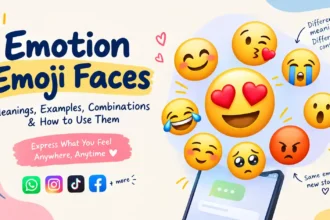
Emotion emoji faces are small digital expressions that help communicate happiness, affection, amusement, sadness, anger, and other feelings. They can support the words you write, soften a short reply, or make a social media caption feel more personal. Their meaning depends on the expression and the situation in which you use it.

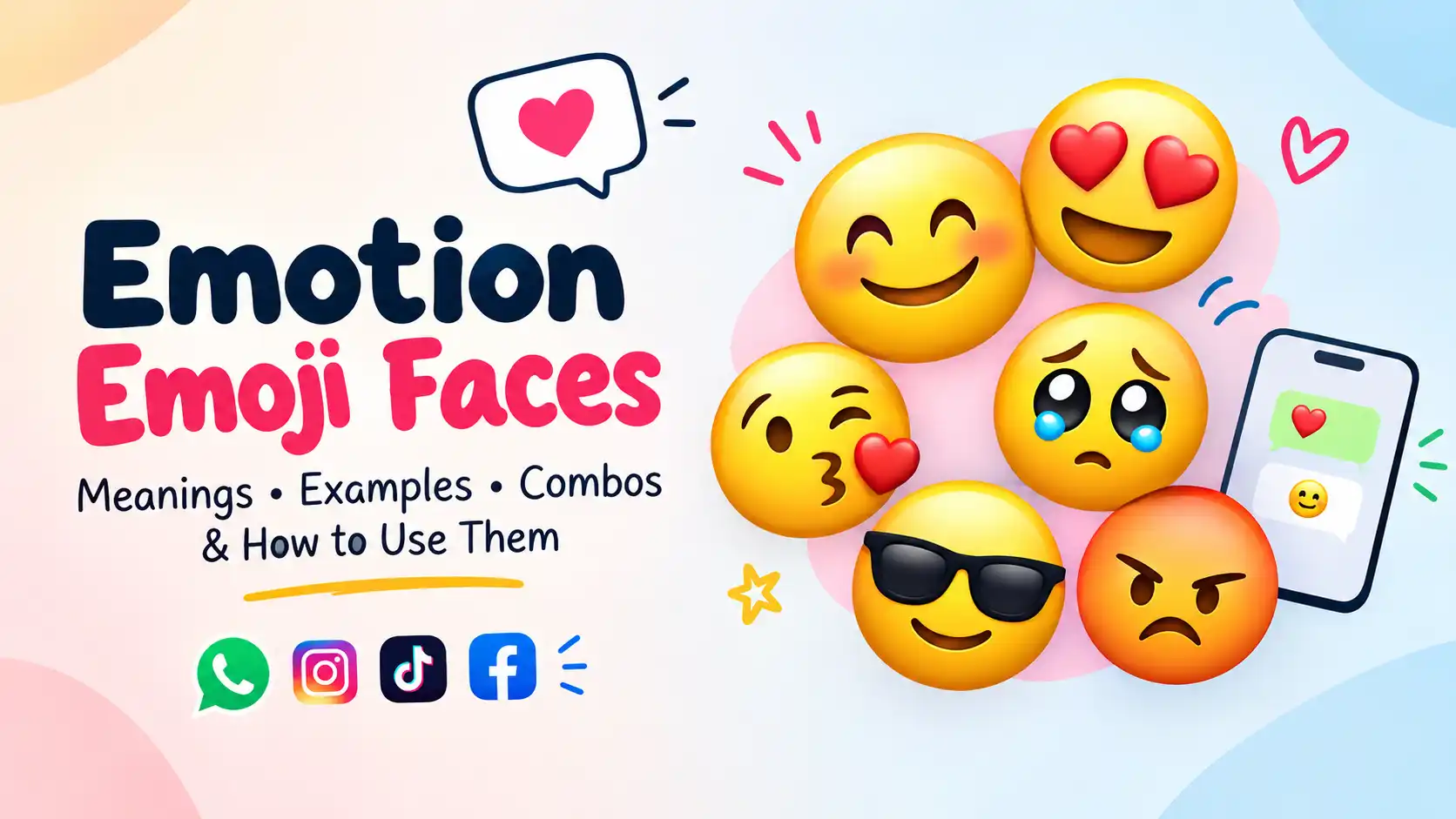
Here are six common faces and how people often interpret them:
- 😀 Grinning Face: Often expresses happiness, friendliness, excitement, or a positive reaction. For example, “I finally finished my exams 😀” sounds cheerful.
- 😊 Smiling Face With Smiling Eyes: Commonly communicates warmth, gratitude, appreciation, or gentle happiness. It can make a thank-you message feel sincere.
- 🙂 Slightly Smiling Face: Can show polite friendliness or quiet satisfaction. Depending on the conversation, it may also feel reserved, awkward, or sarcastic.
- 😂 Face With Tears of Joy: Usually represents strong amusement, laughter, or something unexpectedly funny. People often use it when reacting to jokes and entertaining videos.
- 🥰 Smiling Face With Hearts: Often conveys affection, fondness, appreciation, or feeling touched by someone’s words. It may feel romantic between partners and friendly between close friends.
- 😢 Crying Face: Commonly expresses sadness, disappointment, sympathy, or emotional hurt. It can also be used playfully when something minor goes wrong.
These interpretations are common, not universal. Even a cheerful expression can feel different when it appears beside disappointing news or a serious question. Likewise, a crying face might express genuine sadness or an exaggerated reaction to a funny situation.
The relationship between sender and receiver matters, too. A heart-filled smile from a partner may feel intimate, while the same face from a friend may simply express appreciation. On social media, users sometimes exaggerate emotions for humor, storytelling, or dramatic reactions.
The words surrounding an emoji are just as important as the face itself. “Great job 😊” usually sounds encouraging, while “Sure 🙂” after an argument could feel less friendly. Before interpreting an emoji meaning in texting, consider the complete message rather than judging the symbol alone.
Emotion Emoji Faces Meaning Table
| Emoji | Core meaning | Possible misread | Best used when |
|---|---|---|---|
| 😀 | Happiness and excitement | Forced cheerfulness | Sharing good news |
| 😃 | Enthusiasm and joy | Excessive excitement | Celebrating something |
| 😊 | Warmth and appreciation | Shyness or flirtation | Saying thanks |
| 🙂 | Politeness and mild happiness | Sarcasm or annoyance | A calm, friendly reply |
| 😂 | Amusement and laughter | Laughing at someone | Reacting to a joke |
| 🥰 | Affection and fondness | Romantic interest | Showing appreciation |
| 😉 | Playfulness and teasing | Flirting or sarcasm | Making a lighthearted remark |
| 😢 | Sadness and sympathy | Exaggerated disappointment | Expressing concern |
| 😭 | Intense sadness or dramatic emotion | Laughing dramatically | Reacting emotionally |
| 😡 | Anger and frustration | Playful annoyance | Showing clear displeasure |
10 Emotion Emoji Cards
😀
Grinning Face
Meaning: Happiness, excitement, and friendly enthusiasm.
Example 1: I finally got the job 😀
Example 2: We are meeting this weekend 😀
😃
Grinning Face With Big Eyes
Meaning: Cheerfulness, excitement, and energetic happiness.
Example 1: The concert was amazing 😃
Example 2: Guess what? I passed 😃
😊
Smiling Face With Smiling Eyes
Meaning: Kindness, gratitude, warmth, and gentle happiness.
Example 1: Thanks for checking on me 😊
Example 2: That was really sweet of you 😊
🙂
Slightly Smiling Face
Meaning: Mild happiness, politeness, or a restrained reaction.
Example 1: No problem, I understand 🙂
Example 2: Well, that was unexpected 🙂
😂
Face With Tears of Joy
Meaning: Laughter, amusement, and a strong humorous reaction.
Example 1: That video made my day 😂
Example 2: You really said that out loud 😂
🥰
Smiling Face With Hearts
Meaning: Affection, tenderness, appreciation, and feeling loved.
Example 1: You always know how to cheer me up 🥰
Example 2: This gift means so much to me 🥰
😉
Winking Face
Meaning: Playfulness, teasing, a joke, or a lighthearted hint.
Example 1: I might have a surprise for you 😉
Example 2: You know what I mean 😉
😢
Crying Face
Meaning: Sadness, disappointment, sympathy, or emotional pain.
Example 1: I wish you could have come 😢
Example 2: I feel bad about what happened 😢
😭
Loudly Crying Face
Meaning: Intense sadness, overwhelming feelings, or exaggerated drama.
Example 1: I am going to miss everyone so much 😭
Example 2: That ending broke my heart 😭
😡
Pouting Face
Meaning: Anger, frustration, or strong displeasure.
Example 1: You deleted my work without asking 😡
Example 2: The game crashed right before I won 😡
How to Use Emotion Emoji Faces the Right Way
Choosing an emoji is about matching the expression to the message. A cheerful face can make good news more exciting, while a softer smile can make a short reply feel considerate. Here is how to use these faces across popular platforms.
WhatsApp 💬
WhatsApp conversations range from casual jokes to private, emotional discussions. Emotion emoji faces can help your messages sound warmer and clarify your mood.
- Personal chats: Use 😀 or 😃 when sharing exciting news with someone close.
- Family conversations: Add 😊 to a thank-you message or a kind reply.
- Friendships: Use 😂 when a friend shares a funny story or meme.
- Emotional messages: Choose 😢 or 😭 when expressing sadness or offering sympathy.
- Status updates: Use 🥰 for a sweet moment or 😉 for a playful caption.
For example, “Thanks for always being there for me 😊” feels more personal than a plain thank-you. However, if you are discussing a serious disagreement, a laughing or winking face could make your message seem dismissive.
Instagram 📸
Instagram emojis often add personality to captions, comments, bios, and Reels. A suitable face can help communicate the mood of a photo without adding a long explanation.
For a happy announcement, try “Finally made it happen 😃.” For a photo with someone special, “A day I will remember 🥰” communicates affection. Meanwhile, 😂 works naturally beneath a funny Reel, and 😉 can add a teasing touch to a playful caption.
In comments, keep the relationship and content in mind. A winking face on a friend’s joke might be harmless, but on a stranger’s post, it could be interpreted as flirting. Emojis can support engagement, but they do not guarantee more likes or comments.
TikTok 🎵
TikTok conversations frequently involve humor, reactions, storytelling, and playful exaggeration. Here, the intended emotion may be more dramatic than it would be in a private message.
For example, 😭 might appear beneath a sad story, but it can also express laughter, embarrassment, or disbelief when the video is funny. 😂 is useful for a genuinely amusing moment, while 🙂 can create a deliberately awkward or dry reaction.
You might comment, “Not me doing the exact same thing 😭” on a relatable video. The words and video establish whether the face represents sadness or comic exaggeration.
On Facebook, emotion emoji faces work in posts, comments, and Messenger conversations. Use 😊 to acknowledge someone’s thoughtful message, 😀 to celebrate good news, or 😢 to express sympathy beneath a difficult update.
For example, “Congratulations on your new home! 😀” is cheerful and direct. In a sensitive conversation, a short written response alongside 😢 may communicate more care than the emoji alone.
Practical tip: Before sending a face, read your message once without it and once with it. If the expression changes your intended tone in an unhelpful way, choose another face or explain your feelings in words.
Dos and Don’ts
Do:
- Match the face to the emotion you want to express.
- Consider how well you know the recipient.
- Read the surrounding words before interpreting someone’s emoji.
- Use 😊 for warmth when it suits the conversation.
- Check how the symbol appears on your device.
Don’t:
- Assume 🙂 always signals happiness.
- Use 😂 in a way that makes a serious concern seem unimportant.
- Overload a professional message with expressive faces.
- Treat 😉 as automatic proof of romantic interest.
- Assume everyone interprets 😭 in the same way.
Why Do Emotion Emoji Faces Look Different on iPhone and Android?
Have you ever sent an emoji to a friend and noticed that it looked slightly different on their phone? That is normal. Emoji characters follow the Unicode standard, which helps devices recognize and exchange the same underlying symbols. However, the companies that display those symbols can create their own artwork.
Apple designs the emoji artwork used in its software, while Google, Samsung, Microsoft, and other providers may use different visual designs. As a result, a face can have slightly different details depending on the device, operating system, app, or font.
Here are some differences you might notice:
- Shape: The eyes, mouth, eyebrows, and outline may vary.
- Color: A face may have subtle differences in shading or color.
- Expression: A small change in the mouth or eyes can make a face appear warmer, more serious, or more exaggerated.
- Size and style: Some designs look more rounded, glossy, flat, or detailed than others.
- Display support: Older software may not support newer emoji characters, so a symbol might appear as a box or another placeholder.
For example, 😊 can look a little different on an iPhone and a Samsung phone while still representing the same Unicode character. That does not mean either design is automatically the correct one.
There is another important distinction: the emoji’s underlying character and a platform’s artistic interpretation are not the same thing. If a face appears slightly different on your friend’s screen, the difference may be visual rather than intentional.
When interpreting a message, do not assume that a tiny design difference reveals the sender’s feelings. Look at the words, conversation history, and relationship first. If an emoji is unfamiliar or missing from your screen, updating your device or app may help, although support depends on the software.
Best Emotion Emoji Faces Combos: Copy and Paste:
Emoji combinations let you express a more specific mood than a single face. The best pairings feel natural and fit the message you want to send. These 15 combinations use only the faces introduced in this guide.
Romantic ❤️
- 👉 🥰😊: Send this to someone who makes you feel appreciated.
- 👉 😉🥰: Use this for playful affection with someone you know well.
- 👉 😊🥰: Add this to a sweet message for your partner.
Cute 🥰
- 👉 😊🥰: Use this when someone does something thoughtful.
- 👉 😀😊: Share your excitement about a lovely moment.
- 👉 😃🥰: Celebrate a happy surprise from someone special.
Flirty 😉
- 👉 😉😊: Add a playful touch to a friendly compliment.
- 👉 😉😃: Use this when joking around with someone.
- 👉 😉🥰: Send this when the conversation already feels affectionate.
Missing Someone
- 👉 😢😊: Express sadness while keeping your message gentle.
- 👉 😭🥰: Share how emotional you feel about missing someone close.
- 👉 😢🥰: Use this when you miss someone and still feel affection for them.
Good Night
- 👉 😊🥰: Send a warm, affectionate sign-off before bed.
- 👉 🙂😊: Use this for a calm and friendly good-night message.
- 👉 😉😊: Add a playful ending to a lighthearted conversation.
These combinations are flexible suggestions rather than fixed codes. For romantic or flirty messages, consider whether the other person is comfortable with that tone. A playful pairing can be charming in an established relationship but confusing when the relationship is still new.
Trending Emotion Emoji Faces in 2026
Emotion emoji faces remain useful in digital conversations because they help people convey reactions quickly. In 2026, the faces in this guide are familiar choices for casual messaging, comments, captions, and short-form video discussions. However, there is no single universal list that establishes these ten faces as the official trend leaders across every platform.
Their popularity in everyday communication comes partly from their versatility. People can use the same face sincerely, playfully, or dramatically, depending on the situation.
Here are four expressions and the ways people commonly use them online.
😂 Face With Tears of Joy: This face is often used to react to jokes, relatable situations, funny clips, and amusing comments. It can communicate laughter without requiring a full written response.
😊 Smiling Face With Smiling Eyes: This expression works well for appreciation, kind replies, friendly messages, and positive interactions. It can make a brief comment feel warmer.
😭 Loudly Crying Face: This face can express genuine sadness, but it is also used for exaggerated emotional reactions. In online humor, someone might use it to describe an embarrassing moment or an unexpectedly funny video.
🥰 Smiling Face With Hearts: This face suits affectionate messages, appreciation posts, sweet photos, and comments about people or moments someone finds special.
Where These Faces Commonly Appear
| Emoji | Why trending | Who uses it | Platform |
|---|---|---|---|
| 😂 | Quick humorous reactions | Friends and comedy fans | TikTok, Instagram |
| 😊 | Warm, positive replies | Friends and families | WhatsApp, Facebook |
| 😭 | Dramatic or emotional reactions | Meme and video audiences | TikTok, Instagram |
| 🥰 | Affectionate messages and posts | Couples, friends, creators | Instagram, WhatsApp |
These examples describe common uses, not measured rankings or verified growth statistics. Individual communities develop their own habits, and a face that feels current in one group may be less common in another.
Creators may use emotion emoji faces in captions and comment replies, while everyday users often include them in private messages. Their meaning can shift with trends, inside jokes, and the content surrounding them.
Overall, emoji usage continues to evolve as online communities develop new ways to express familiar feelings.
Emotion Emoji Faces Meaning in Different Contexts
The meaning of an emotion emoji face often changes with the people involved and the conversation taking place. A smile between close friends may communicate genuine happiness, while the same expression in a tense exchange may seem uncomfortable or sarcastic.
Here is how context can influence interpretation.
Romantic Conversations
In romantic chats, 😊 can make a compliment feel gentle, while 🥰 may express affection or appreciation. The winking face 😉 can add a playful hint when both people understand the tone.
For example, “I had a lovely time with you 🥰” sounds affectionate. However, an emoji alone cannot confirm someone’s romantic feelings. Consider the full conversation rather than drawing conclusions from one symbol.
Friendship
Friends often use 😂 to react to jokes, 😃 to celebrate achievements, and 😉 to tease one another. Close friends may also use exaggerated expressions to make ordinary situations funnier.
For example, “You actually remembered my birthday 😂” could communicate amused surprise rather than criticism.
Family
In family conversations, 😊 can make a thank-you feel warm, while 🥰 may express appreciation for a thoughtful gesture. When a relative shares disappointing news, 😢 can acknowledge their feelings.
A written message is still valuable, especially when the situation calls for sympathy or support.
Professional and Casual Communication
In casual workplace chats, 😀 or 😊 may suit congratulations and friendly exchanges. However, the tone of the workplace matters. In a formal email about a serious issue, a clear sentence may be more appropriate than an expressive face.
For example, “Thank you for sending the updated file 😊” may work in a friendly team chat. For an official complaint, explain the concern directly instead of relying on emojis.
Texting and Social Media Comments
Text messages lack many of the cues people use in face-to-face conversations, such as voice and facial expression. Emojis can help communicate tone, but they can also create ambiguity.
A reply like “Okay 🙂” might be completely sincere. After a disagreement, however, the receiver may wonder whether it is sarcastic. On Instagram or TikTok, 😭 might signal sadness, laughter, embarrassment, or dramatic disbelief.
Captions
Captions often use faces to establish an emotional mood quickly. A happy announcement might include 😀, a heartfelt appreciation post could use 🥰, and a humorous story might end with 😂.
The most reliable approach is simple: match the expression to your intended message, consider your audience, and use words whenever an emoji might leave room for misunderstanding.
How to Copy and Paste Emotion Emoji Faces?
Copying emotion emoji faces takes only a few seconds. You do not need a special keyboard or an emoji generator to use the common symbols in this guide.
Copy these emotion emoji faces:
Copy and paste
😀 😃 😊 🙂 😂 🥰 😉 😢 😭 😡
Copy all facesCopy 😊
Follow these steps:
- Select the emoji or group of faces you want to use.
- Copy the selection using your device’s copy command.
- Open WhatsApp, Instagram, TikTok, Facebook, or your preferred messaging app.
- Paste the emoji into a message, caption, comment, or status update.
- Add words if necessary to make your intended meaning clear.
On a phone, you can also open the built-in emoji keyboard and select a face directly. On a computer, the available emoji picker depends on your operating system.
If a symbol appears differently after pasting, remember that the receiving device or app may display its own version of the emoji artwork. The character can remain the same even when its appearance changes.
Frequently Asked Questions:
1. What is the most popular emotion emoji face?
There is no single face that is the most popular in every conversation or on every platform. 😂, 😊, 😀, and 🥰 are familiar choices for laughter, friendliness, happiness, and affection, respectively.
2. What does an emotion emoji face mean when someone sends it?
Its meaning depends on the expression, message, relationship, and conversation. For example, 😊 may express appreciation, while 😉 can suggest playfulness. Consider the surrounding words instead of assuming the sender has a particular intention.
3. Why do emotion emoji faces look different on iPhone and Android?
Unicode provides a standard for emoji characters, but Apple, Google, Samsung, Microsoft, and other providers create their own visual designs. Therefore, the same face may have different colors, shapes, or details on different devices.
4. Are emotion emoji faces used differently in other countries?
Yes, interpretation can vary with language, culture, age group, and online community. However, differences are not identical for everyone within a country. When communicating across cultures, consider the context and ask for clarification if an emoji seems unclear.
Conclusion
Emotion emoji faces make everyday digital conversations more expressive, from cheerful updates to heartfelt messages and playful reactions. 😊
Choose a face that matches your intended tone, and remember that the surrounding words matter just as much as the symbol.
When you are unsure how someone will interpret an emoji, a little extra clarity can make your message feel more natural and thoughtful.

Nasrullah — Emoji Strategist & Content Writer
Nasrullah is a passionate emoji enthusiast and content writer who loves exploring the meanings, uses, and cultural context behind emojis. He creates simple, helpful, and easy-to-understand guides that help readers choose the right emoji for WhatsApp, Instagram, Facebook, texting, and everyday conversations.
With a focus on emoji meanings, combinations, social media usage, and modern digital communication, Nasrullah aims to make every emoji easier to understand and use with confidence. His content combines practical examples with clear explanations so readers can quickly find the meaning and usage they are looking for.
When he’s not researching emojis, Nasrullah enjoys exploring digital trends, writing useful online content, and learning about how people communicate in the digital world. 😊