Sometimes the best response is the one you almost sent, but wisely held back. 😬
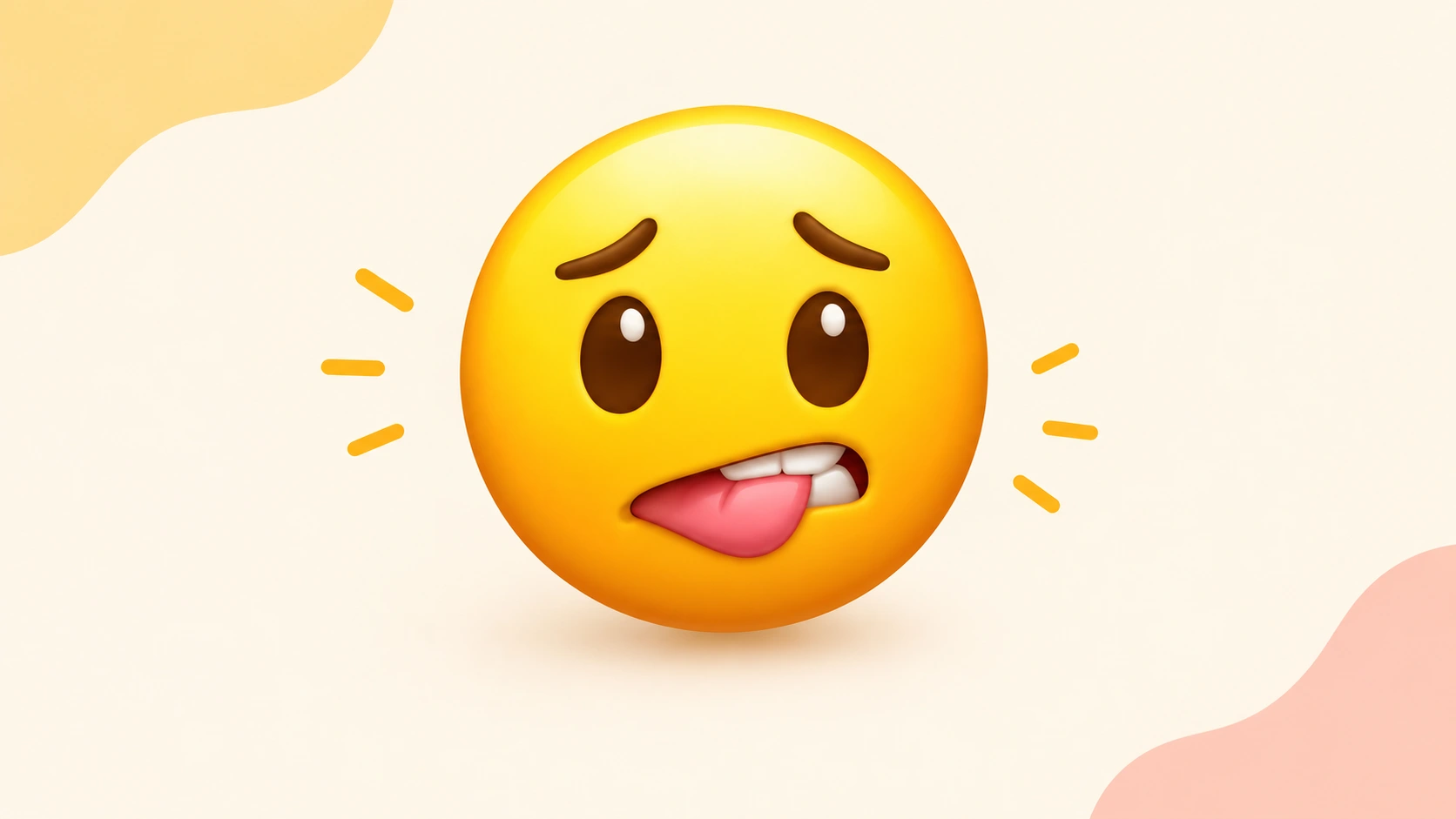
When someone says something annoying, funny, awkward, or tempting to comment on, you might literally want to “bite your tongue.” Online, the biting tongue emoji can express that same feeling: holding back words, stopping yourself from reacting, or trying not to say too much. 😬🤐
One important detail is that “biting tongue emoji” is not the official name of one Unicode emoji. It is a search phrase people use for several related expressions, especially 😬, 👅, 🤐, 🤫, and 🫦. Unicode officially identifies 🫦 as “biting lip,” while 👅 is the tongue emoji.
That means context matters. A message such as “I have something to say 😬” can feel very different from “I’m trying not to laugh 🤭.” Your relationship with the sender, the words around the emoji, and the platform can all shape the tone.
The biting tongue emoji idea is perfect for those moments when your thoughts are louder than your reply. 😬🤐
What Does the Biting Tongue Emoji Mean?
The biting tongue emoji usually represents holding something back. There is no single official Unicode character named “biting tongue,” so people often build the idea with emojis such as 😬, 👅, 🤐, or 🤫. In everyday texting, the expression can mean, “I should probably not say this,” “I am keeping my mouth shut,” or “I am trying not to react.” 😬🤐

The feeling can be playful, nervous, awkward, annoyed, or even slightly mischievous. For example, someone might text, “Your boss is standing right there, so I’m biting my tongue 😬.” Here, the emoji suggests restraint. In another chat, “I know exactly what happened, but I’m saying nothing 🤐” makes the same idea more deliberate and secretive.
Related emojis can change the tone. 👅 can make the expression more literal or playful, while 🤫 emphasizes silence. 🤭 can suggest that someone is hiding a laugh or reaction. 🫦 can suggest nervousness, flirting, or holding back an emotional response. 😛, 😝, and 😜 usually make the message more silly or teasing.
The sender and receiver also matter. A close friend may understand 😬 as joking frustration, while a coworker could read it as discomfort. In a romantic conversation, 🫦 might feel flirtier than it would in an ordinary group chat.
On social media, the same idea often appears in comments when someone has an opinion but chooses not to share it. It can also be used after a controversial statement, an awkward moment, or a joke that someone is trying not to laugh at. The surrounding words provide the real clue.
Meaning Table:
| Emoji | Core meaning | Possible misread | Best used when |
|---|---|---|---|
| 😬 | Awkward restraint or tension | Fear or discomfort | You are holding back a reaction |
| 👅 | Tongue, silliness, playful expression | Random or childish | You want a literal tongue reference |
| 🤐 | Keeping quiet | Cold or secretive | You do not want to say something |
| 🤫 | Silence or secrecy | Telling someone to be quiet | You are deliberately staying quiet |
| 🤭 | Hidden laugh or reaction | Shyness | You are suppressing laughter |
| 🫦 | Biting lip, nervousness, flirting | Strongly romantic | You want a nervous or flirty tone |
| 😛 | Playful tongue-out expression | Immature | You are joking around |
| 😝 | Silly or exaggerated teasing | Overly goofy | You want a playful reaction |
| 😜 | Winking, teasing, tongue-out humor | Flirting | You are being cheeky |
| 👄 | Mouth or speech | Too literal | You need a mouth-related visual |
😬 Grimacing Face
Meaning: Awkward tension, discomfort, or holding back a reaction.
Example 1: I really want to comment, but I’m biting my tongue 😬
Example 2: That meeting was awkward 😬
👅 Tongue
Meaning: A literal tongue reference that can add a playful or cheeky tone.
Example 1: I accidentally bit my tongue 👅
Example 2: Okay, tongue officially held back 👅
👄 Mouth
Meaning: Speech, talking, or the idea of keeping words inside.
Example 1: My mouth is staying shut 👄
Example 2: There is so much I could say 👄
🤐 Zipper-Mouth Face
Meaning: Keeping quiet, withholding information, or refusing to comment.
Example 1: I know the answer, but I’m not telling 🤐
Example 2: Your secret is safe with me 🤐
🤫 Shushing Face
Meaning: Silence, secrecy, or asking someone not to reveal something.
Example 1: I’ll keep that between us 🤫
Example 2: Don’t make me say it 🤫
🤭 Face With Hand Over Mouth
Meaning: Suppressed laughter, surprise, embarrassment, or a hidden reaction.
Example 1: I should not be laughing right now 🤭
Example 2: Oops, I almost said it 🤭
🫦 Biting Lip
Meaning: Nervousness, emotional restraint, discomfort, or flirting depending on context.
Example 1: Waiting for your reply 🫦
Example 2: Okay, I’m trying to behave 🫦
😛 Face With Tongue
Meaning: Playfulness, joking, teasing, or silliness.
Example 1: I was only joking 😛
Example 2: You know I’m teasing you 😛
😝 Squinting Face With Tongue
Meaning: Strong playful teasing, silliness, or exaggerated humor.
Example 1: You really believed me? 😝
Example 2: Fine, you win this round 😝
😜 Winking Face With Tongue
Meaning: Cheeky humor, teasing, mischief, or playful flirting.
Example 1: I definitely did not do that 😜
Example 2: You know what I mean 😜
How to Use the Biting Tongue Emoji the Right Way?
The best use of the biting tongue emoji depends on what you are trying not to say. If the message is about restraint, 😬 or 🤐 usually works better than a playful tongue emoji. If the moment is humorous, 🤭 can soften the reaction.
WhatsApp 💬
In WhatsApp chats, this expression works especially well when you are reacting to something without fully explaining your thoughts.
Personal chat:
“I have an opinion about that 😬”
Family conversation:
“I’m going to bite my tongue this time 🤐”
Friendship:
“You know I have something to say 😬”
Emotional message:
“I could say a lot, but I’ll leave it there 🤐”
For a WhatsApp status, a short line such as “Trying very hard not to comment 😬” can communicate the mood without explaining everything.
Instagram 📸
Instagram emojis often carry more visual and playful meaning. A biting tongue expression can work in captions, comments, Reels, and casual replies.
Caption:
“Me pretending I didn’t notice 😬”
Comment:
“I have thoughts, but I’ll behave 🤐”
Reel reaction:
“That escalated quickly 😬”
If the post has a playful or teasing tone, 😜 or 🫦 may work better than a serious-looking 😬.
TikTok 🎵
TikTok comments frequently rely on short reactions, so the emoji can add tone without requiring a long explanation.
You might write:
“Not me trying not to say anything 😬”
or:
“I’m staying out of this one 🤐”
For humorous videos, 🤭, 😛, or 😜 can make the reaction feel lighter. The surrounding caption or comment should make your intention clear.
On Facebook posts and comments, the biting tongue idea can show restraint, amusement, or an intentionally unspoken opinion.
For example:
“I have a whole paragraph in my head right now 😬”
In Messenger, 🤐 can make a private message feel like a playful promise to keep quiet.
Do’s and Don’ts
Do:
- Use the emoji to support your actual message.
- Consider your relationship with the receiver.
- Let the surrounding words establish the tone.
- Use 😬 for awkward restraint and 🤐 for deliberate silence.
- Check how the emoji appears on your device.
Don’t:
- Assume everyone reads it the same way.
- Use a playful emoji in a genuinely serious situation without context.
- Mix unrelated emojis just to make a message look busy.
- Assume 🫦 is automatically romantic.
- Treat the emoji as a complete sentence when the situation needs explanation.
Why Does the Biting Tongue Emoji Look Different on iPhone and Android?
If you search for a biting tongue emoji, you may notice that the related emojis look different across phones. That is normal.
Unicode provides the underlying emoji characters and standards, but companies create their own visual artwork. Apple, Google, Samsung, Microsoft, and other platforms can therefore show the same Unicode emoji with different shapes, colors, proportions, or facial details.
For example, 😬 may have a slightly different facial design on an iPhone than on an Android phone. The same thing can happen with 👅, 🤭, 🤐, or 🫦. The expression can appear wider, narrower, brighter, or more stylized depending on the platform.
The important point is that the underlying character remains the same. A sender using 😬 on one device is not necessarily sending a different emoji just because the receiver sees another design.
This matters with emotional expressions because tiny visual differences can influence how a face feels. A slightly different smile or mouth shape might look more nervous to one person and more playful to another.
So, if someone says, “Why does your emoji look different from mine?” the answer is usually platform design rather than a different meaning. Unicode handles the shared character, while individual platforms handle the artwork.
Best Biting Tongue Emoji Combos: Copy & Paste
Romantic ❤️
😬🫦 — Use this when you are trying to hide a nervous romantic reaction.
🫦🤫 — Use this for a playful, slightly mysterious romantic message.
🤭🫦 — Use this when you are shy about what you really want to say.
Cute 🥰
🤭😬 — Use this when you are trying not to laugh or smile.
👅🤭 — Use this for a silly, playful reaction.
😛🤭 — Use this when teasing someone in a harmless way.
Flirty 😉
😜🫦 — Use this for cheeky flirting with someone you know well.
🫦😜 — Use this when your message has a playful double meaning.
🤭😜 — Use this when you are pretending to behave.
Missing Someone 💭
🤐🫦 — Use this when you have feelings you are not saying out loud.
😬🤐 — Use this for holding back an emotional message.
👅🤐 — Use this when you want a playful “I’m keeping quiet” feeling.
Good Night 🌙
🤭🤐 — Use this for a cute, secretive good-night message.
🫦🤫 — Use this for a playful “good night, don’t ask” tone.
😬🤐 — Use this when ending the conversation before saying too much.
Trending Biting Tongue Emoji in 2026
In 2026, the idea behind the biting tongue emoji fits naturally into short-form digital communication because people often use emoji combinations instead of spelling out every reaction. There is no official ranking that makes one “biting tongue emoji” the number-one choice, but several related expressions are commonly useful in casual chats, comments, and captions.
😬 is especially useful when the emotion is awkwardness or tension. 🤐 is clearer when the intended message is “I am not saying anything.” 🤭 works when the person is suppressing laughter or a reaction, while 🫦 can add nervous or flirtatious energy. These distinctions help users choose an emoji that matches the actual situation.
| Emoji | Why trending | Who uses it | Platform |
|---|---|---|---|
| 😬 | Quick way to show awkward restraint | Casual texters and commenters | WhatsApp, TikTok |
| 🤐 | Clearly communicates silence | Friends, families, creators | WhatsApp, Instagram |
| 🤭 | Adds humor and hidden reactions | Social media users | TikTok, Instagram |
| 🫦 | Adds nervous or playful tension | Casual and romantic texters | Instagram, messaging |
Creators may use these emojis in captions, comment replies, reaction posts, and short messages because they communicate tone quickly. Everyday users use them in similar ways when a written sentence feels too serious or too long.
Emoji meaning also continues to evolve through repeated use in online communities. A symbol can gain a playful, ironic, romantic, or humorous tone depending on the conversation around it.
Biting Tongue Emoji Meaning in Different Contexts
The same biting tongue emoji expression can feel completely different depending on the situation.
Romantic conversations:
🫦 may suggest nervous attraction or a restrained emotional reaction. For example, “I’m trying not to say too much 🫦” can feel teasing when used between people who already have a romantic connection.
Friendship:
😬 can simply mean, “I know what you are talking about, but I am staying out of it.” A friend might send, “That was awkward 😬” after an uncomfortable moment.
Family:
🤐 can communicate that you know something but do not want to reveal it. It can also be used jokingly when family members are teasing one another.
Professional or casual communication:
In a professional setting, be careful. 😬 may communicate discomfort rather than playful restraint. A sentence such as “I’ll leave that decision to the team 😬” could sound uncertain, so words matter.
Texting:
Text messages often rely heavily on context. “I almost said something 😬” is different from simply sending 😬 by itself.
Social media comments:
A short reaction like “I have thoughts 😬” can suggest that the commenter is deliberately holding back.
Captions:
The emoji can create a knowing or humorous tone. “When you know the whole story but say nothing 🤐” works because the words explain the intended reaction.
The safest approach is simple: match the emoji to the relationship, message, and mood rather than assuming one fixed definition.
How to Copy and Paste the Biting Tongue Emoji?
If you want a simple copy-paste option, start with:
😬
Select the emoji, copy it, and paste it wherever you want. You can use it in WhatsApp messages, Instagram captions, TikTok comments, Facebook posts, Messenger chats, and ordinary text messages.
For a stronger “I am not saying anything” feeling, try:
🤐
For a more playful tongue-related expression, try:
👅
You can also combine emojis when one symbol does not fully express your meaning. For example, 😬🤐 makes the idea of holding back a reaction much clearer.
On most phones and computers, you can open the emoji keyboard, search for the relevant symbol, and insert it directly. If you are copying an emoji from a website, simply select it, copy it, and paste it into your message.
FAQs
1. What is the most popular biting tongue emoji?
There is no single official Unicode emoji named “biting tongue.” 😬, 🤐, 👅, and 🤭 are among the most useful standalone choices for expressing the idea, depending on the intended tone.
2. What does the biting tongue emoji mean when someone sends it?
It usually suggests holding something back, feeling awkward, suppressing a reaction, or choosing not to speak. The exact meaning depends on the conversation and relationship, not on gender.
3. Why do emojis look different on iPhone vs Android?
Unicode provides the shared emoji character, while companies such as Apple and Google create their own visual designs. Therefore, the same emoji can look slightly different across devices.
4. Are biting tongue emojis used differently in other countries?
They can be. Online communities and cultural contexts may give familiar emojis different shades of humor, politeness, teasing, or emotion. Context is always important.
Conclusion
The biting tongue emoji is best understood as an idea rather than one official emoji. 😬, 🤐, 🤭, 👅, and 🫦 can each express different versions of holding something back.
Choose the symbol that matches your real tone, especially when chatting with someone who may interpret it differently. A little context can make your emoji message much clearer. 🤐✨

Nasrullah — Emoji Strategist & Content Writer
Nasrullah is a passionate emoji enthusiast and content writer who loves exploring the meanings, uses, and cultural context behind emojis. He creates simple, helpful, and easy-to-understand guides that help readers choose the right emoji for WhatsApp, Instagram, Facebook, texting, and everyday conversations.
With a focus on emoji meanings, combinations, social media usage, and modern digital communication, Nasrullah aims to make every emoji easier to understand and use with confidence. His content combines practical examples with clear explanations so readers can quickly find the meaning and usage they are looking for.
When he’s not researching emojis, Nasrullah enjoys exploring digital trends, writing useful online content, and learning about how people communicate in the digital world. 😊