
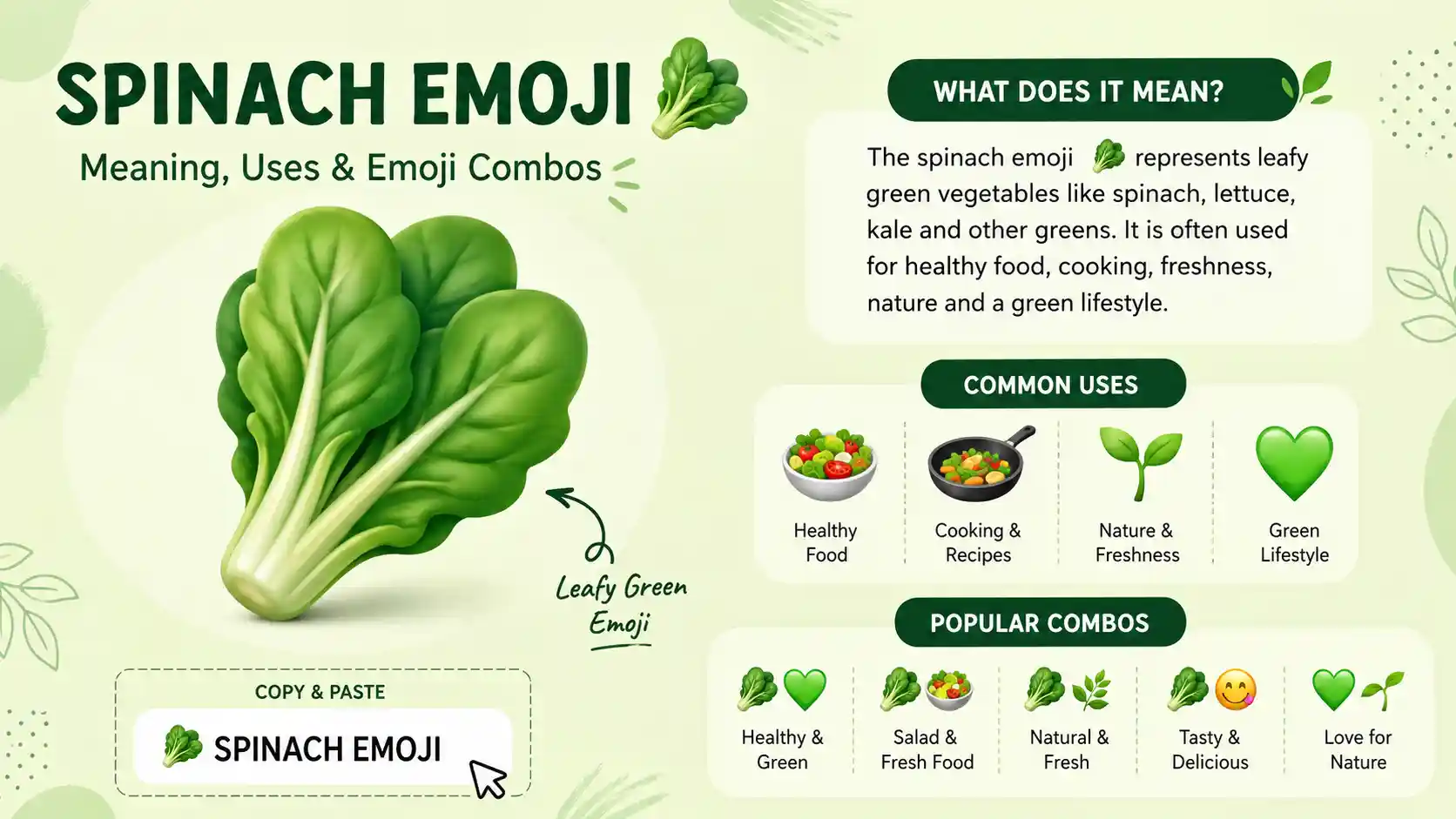
You are texting someone about dinner, sharing a healthy meal, or posting a fresh-looking salad, and you suddenly need the perfect green emoji. That is where the spinach emoji 🥬 often comes in. Technically, 🥬 is officially called the “leafy green” emoji rather than the “spinach” emoji, but many people naturally use it to represent spinach, lettuce, kale, leafy vegetables, salads, and healthy food.
The spinach emoji can have a straightforward food meaning, but its tone can change depending on the conversation. In texting, it may simply mean “spinach,” while on Instagram or TikTok it can suggest healthy eating, fresh ingredients, cooking, gardening, or a green lifestyle. 🥗🌿💚
Because emojis do not have one universal emotional meaning, the surrounding words matter. A message about meal preparation feels different from a joke about eating vegetables. This guide explains the spinach emoji meaning, how people use it on WhatsApp and social media, which emojis pair naturally with it, and how to copy and paste it.
What Does the Spinach Emoji Mean?
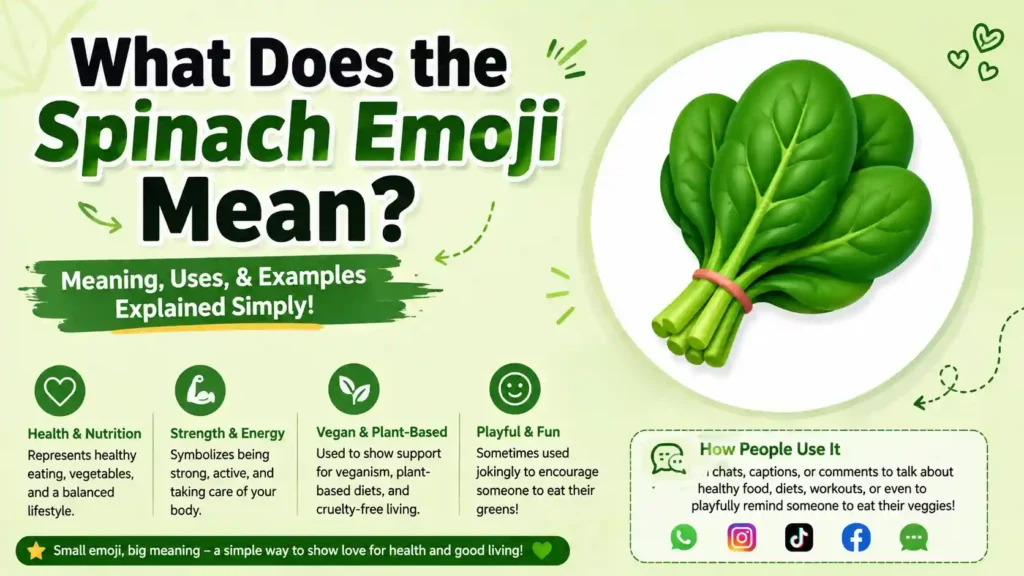
The spinach emoji 🥬 generally represents leafy green vegetables, especially spinach, lettuce, kale, or similar greens. Its official Unicode name is “leafy green,” so calling it the spinach emoji is a common everyday interpretation rather than its formal name.
In texting, 🥬 can literally mean “spinach” or “greens.” Someone might send it while talking about grocery shopping, preparing dinner, making a smoothie, or trying to eat more vegetables. In a food conversation, the meaning is usually quite direct: “I bought spinach,” “Add some greens,” or “I am eating healthy tonight.”
The emotional meaning is more flexible. 🥬 can suggest freshness, health, nature, nutrition, or a clean lifestyle. Pairing it with 💚 can make the message feel warm and positive, while 🌿 can emphasize a natural or fresh atmosphere. A food creator might use 🥬 to make a caption feel wholesome without writing a long explanation.
🥬 On WhatsApp, the emoji usually works as a practical food symbol. On Instagram, it can appear in captions about recipes, salads, meal preparation, gardening, or healthy routines. On TikTok, it may be used literally or humorously, especially when creators are talking about vegetables or food habits.
Context also matters in relationships. If someone you like sends 🥬 while discussing dinner, it probably has a literal food meaning. If the conversation is playful, the emoji may simply add a cute green touch. There is no universal romantic meaning attached to it.
The same principle applies to other related emojis. 🌱 can suggest growth or something newly started, 🌿 can emphasize nature, 🥗 can point toward a prepared healthy meal, 🥦 represents broccoli, 🥒 suggests cucumber, and 🥕 commonly represents carrots. None should automatically be interpreted emotionally without considering the message around them.
Meaning Table:
| Emoji | Core meaning | Possible misread | Best used when |
|---|---|---|---|
| 🥬 | Leafy greens, spinach | Generic vegetable | Food and healthy eating |
| 🌿 | Herb, nature, freshness | Decoration | Natural or fresh themes |
| 🌱 | Growth, sprout | Gardening only | New beginnings or plants |
| 🥗 | Salad, healthy meal | Diet-focused message | Meals and recipes |
| 🥦 | Broccoli, vegetables | Any green food | Vegetable conversations |
| 🥒 | Cucumber, fresh food | Pickle reference | Recipes and food |
| 🥕 | Carrot, vegetable | Generic health symbol | Cooking and produce |
| 🫛 | Pea pod, vegetables | General green food | Food and gardening |
| 💚 | Green heart, care | Romantic affection | Warm green-themed messages |
| 😋 | Enjoying food | Flirting | Delicious meals |
Exactly 10 Emoji Cards:
🥬 Leafy Green:
Meaning: Leafy vegetables, spinach, freshness, and healthy food.
Example 1: I bought fresh spinach today 🥬
Example 2: Adding more greens to dinner 🥬
🌿 Herb:
Meaning: Nature, herbs, freshness, and a natural atmosphere.
Example 1: Fresh ingredients make everything better 🌿
Example 2: I love growing herbs at home 🌿
🌱 Seedling:
Meaning: Growth, new beginnings, plants, and fresh starts.
Example 1: Starting my little garden 🌱
Example 2: New season, new goals 🌱
🥗 Green Salad:
Meaning: Salad, healthy meals, vegetables, and fresh eating.
Example 1: Lunch is ready 🥗
Example 2: Keeping today’s meal light 🥗
🥦 Broccoli:
Meaning: Broccoli, vegetables, healthy food, and cooking.
Example 1: Please add some broccoli 🥦
Example 2: Vegetables are on today’s menu 🥦
🥒 Cucumber:
Meaning: Cucumber, fresh produce, salads, and recipes.
Example 1: Fresh cucumber for the salad 🥒
Example 2: This recipe needs one cucumber 🥒
🥕 Carrot:
Meaning: Carrots, vegetables, cooking, and fresh produce.
Example 1: I need carrots for dinner 🥕
Example 2: Fresh vegetables from the market 🥕
🫛 Pea Pod:
Meaning: Peas, vegetables, gardening, and fresh produce.
Example 1: These peas are so fresh 🫛
Example 2: Growing vegetables this year 🫛
💚 Green Heart:
Meaning: Warmth, care, affection, and a green or nature-themed mood.
Example 1: Sending you some green love 💚
Example 2: Love this healthy lifestyle 💚
😋 Face Savoring Food:
Meaning: Enjoying delicious food, tasty meals, and appetite.
Example 1: This spinach recipe is amazing 😋
Example 2: Dinner was seriously good 😋
How to Use the Spinach Emoji the Right Way:
WhatsApp 💬
On WhatsApp, 🥬 is most useful when the conversation involves food, groceries, cooking, gardening, or healthy habits. You can send it after mentioning spinach, vegetables, salads, or a recipe. For example, “I am making pasta with spinach 🥬” feels completely natural.
It can also work in family chats. If someone asks what you bought from the market, “Lots of fresh greens 🥬” quickly communicates the answer without needing another sentence. Friends can use it when discussing meal plans, vegetarian dishes, or a new recipe.
In personal conversations, the emoji can make a practical message feel lighter. “Eat something healthy today 🥬” sounds friendlier than the same sentence without an emoji. Still, the relationship matters. With a close friend, it can feel playful. In a professional conversation, it is better to keep the use literal and relevant.
Instagram 📸
Instagram gives 🥬 a broader visual role. Food bloggers, recipe creators, home cooks, gardeners, and wellness-focused accounts can use it in captions about fresh ingredients. A caption such as “Fresh from the kitchen 🥬🌿” creates a simple natural mood.
It can also appear in comments. If someone posts a beautiful salad, recipe, or vegetable garden, 🥬 can be a quick supportive response. For aesthetic posts, pairing it with 🌿 or 💚 can emphasize a fresh green theme.
TikTok 🎵
On TikTok, the emoji can be literal, humorous, or part of a food-related trend. It might appear in recipe captions, cooking comments, meal-prep videos, or jokes about vegetables.
Facebook posts and Messenger conversations use 🥬 in much the same way. It works especially well for recipes, grocery updates, gardening posts, family meals, and casual food conversations.
Why Does the Spinach Emoji Look Different on iPhone and Android?
If 🥬 looks slightly different on your phone compared with someone else’s device, that does not necessarily mean you received a different emoji. Unicode defines the underlying emoji character, while individual technology companies create their own visual artwork for displaying it. The Unicode listing identifies 🥬 as “leafy green,” while the appearance can vary between platforms.
Apple, Google, Samsung, Microsoft, and other companies can choose different artistic treatments. One version may look like a tightly packed bunch of leaves, while another may have a different arrangement, outline, shading, or color balance. These differences are normal.
The shape can change slightly, and the amount of detail can vary. Even the apparent size or spacing may look different depending on the operating system, app, font, and device. What matters is that the underlying Unicode character is the same.
This is especially important when you are trying to identify an emoji from a screenshot. If a friend sends 🥬 from an Android phone and you view it on an iPhone, the artwork may not be identical. That does not mean the sender used a different symbol.
The same principle applies to related emojis such as 🥦, 🥒, and 🥕. Their platform artwork may differ, but their underlying characters remain recognizable across supported systems.
There is also an important distinction between an emoji’s official name and its everyday nickname. 🥬 is officially “leafy green,” but users may call it the spinach emoji because spinach is one of the foods it naturally represents. The official label does not prevent people from using a more specific everyday interpretation.
So, if your spinach emoji looks a little different from someone else’s, there is usually nothing wrong. Platform-specific design is simply part of how emojis work.
Best Spinach Emoji Combos: Copy & Paste:
Romantic ❤️
1.👉 💚🥬🌿: Use this for a sweet, nature-inspired message.
2.👉 🥬💚😋: Use this when sharing a healthy meal with someone special.
3.👉 🌿💚🥬: Use this for a soft, fresh, affectionate mood.
Cute 🥰
1.👉 🥬🌱💚: Use this for a cute green and wholesome feeling.
2.👉 🥬🥗😋: Use this when showing off a tasty healthy meal.
3.👉 🌿🥬🌱: Use this for a playful plant-inspired message.
Flirty 😉
1.👉 🥬😋💚: Use this when joking about a delicious meal together.
2.👉 🥗🥬😉: Use this for a playful food invitation.
3.👉 🥬🌿😋: Use this when making a lighthearted food comment.
Missing Someone 💭
1.👉 🥬💚🌿: Use this with a gentle message about someone you miss.
2.👉 🌱💚🥬: Use this for a soft reminder of a shared healthy moment.
3.👉 🥬🥗💚: Use this when remembering meals you enjoyed together.
Good Night 🌙
1.👉 🥬🌿💚: Use this with a calm good-night message.
2.👉 🥗🥬😋: Use this after talking about dinner before bed.
3.👉 🌱🥬💚: Use this for a peaceful, wholesome night message.
Trending Spinach Emoji in 2026:
In 2026, 🥬 fits naturally into the wider conversation around food, fresh ingredients, cooking, gardening, and green-themed content. It is commonly useful because it can represent several leafy vegetables rather than only one specific dish. Unicode’s current emoji charts place 🥬 among food and vegetable emojis and identify its official short name as “leafy green.”
Its usefulness is particularly noticeable in visual social media. Recipe creators can place 🥬 in captions about salads, vegetable dishes, meal preparation, or fresh ingredients. Everyday users can use it when posting grocery hauls, homemade meals, garden updates, or conversations about eating more vegetables.
🥬 On WhatsApp, the emoji remains practical and conversational. On Instagram, it can support food photography and healthy-looking captions. On TikTok, creators can use it in recipe videos, cooking humor, vegetable-related jokes, and comments. Facebook users may encounter it in recipe posts, gardening discussions, or family food conversations.
The related emojis 🥗, 🌿, 🥦, and 💚 can shift the tone without changing the basic subject. 🥗 makes the message feel more meal-focused, 🌿 makes it more natural, 🥦 makes the vegetable reference more specific, and 💚 adds warmth.
| Emoji | Why trending | Who uses it | Platform |
|---|---|---|---|
| 🥬 | Flexible leafy-food symbol | Food lovers | WhatsApp, Instagram |
| 🥗 | Clear meal reference | Recipe creators | Instagram, TikTok |
| 🌿 | Fresh natural feeling | Lifestyle users | Instagram, Facebook |
| 💚 | Adds warmth to green themes | Everyday users | All major platforms |
Emoji usage continues to evolve as people adapt familiar symbols to new conversations, visual styles, jokes, and online communities.
Spinach Emoji Meaning in Different Contexts:
The spinach emoji can communicate something slightly different depending on who sends it and what the conversation is about. In a romantic conversation, 🥬 usually does not automatically mean love. If someone sends “Dinner tonight? 🥬💚,” the surrounding message creates the emotional tone. The emoji itself mainly contributes a food or green theme.
Between friends, 🥬 can be casual and funny. Someone might send “Guess what I am eating again 🥬” after talking about healthy meals all week. Another friend might respond with 🥗 or 😋 to keep the food conversation going.
In family chats, the meaning is often practical. A parent may use 🥬 while discussing groceries, recipes, dinner ingredients, or vegetables. It can make a simple shopping message feel less formal.
In professional communication, context becomes even more important. A food business, nutrition-related account, restaurant, or gardening brand can use 🥬 naturally. 🥬 In an unrelated workplace conversation, however, the emoji might seem confusing or overly casual.
In texting, 🥬 is usually literal and easy to understand when food is already being discussed. In social media comments, it may work as a quick reaction to a healthy meal, recipe, garden, or green-themed photo.
Captions can use it more creatively. “Fresh ingredients, simple dinner 🥬” gives a post a wholesome feel without claiming anything specific. The emoji can also contribute to an overall visual theme.
Culture and personal habits can influence interpretation too. Someone who regularly uses vegetable emojis may see 🥬 simply as spinach, while another person may read it as lettuce, kale, or a general leafy green. That flexibility is normal.
The safest approach is to read the emoji alongside the words, relationship, and topic. Rather than asking what 🥬 “always” means, ask what it appears to mean in that particular conversation.
How to Copy and Paste the Spinach Emoji:
Here is the spinach emoji ready to copy:
🥬
To use it, select the emoji, copy it, and paste it wherever you want. You can place 🥬 in WhatsApp messages, Instagram captions, TikTok comments, Facebook posts, Messenger chats, or ordinary text messages.
On a computer, you can copy the character directly from this page. On a phone, press and hold the emoji to select it, then choose the copy option when available.
You can also combine it with other relevant symbols. For example:
🥬💚🌿
or
🥬🥗😋
These combinations can make a food message more expressive while keeping the meaning easy to understand.
FAQs:
1. What is the most popular spinach emoji?
The emoji commonly called the spinach emoji is 🥬. Its official Unicode name is “leafy green,” so it can represent spinach as well as other leafy vegetables.
2. What does 🥬 mean when someone sends it?
Usually, 🥬 refers to spinach, leafy greens, vegetables, food, or freshness. The exact meaning depends on the conversation. It does not automatically carry a romantic or gender-specific meaning.
3. Why do emojis look different on iPhone vs Android?
Different platforms create their own artwork for Unicode emoji characters. The design can therefore change in shape, color, detail, or style while the underlying emoji remains the same.
4. Are spinach emojis used differently in other countries?
Usage can vary between communities, languages, and cultures. Some people may use 🥬 specifically for spinach, while others may use it more broadly for leafy greens, salad ingredients, or vegetables. Context is the best guide.
Conclusion:
The spinach emoji 🥬 is a simple, flexible symbol for spinach, leafy greens, vegetables, freshness, and food. Its official name is “leafy green,” but its everyday use can be more specific depending on context.
Use it naturally in meals, recipes, chats, captions, and gardening conversations. When paired thoughtfully with emojis such as 🌿, 🥗, or 💚, it can add just the right amount of personality without overwhelming your message. 🥬

Nasrullah — Emoji Strategist & Content Writer
Nasrullah is a passionate emoji enthusiast and content writer who loves exploring the meanings, uses, and cultural context behind emojis. He creates simple, helpful, and easy-to-understand guides that help readers choose the right emoji for WhatsApp, Instagram, Facebook, texting, and everyday conversations.
With a focus on emoji meanings, combinations, social media usage, and modern digital communication, Nasrullah aims to make every emoji easier to understand and use with confidence. His content combines practical examples with clear explanations so readers can quickly find the meaning and usage they are looking for.
When he’s not researching emojis, Nasrullah enjoys exploring digital trends, writing useful online content, and learning about how people communicate in the digital world. 😊