Have you ever seen someone use an emoji after describing a terrible day, an embarrassing moment, or an overwhelming situation and wondered what they were trying to say? Online conversations often use emojis to express emotions that are difficult to put into words. The suicidal emoji is a search term people may use when looking for symbols connected to emotional distress, hopelessness, exhaustion, or dark humor.
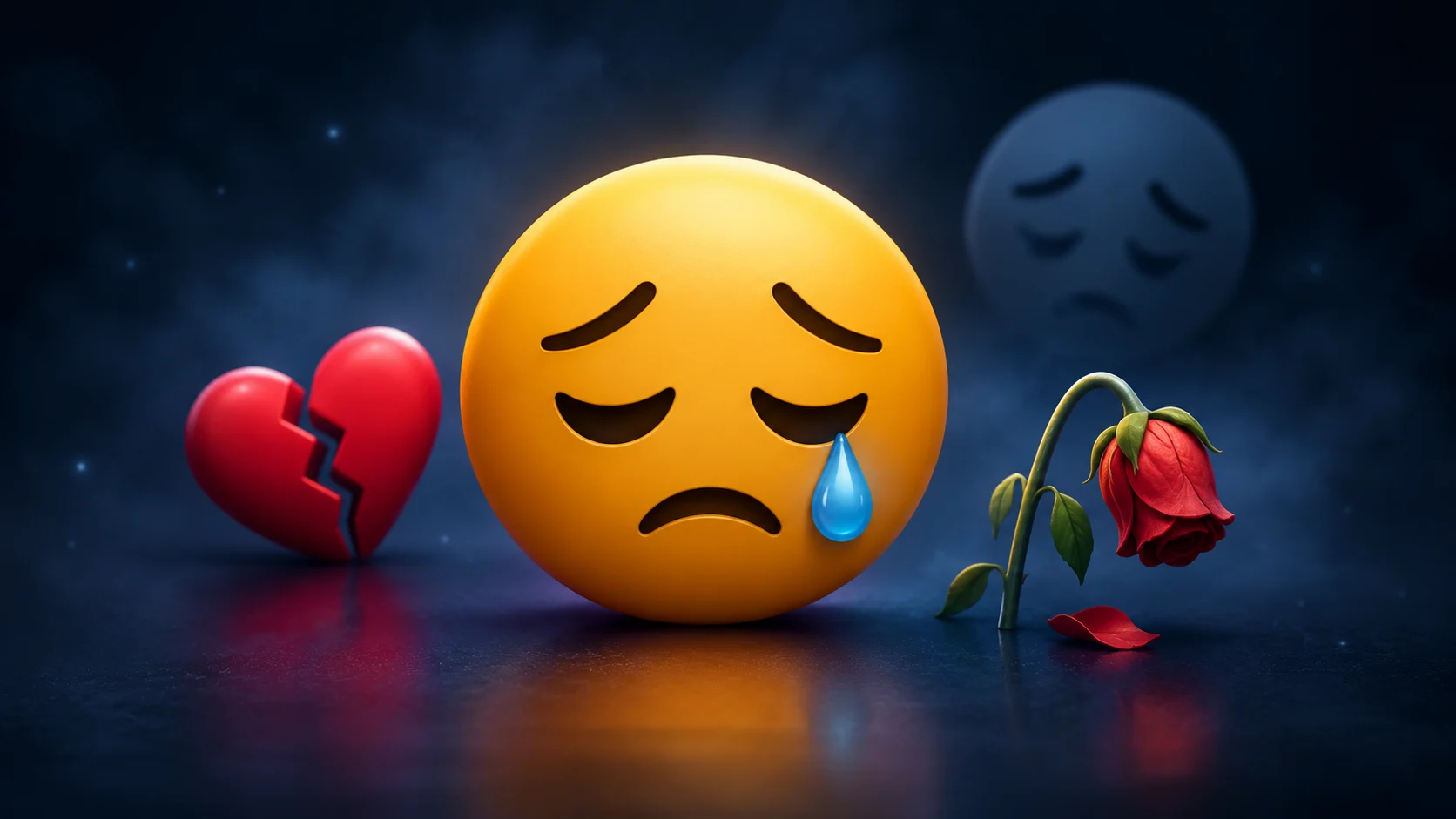
However, there is no official Unicode emoji specifically representing suicide. People may use different emojis, such as a skull, a broken heart, a dizzy face, or a wilted flower, to communicate sadness, emotional pain, or feeling overwhelmed. Their meaning depends heavily on the conversation and the person using them.
Understanding these symbols can help you interpret messages on WhatsApp, Instagram, TikTok, Facebook, and other platforms without immediately jumping to conclusions. It is also important to recognize when a joke might be masking genuine distress. 💭
Some emojis express sadness or emotional exhaustion, but a person’s words and feelings always matter more than the symbol itself.
What Does the Suicidal Emoji Mean?
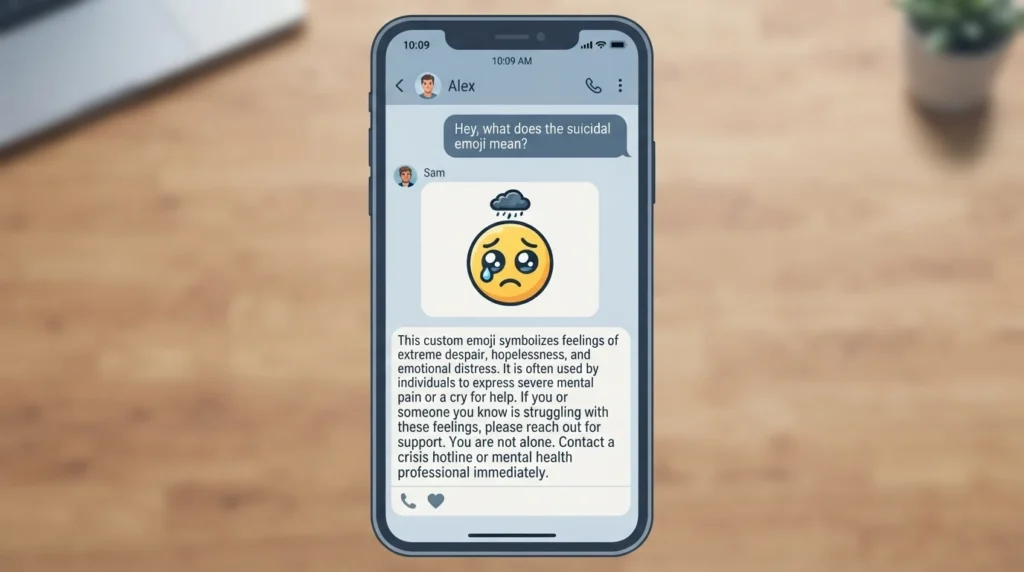
The term suicidal emoji does not refer to one officially recognized emoji. Instead, people often use certain symbols to communicate intense sadness, emotional exhaustion, hopelessness, frustration, or dark humor. The meaning depends on the situation, the message, and the person sending it.
When someone uses a skull emoji 💀, they might be reacting to something extremely funny, embarrassing, shocking, or overwhelming. In casual internet slang, it can mean that something was so funny they are metaphorically dead from laughing. However, in a serious conversation, the same symbol may come across as darker or more emotional.
A broken heart 💔 often expresses heartbreak, disappointment, loneliness, or emotional pain. People may use it after a breakup, when discussing a difficult experience, or when they feel hurt by someone they care about.
The dizzy face 😵 can suggest confusion, exhaustion, stress, disbelief, or feeling mentally overwhelmed. Someone might use it after a difficult exam, a stressful day, or a situation they cannot easily handle.
The wilted flower 🥀 is commonly associated with sadness, fading feelings, disappointment, loneliness, or a gloomy aesthetic. On social media, it may appear in emotional captions or posts about difficult experiences.
The crying face 😢 may express genuine sadness, sympathy, disappointment, or emotional sensitivity. Meanwhile, the black heart 🖤 can communicate grief, dark humor, emotional distance, or a particular aesthetic.
These symbols do not automatically mean someone is suicidal. Context matters, including the person’s wording, recent behavior, relationship with the recipient, and whether they have directly expressed thoughts of self-harm. If someone says they want to die or cannot keep themselves safe, take their words seriously instead of relying on emoji interpretation.
9. Meaning Table
| Emoji | Core meaning | Possible misread | Best used when |
|---|---|---|---|
| 💀 Skull | Dark humor, shock, extreme reaction | Actual death-related meaning | Reacting to something absurd or hilarious |
| 💔 Broken heart | Heartbreak, emotional pain | Romantic breakup only | Expressing hurt or disappointment |
| 😵 Dizzy face | Confusion, overwhelm, exhaustion | Being physically dizzy only | Describing a stressful situation |
| 🥀 Wilted flower | Sadness, disappointment, gloomy mood | Romantic rejection only | Emotional or melancholic captions |
| 😢 Crying face | Sadness, sympathy, disappointment | Serious distress every time | Expressing sadness or compassion |
| 🖤 Black heart | Dark aesthetic, grief, affection | Lack of emotion | Dark-themed posts or emotional messages |
10. Emoji Cards
💀 Skull
Meaning: Dark humor, shock, an extreme reaction, or feeling overwhelmed by something.
Example 1: That embarrassing moment will haunt me forever 💀
Example 2: I cannot believe that actually happened 💀
💔 Broken Heart
Meaning: Heartbreak, disappointment, emotional hurt, or loss.
Example 1: I really thought things would work out 💔
Example 2: That ending completely broke my heart 💔
😵 Dizzy Face
Meaning: Confusion, mental overload, exhaustion, or disbelief.
Example 1: Three deadlines in one day, I cannot think anymore 😵
Example 2: I just read the instructions five times 😵
🥀 Wilted Flower
Meaning: A sad mood, fading emotions, disappointment, or a melancholic feeling.
Example 1: Some days just feel heavier than others 🥀
Example 2: Missing the days when everything felt simple 🥀
😢 Crying Face
Meaning: Sadness, sympathy, disappointment, or emotional sensitivity.
Example 1: I was really hoping to see you today 😢
Example 2: That story honestly made me emotional 😢
🖤 Black Heart
Meaning: Dark humor, emotional depth, grief, affection, or a dark aesthetic.
Example 1: You always understand me without explaining 🖤
Example 2: Keeping my peace and staying quiet 🖤
😔 Pensive Face
Meaning: Regret, sadness, reflection, disappointment, or a quiet emotional moment.
Example 1: I wish I had handled that differently 😔
Example 2: Trying to make sense of everything lately 😔
😞 Disappointed Face
Meaning: Feeling let down, discouraged, upset, or unhappy with an outcome.
Example 1: I really expected a better result 😞
Example 2: Plans changed at the last minute again 😞
😶 Face Without Mouth
Meaning: Silence, speechlessness, discomfort, or not knowing what to say.
Example 1: I have no words for that situation 😶
Example 2: That conversation got awkward very quickly 😶
😭 Loudly Crying Face
Meaning: Strong sadness, emotional overwhelm, dramatic reactions, or even laughter in online slang.
Example 1: I was waiting all week and the event got cancelled 😭
Example 2: That movie ending was way too emotional 😭
11. How to Use the Suicidal Emoji the Right Way?
Emojis connected to sadness, emotional exhaustion, and dark humor can communicate different feelings online. Still, when a conversation touches on suicide or serious emotional distress, it is important to choose words carefully. A symbol may express a mood, but it cannot fully explain what someone is experiencing.
WhatsApp 💬
WhatsApp is often used for private conversations with close friends, family members, partners, and people you trust. In these chats, sad or dark-themed emojis might appear when someone is talking about a difficult day, a personal disappointment, or feeling emotionally exhausted.
For example, a friend might send a broken heart after a relationship problem or a pensive face when they are feeling down. If someone uses these symbols alongside messages such as “I cannot deal with anything anymore,” it is worth checking on them rather than simply reacting with another emoji.
Example messages:
- “Today was honestly too much for me 😔”
- “I am tired of pretending everything is okay 💔”
If the conversation feels serious, a caring response is more helpful than making jokes.
Instagram 📸
On Instagram, sad emojis can appear in captions, Stories, comments, Notes, and Reels. Users may combine them with dark photography, emotional music, reflective captions, or personal posts.
Some posts are simply aesthetic, while others reflect a genuine emotional experience. Avoid assuming you know what someone feels based on a picture or emoji alone.
TikTok
TikTok users often mix emotional expressions with humor, dramatic storytelling, relatable videos, and trends. A skull might be a reaction to an embarrassing situation, while a crying face could express laughter, sadness, or disbelief.
However, when a creator directly talks about suicide, hopelessness, or wanting to disappear, do not assume it is just a trend.
On Facebook, these symbols can appear in personal updates, comments, Messenger chats, and posts about relationships or difficult experiences. A simple sad emoji may be a way to show sympathy, while a black heart might express support or affection.
When the message seems concerning, respond to the person, not just the emoji.
12. Do’s and Don’ts
Using emotional emojis thoughtfully can help you avoid confusion and make conversations more respectful.
Do:
- Use emojis to support the meaning of your words.
- Pay attention to the relationship with the person receiving your message.
- Consider the surrounding conversation before interpreting a symbol.
- Match the emoji to the emotional tone.
- Ask someone how they are doing if their message worries you.
- Check how an emoji appears across different devices.
Don’t:
- Assume every dark emoji means suicidal thoughts.
- Treat serious statements about suicide as jokes automatically.
- Use sad emojis to dismiss someone’s real feelings.
- Send humorous reactions when someone is clearly asking for help.
- Assume everyone understands internet slang in the same way.
- Rely on emojis alone when discussing serious emotional experiences.
A little context and kindness can make a big difference. If an emoji appears alongside concerning words, take the words seriously and offer a genuine response.
13. Why Do Suicidal Emojis Look Different on iPhone and Android?
Have you ever sent an emoji from an iPhone and noticed that it looked slightly different on an Android phone? That happens because emojis are supported by the Unicode standard, but different companies create their own visual designs.
Unicode provides a common system for identifying emoji characters across digital devices. Companies such as Apple, Google, Samsung, and Microsoft use those character standards but design their own artwork to display them.
As a result, the same emoji may have slightly different:
- Facial expressions
- Colors and shades
- Shapes and proportions
- Details and textures
- Overall visual styles
For example, a skull emoji 💀 may appear slightly different on an iPhone, Samsung Galaxy, Google Pixel, or Windows computer. One design may look more cartoonish, while another may appear more detailed.
The underlying character is generally the same even when its appearance changes. These visual differences can occasionally influence how people interpret an emoji, especially when facial expressions or details are subtle.
This does not mean one platform has the correct design and another has the wrong one. They are simply different interpretations of the same Unicode emoji character.
When sending emotional messages, remember that the recipient may see a slightly different version of the symbol. If the message is important, clear words are always more reliable than depending entirely on the emoji’s appearance.
14. Best Suicidal Emoji Combos, Copy & Paste
People sometimes use sad, dark, or emotional emoji combinations to describe difficult moods, heartbreak, exhaustion, or dramatic moments. These combinations are not universal signals of suicidal thoughts, so interpret them carefully.
Romantic ❤️
- 💔 🖤 😔, use it for a sad or reflective relationship caption.
- 😢 💔 🥀, use it when expressing disappointment after emotional hurt.
- 🖤 😔 💭, use it for a quiet, thoughtful message about someone you miss.
Cute 🥰
- 😔 🖤, use it for a soft, moody caption.
- 😢 🥀, use it to express a little disappointment in a dramatic way.
- 😶 🖤, use it when you have no words but want to express a mood.
Flirty 😉
- 😶 😔, use it for a playful, awkward reaction when the conversation feels unexpected.
- 💔 😢, use it when joking about fictional heartbreak or a disappointing romantic moment.
- 😵 😶, use it when someone leaves you speechless in a playful conversation.
Missing Someone 💭
- 🥀 😔, use it for a reflective caption about memories.
- 💔 💭, use it when thinking about a difficult relationship.
- 😢 🖤, use it to express sadness or emotional longing.
Good Night 🌙
- 😔 🖤, use it for a quiet, reflective nighttime message.
- 😢 💭, use it when your mind feels full before bed.
- 🥀 😶, use it for a gloomy aesthetic caption or a silent, reflective mood.
If a combination is being used to communicate genuine suicidal thoughts rather than an aesthetic or casual mood, respond with compassion and direct conversation instead of treating it as ordinary emoji slang.
15. Trending Suicidal Emojis in 2026
Emojis associated with sadness, dark humor, emotional reactions, and reflective moods remain recognizable parts of everyday online communication. However, there is no verified ranking establishing these symbols as the most popular suicide-related emojis in 2026.
The following emojis are commonly understood in online conversations, and their use can vary depending on the community, platform, and situation.
| Emoji | Why it appears in online conversations | Who uses it | Platform |
|---|---|---|---|
| 💀 Skull | Dark humor, shock, exaggerated reactions | Friends, meme creators, casual users | TikTok, Instagram, WhatsApp |
| 💔 Broken heart | Heartbreak, emotional posts, relationship content | Couples, creators, friends | Instagram, Facebook |
| 😵 Dizzy face | Overwhelm, disbelief, dramatic reactions | Students, meme communities, everyday users | TikTok, WhatsApp |
| 🥀 Wilted flower | Melancholy, gloomy aesthetics, sad captions | Aesthetic creators, emotional posters | Instagram, TikTok |
Why do people use them so often in casual conversations?
Emojis are quick, recognizable, and easy to add to a short message. They can soften a sentence, make a reaction more expressive, or communicate an emotional tone without writing a long explanation.
The skull, for example, can be used in a completely humorous conversation. In another situation, the same symbol may appear in a serious post. The broken heart may communicate genuine sadness, while a dizzy face can simply describe a stressful afternoon.
Creators also use emotional emojis in captions, comments, and videos because they help communicate the intended mood. Nevertheless, the meaning is not fixed, and online usage can change quickly across communities.
Emoji use continues to evolve as people develop new ways to express humor, emotion, identity, and reactions through digital communication.
16. Suicidal Emoji Meaning in Different Contexts
The same emoji can communicate very different feelings depending on who sends it, what was said earlier, and the relationship between the people involved. Understanding the context is more helpful than trying to assign one fixed meaning.
Romantic conversations
In romantic chats, 💔 may express disappointment, sadness, missing a partner, or feeling hurt. A person might use 😔 after an emotional conversation, but it does not automatically mean the relationship is ending or that they want attention.
Example: “I wish we could talk like we used to 😔”
Friendship
Friends may use 💀 to react to a ridiculous joke, embarrassing story, or unexpected situation. It is often used casually without any connection to death or emotional distress.
Example: “You actually said that in front of everyone 💀”
Family conversations
In family chats, 😢 might communicate sympathy, sadness, or concern about a difficult situation. A black heart may be used to show affection or support when someone is going through a challenging time.
Example: “I am sorry you are going through this. We are here for you 🖤”
Professional and casual communication
In a workplace chat, 😵 may describe being overwhelmed by tasks or deadlines. However, overly dark humor may not be appropriate in a professional conversation, especially when the other person does not know your communication style.
Example: “That schedule is a little overwhelming 😵”
Texting and social media comments
Emotional emojis often appear in short messages where users want to communicate their reaction quickly. A crying face may represent actual sadness, exaggerated disappointment, or even laughter, depending on the conversation.
Example: “I missed the entire episode 😭”
Captions and personal posts
On Instagram and TikTok, sad symbols may appear with music, photography, or personal reflections. Some captions are aesthetic, but others may reflect genuine experiences. Avoid deciding that someone is fine simply because their post looks artistic or humorous.
When a person expresses suicidal thoughts directly, the meaning is no longer something you need to decode through emojis. Reach out, listen, and encourage them to seek real support.
17. How to Copy and Paste Suicidal Emojis
Copying emojis is easy, whether you are using a smartphone, tablet, or computer.
Copy the emoji
Select the symbol you want below and copy it:
💀 💔 😵 🥀 😢 🖤 😔 😞 😶 😭
Copy and paste these emotional emojis wherever supported.
How to use them
- Select the emoji you want to use.
- Right-click and choose Copy, or press
Ctrl + Con your computer. - Open WhatsApp, Instagram, TikTok, Facebook, or your messaging app.
- Click or tap where you want the emoji to appear.
- Paste it using
Ctrl + Von desktop or the Paste option on mobile.
You can use these symbols in captions, comments, messages, bios, reactions, and personal posts.
If you are discussing something serious, consider adding a clear sentence alongside the emoji. This makes it easier for the other person to understand what you mean without guessing your emotional state.
18. FAQs About Suicidal Emojis
1. What is the most popular suicidal emoji?
There is no officially recognized suicidal emoji or verified ranking of suicide-related emojis. The skull 💀, broken heart 💔, and crying face 😢 are sometimes used in dark humor or emotional conversations, but their meanings vary.
2. What does 💀 mean when someone sends it?
The skull emoji often means something was extremely funny, shocking, embarrassing, or unbelievable. In serious conversations, it may carry a darker tone, so look at the surrounding message rather than assuming one meaning.
3. Why do emojis look different on iPhone vs Android?
Emojis follow Unicode character standards, but Apple, Google, Samsung, and other companies design their own artwork. This is why an emoji can look slightly different across devices even when the underlying symbol is the same.
4. Are suicidal emojis used differently in other countries?
Yes, emoji interpretation can vary across languages, cultures, and online communities. Humor, social norms, and personal experiences can affect how someone understands a symbol, so it is best not to assume every person interprets an emoji in the same way.
19. Conclusion
Emojis associated with sadness, dark humor, heartbreak, or emotional exhaustion can carry many meanings in digital conversations. Their interpretation depends on context, wording, and the person using them.
An emoji alone cannot tell you whether someone is struggling with suicidal thoughts. If a message worries you, check in with the person and listen without judgment. 💭
Clear communication, compassion, and genuine support matter far more than decoding a symbol.

Nasrullah — Emoji Strategist & Content Writer
Nasrullah is a passionate emoji enthusiast and content writer who loves exploring the meanings, uses, and cultural context behind emojis. He creates simple, helpful, and easy-to-understand guides that help readers choose the right emoji for WhatsApp, Instagram, Facebook, texting, and everyday conversations.
With a focus on emoji meanings, combinations, social media usage, and modern digital communication, Nasrullah aims to make every emoji easier to understand and use with confidence. His content combines practical examples with clear explanations so readers can quickly find the meaning and usage they are looking for.
When he’s not researching emojis, Nasrullah enjoys exploring digital trends, writing useful online content, and learning about how people communicate in the digital world. 😊