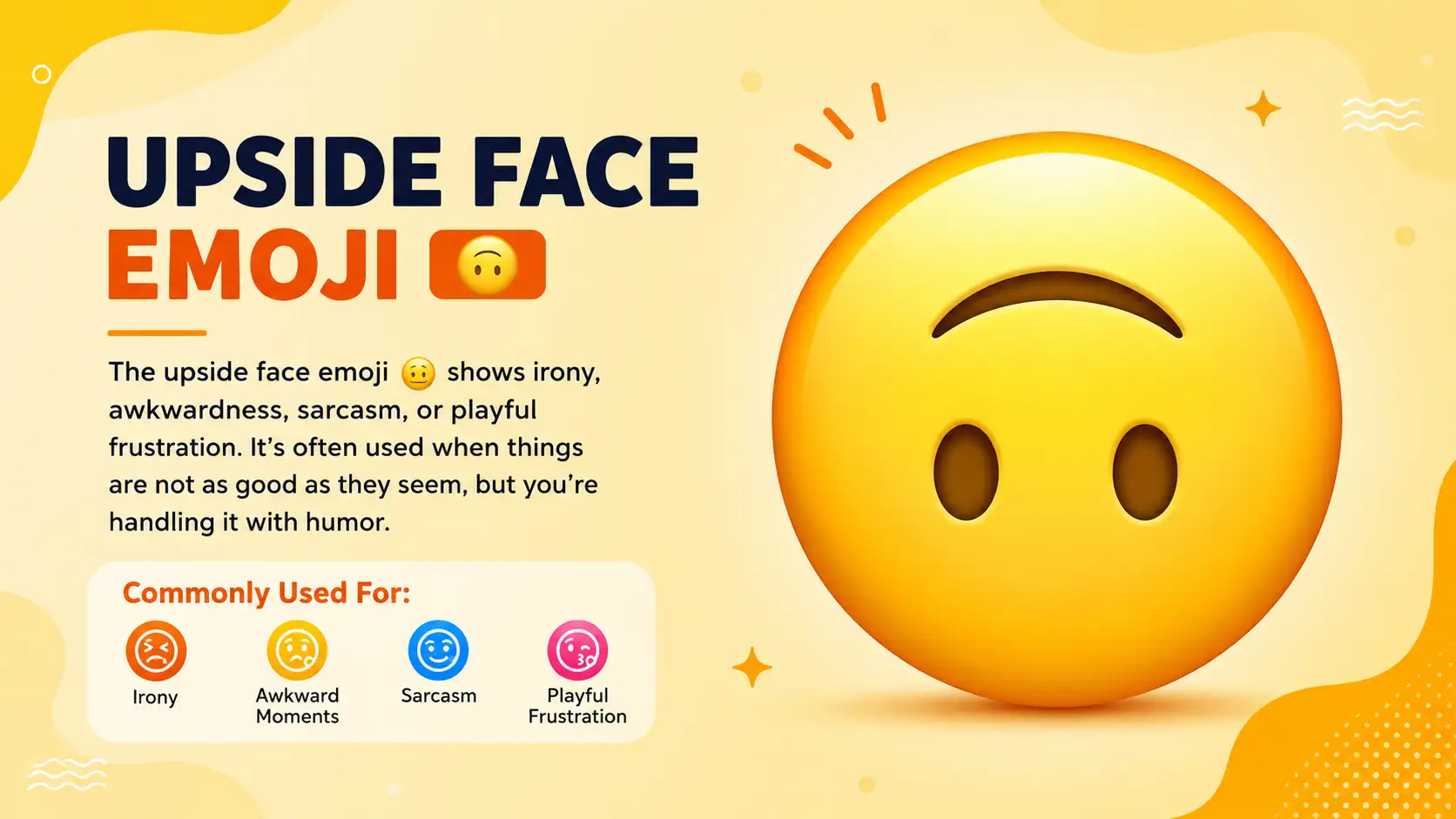
You type out a normal sentence, add 🙃 at the end, and suddenly your friend replies with “wait, are you okay?” That’s the strange power of the upside down face emoji. It can turn a plain statement into something sarcastic, silly, or quietly uneasy, all without changing a single word. People search for the upside down face emoji meaning because it’s one of the trickiest emojis out there: it never quite says what it looks like it’s saying. Its real meaning depends heavily on the sentence around it, who sent it, and the platform it showed up on. Understanding 🙃, along with a few close relatives like 😊, 😉, and 😅, can help you avoid awkward mixed signals and actually say what you mean.
Sometimes flipping one face upside down says more than an entire paragraph could. 🙃
What Does the Upside Down Face Emoji Mean?
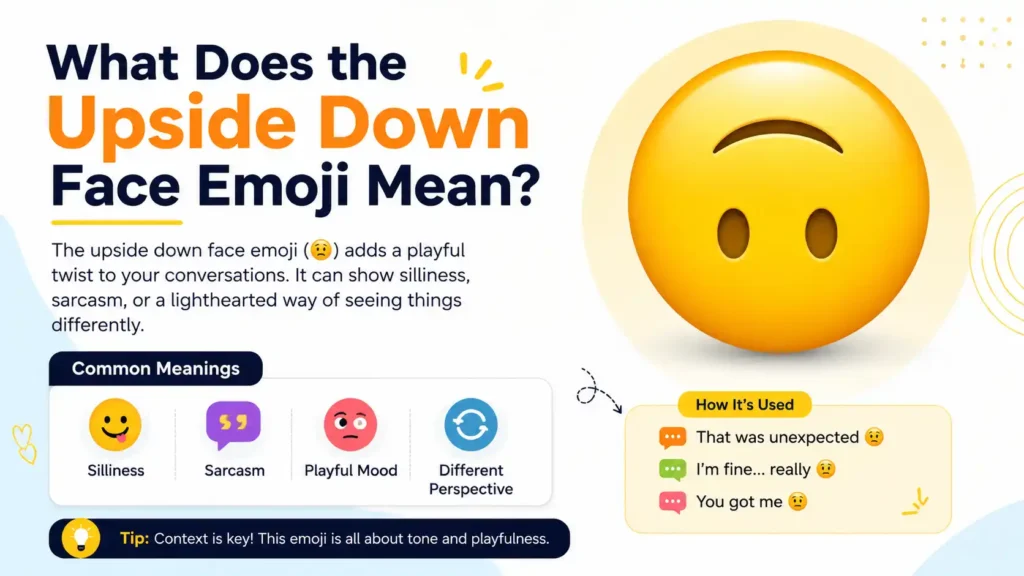
At its core, the upside down face 🙃 is exactly what it looks like: a regular smiling face, flipped. That single visual twist is why its meaning is so slippery. Where a plain 🙂 reads as calm and sincere, flipping it upside down adds a layer of irony, silliness, or subtle discomfort. It’s rarely used to express pure happiness the way 😊 or 😂 might be.
In texting, 🙃 often shows up when someone wants to soften bad news, admit something awkward, or say one thing while clearly meaning another. “I failed the exam 🙃” doesn’t read as cheerful, it reads as “I’m not okay about this, but I’m trying to laugh it off.” That’s a very different job than 😊, which usually signals genuine warmth, or 😉, which signals a playful wink toward something implied.
On social media, the emoji leans more sarcastic. A caption like “Great, my flight got cancelled 🙃” is almost never sincere. It’s the emoji equivalent of a tight, forced smile. This is where it overlaps with 😅, which also carries that “laughing so I don’t cry” energy, and 😬, which leans more toward cringe or secondhand embarrassment.
The relationship between sender and receiver matters too. From a close friend, 🙃 can simply mean playful sarcasm or a running inside joke. From someone you don’t know well, or in a professional message, it can come across as passive-aggressive, since it often implies unspoken frustration. A coworker replying “sure, whatever works 🙃” is rarely just agreeing happily.
Meaning Table:
| Emoji | Core meaning | Possible misread | Best used when |
|---|---|---|---|
| 🙃 | Playful sarcasm, irony, or awkward honesty | Read as genuinely happy or as passive-aggressive | Softening bad news or being lightly sarcastic |
| 😊 | Warm, sincere happiness | Read as overly formal or distant | Genuine thanks or friendly warmth |
| 🙂 | Calm, mild positivity | Read as flat or unenthusiastic | Polite, neutral replies |
| 😉 | Playful hint or inside joke | Read as flirty when it isn’t meant that way | Teasing or implying something without saying it |
| 😏 | Smug, knowing, or flirty confidence | Read as arrogant or mocking | Playful teasing between close friends |
| 😅 | Nervous relief or awkward laughter | Read as pure joy | Admitting a mistake lightly |
| 😬 | Cringe or secondhand embarrassment | Read as disgust | Reacting to an awkward situation |
| 🤪 | Silly, over-the-top goofiness | Read as chaotic or careless | Joking around with close friends |
Emoji Cards:
🙃 Upside Down Face:
Meaning: Sarcasm, irony, or awkward honesty hidden behind a smile.
Example 1: Guess who forgot their charger again 🙃
Example 2: Cool, my order got cancelled 🙃
😊 Smiling Face With Smiling Eyes:
Meaning: Genuine warmth, gratitude, and sincere happiness.
Example 1: Thank you so much for helping me today 😊
Example 2: It was so nice seeing you 😊
🙂 Slightly Smiling Face:
Meaning: Calm, neutral positivity without much emotional weight.
Example 1: Sounds good, see you then 🙂
Example 2: Got your message, will reply soon 🙂
😉 Winking Face:
Meaning: A playful hint, tease, or shared inside joke.
Example 1: I might have saved you a slice of cake 😉
Example 2: You know exactly what I mean 😉
😏 Smirking Face:
Meaning: Smug confidence, flirtiness, or a knowing look.
Example 1: I already know you’re going to say yes 😏
Example 2: Someone’s been practicing 😏
😜 Winking Face With Tongue:
Meaning: Silly, teasing playfulness with a lighthearted edge.
Example 1: Catch me if you can 😜
Example 2: Just kidding, mostly 😜
🤪 Zany Face:
Meaning: Full-on goofy, chaotic, over-the-top silliness.
Example 1: Me trying to be productive today 🤪
Example 2: We stayed up until 3am for no reason 🤪
😅 Grinning Face With Sweat:
Meaning: Nervous relief or laughing off an awkward moment.
Example 1: I totally forgot about the meeting 😅
Example 2: That was close, we almost missed the train 😅
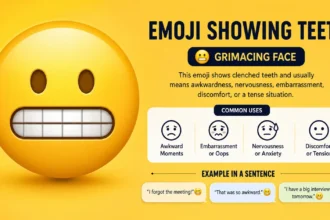
😬 Grimacing Face:
Meaning: Cringe, secondhand embarrassment, or bracing for impact.
Example 1: I may have replied all by accident 😬
Example 2: He’s still mad about last week 😬
🤔 Thinking Face:
Meaning: Curiosity, doubt, or genuine consideration.
Example 1: Wait, that doesn’t add up 🤔
Example 2: Not sure which one to pick 🤔
How to Use the Upside Down Face Emoji the Right Way:
WhatsApp 💬
In personal chats, 🙃 works well for gently sarcastic updates between friends, like admitting you’re running late again.🙃 In family group chats, it usually softens complaints, such as “traffic is insane today 🙃,” without sounding genuinely upset. In emotional messages, it’s best used carefully, since it can undercut sincerity if the receiver reads it as flippant. On status updates, it often signals a lighthearted, slightly ironic mood rather than a straightforwardly happy one.
Instagram 📸
In captions, 🙃 pairs naturally with self-deprecating humor, like a blurry photo captioned “photographer of the year 🙃.”🙃 In comments, it tends to agree with a joke while adding a knowing wink of irony. In bios, it can hint at a playful, not-too-serious personality. On aesthetic posts, creators sometimes swap it for 😊 or 🙂 instead, since 🙃 leans more comedic than polished. In reels and engagement-heavy content, it works well for relatable “this is fine” moments.
TikTok 🎵
TikTok captions lean heavily on 🙃 for irony, especially in “expectation vs reality” style videos. In comments, it often reacts to something chaotic or unexpected happening on screen. As a reaction, it can replace a longer sentence entirely, similar to how 😬 or 🤪 get used. In humor and trend-driven content, 🙃 frequently appears when a creator wants viewers to read between the lines rather than take a caption literally.
On Facebook, 🙃 shows up in posts and comments in a similar sarcastic, laid-back way, often reacting to everyday frustrations shared with friends or family. In Messenger, it functions much like it does on WhatsApp, softening complaints or adding light irony to a message. As a reaction, some users lean on it when a straightforward “like” doesn’t quite capture the mixed feelings behind a post.
Dos and Don’ts
Do:
- Use 🙃 to soften bad news without sounding overly dramatic.
- Consider your relationship with the receiver before using it.
- Pay attention to the wording around the emoji.
- Match it with a tone of light sarcasm or gentle irony.
- Check how it renders on different devices before sending something important.
Don’t:
- Use 🙃 in serious or professional messages where tone matters.
- Assume everyone will read it as playful rather than passive-aggressive.
- Overload a heavy message with 🙃 or similar emojis.
- Combine it randomly with unrelated emojis just for decoration.
- Assume 🙃 automatically means someone is upset or automatically means they’re joking.
Why Does the Upside Down Face Emoji Look Different on iPhone and Android?
Emojis are built on a shared standard called Unicode, which assigns every emoji a unique code so it works across apps and devices. However, the actual design, meaning the shape, color, and expression, is created individually by each company. Apple, Google, Samsung, and Microsoft all draw their own version of 🙃, so the underlying character stays the same even though the artwork looks different.
On some devices, the upside down face might look more exaggerated or cartoonish, while on others it looks subtle and minimal. The eyes, mouth curve, and shading can shift slightly from one platform to another. None of these versions is more “correct” than the others, they’re simply different visual interpretations of the same Unicode character. This is worth knowing if a message looks slightly different on your screen compared to what the sender saw on theirs.
Best Upside Down Face Emoji Combos: Copy & Paste
Romantic ❤️
1.👉 🙃❤️ — Use this for a lightly teasing, affectionate message.
2.👉 🙃😉 — Use this when you’re flirting but keeping it playful.
3.👉 😊🙃 — Use this to mix genuine warmth with a touch of irony.
Cute 🥰
1.👉 🙂🤪 — Use this for a silly, lighthearted good morning text.
2.👉 😊😜 — Use this for a cute, playful caption.
3.👉 🙃😊 — Use this for a message that’s sweet with a little wink of humor.
Flirty 😉
1.👉 😏🙃 — Use this when you’re teasing someone you like.
2.👉 😉😜 — Use this for playful, confident flirting.
3.👉 🙃😏 — Use this to imply something without spelling it out.
Missing Someone 💭
1.👉 🙃💭 — Use this for a bittersweet “thinking of you” text.
2.👉 😅🙃 — Use this when you miss someone but want to keep it light.
3.👉 🙃😊 — Use this for a message that’s soft but not overly serious.
Good Night 🌙
1.👉 🙃🌙 — Use this for a casual, low-key goodnight message.
2.👉 😊🙂 — Use this for a warm, simple goodnight.
3.👉 🙃😅 — Use this after a long, chaotic day.
Trending Upside Down Face Emoji Combos in 2026:
A few emojis from this list keep showing up frequently in casual online conversations heading into 2026. The upside down face 🙃 itself remains a common way to add irony to everyday complaints, especially among younger users who favor understatement over exclamation points. The zany face 🤪 is frequently used in chaotic, relatable content where things clearly didn’t go as planned. The grimacing face 😬 commonly appears in comment sections reacting to awkward or cringeworthy moments, while the grinning face with sweat 😅 often shows up when someone is admitting a small mistake without making a big deal of it.
These emojis appear often in captions, comments, and casual messaging rather than formal writing, and they’re popular with everyday users, creators, and commenters alike across WhatsApp, Instagram, TikTok, and Facebook.
| Emoji | Why trending | Who uses it | Platform |
|---|---|---|---|
| 🙃 | Common way to add irony to complaints | Casual texters, younger users | WhatsApp, Instagram |
| 🤪 | Fits chaotic, relatable content | Creators, commenters | TikTok, Instagram |
| 😬 | Reacts to cringe or awkward moments | Commenters | TikTok, Facebook |
| 😅 | Softens small mistakes or nervous moments | Everyday users | WhatsApp, Messenger |
Emoji usage on these platforms continues to shift as new trends, formats, and communication habits emerge, and the way people combine faces like 🙃 with others will likely keep evolving alongside them.
Upside Down Face Emoji Meaning in Different Contexts:
In romantic conversations, 🙃 often adds playful teasing rather than sincerity, working best alongside a genuinely warm sentence rather than replacing one. Among friends, it frequently signals shared sarcasm, the kind of joke only the two of you fully understand. 🙃In family conversations, it tends to soften minor complaints, like being stuck in traffic or running late, without sounding genuinely upset.
In professional or semi-formal settings, 🙃 is best avoided altogether, since it can easily be misread as passive-aggressive rather than lighthearted. In casual texting, it works well for admitting something awkward without making it heavier than it needs to be. On social media comments, it usually agrees with a joke while adding an extra layer of irony, and in captions, it often signals that the caption shouldn’t be taken completely at face value.
How to Copy and Paste the Upside Down Face Emoji:
Copying and pasting 🙃 is simple no matter which platform you’re using.
Copy this: 🙃
Just select the emoji above, copy it, and paste it directly into WhatsApp, Instagram captions or comments, TikTok captions or comments, or Facebook posts and Messenger chats. Most keyboards also let you search “upside down” or “flip” in the emoji panel to find it directly without copying and pasting at all.
Frequently Asked Questions:
What is the most popular upside down face emoji?
🙃 itself is the single most recognized version. There isn’t a widely used alternate design, since its meaning comes from the flipped expression rather than color or style variations.
What does 🙃 mean when someone sends it?
It usually signals sarcasm, irony, or a bit of awkward honesty, but the exact meaning depends on the message, the relationship, and the platform rather than any fixed rule.
Why do emojis look different on iPhone vs Android?
Emojis share a universal Unicode code, but each company designs its own visual style, which is why the same emoji can look slightly different across devices.
Is the upside down face emoji used differently in other countries?
Cultural context and community habits can shift how sarcastic or playful 🙃 feels in different regions, so it’s worth paying attention to how people around you typically use it rather than assuming one universal reading.
Conclusion:
The upside down face emoji 🙃 rarely means exactly what it looks like, and that’s what makes it so useful. Pay attention to wording, relationship, and platform before assuming its tone, and it’ll rarely lead you astray. Used thoughtfully alongside emojis like 😊, 😅, or 🤪, it can add just the right amount of irony or warmth to your message. 🙃

Nasrullah — Emoji Strategist & Content Writer
Nasrullah is a passionate emoji enthusiast and content writer who loves exploring the meanings, uses, and cultural context behind emojis. He creates simple, helpful, and easy-to-understand guides that help readers choose the right emoji for WhatsApp, Instagram, Facebook, texting, and everyday conversations.
With a focus on emoji meanings, combinations, social media usage, and modern digital communication, Nasrullah aims to make every emoji easier to understand and use with confidence. His content combines practical examples with clear explanations so readers can quickly find the meaning and usage they are looking for.
When he’s not researching emojis, Nasrullah enjoys exploring digital trends, writing useful online content, and learning about how people communicate in the digital world. 😊