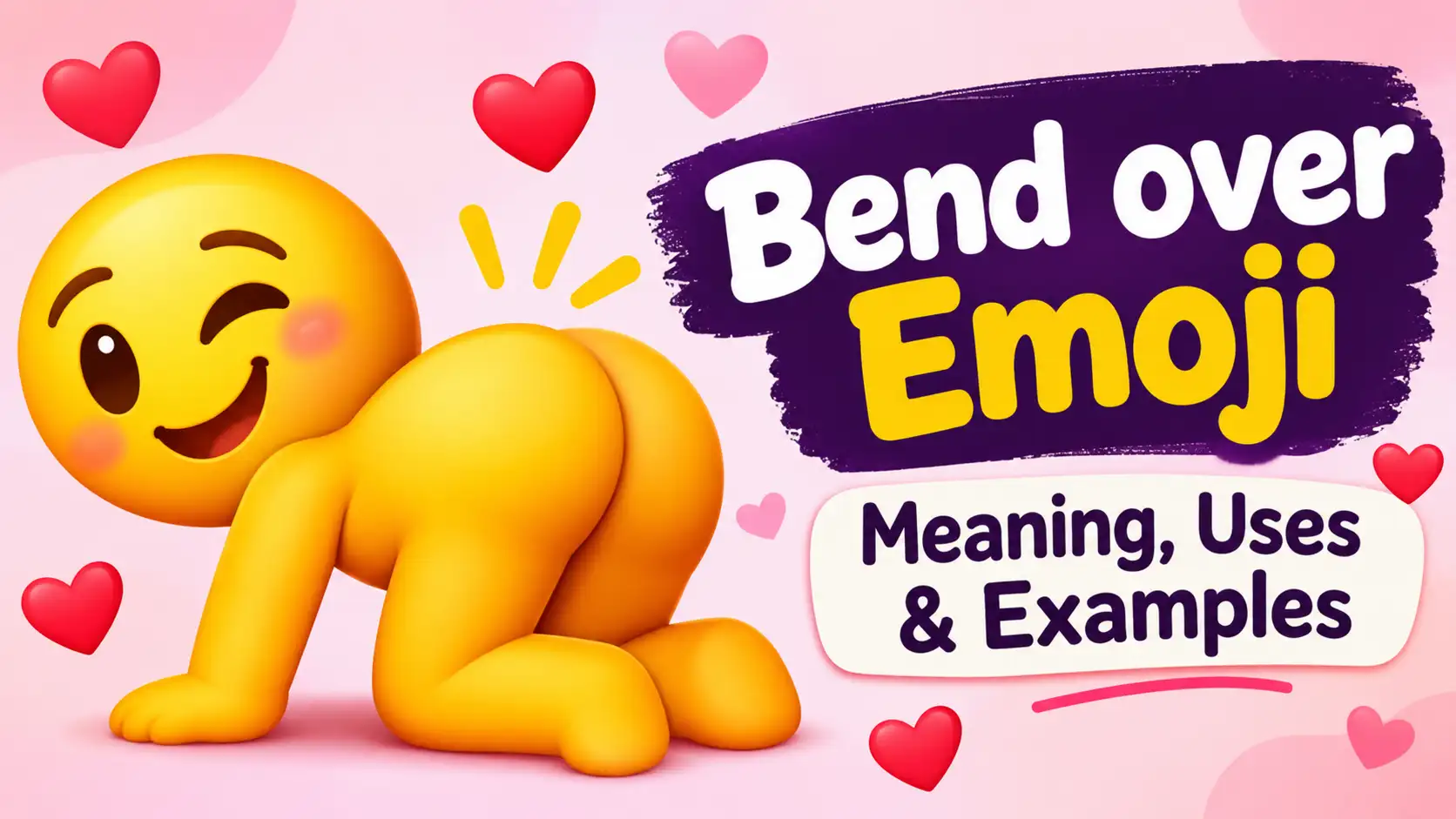
Have you ever received a bending or bowing emoji and wondered what the sender was trying to say? It can be confusing because a simple body gesture may communicate several different things. The phrase bend over emoji is commonly used when people search for a person bending forward, bowing, or making a particular gesture in a message. However, there isn’t an official Unicode emoji specifically named “bend over emoji.”
The closest recognizable option is 🙇, the person bowing emoji. Depending on the conversation, it can suggest an apology, respect, gratitude, embarrassment, or a playful reaction. Some people may also use it jokingly or give it a suggestive interpretation. Context matters, especially when you’re chatting with someone you like or sharing reactions on social media. Let’s explore the meaning, related symbols, practical examples, and ways to use this gesture naturally.
Sometimes a simple bowing gesture says more than a long explanation. 🙇
What Does the Bend Over Emoji Mean? 🙇
The bend over emoji usually refers to a person making a forward-bending gesture. The closest official Unicode character is 🙇, known as the person bowing emoji. It shows someone bending forward with their head lowered. Although people sometimes describe it as a bending, kneeling, or bowing emoji, its official identity is more specific.
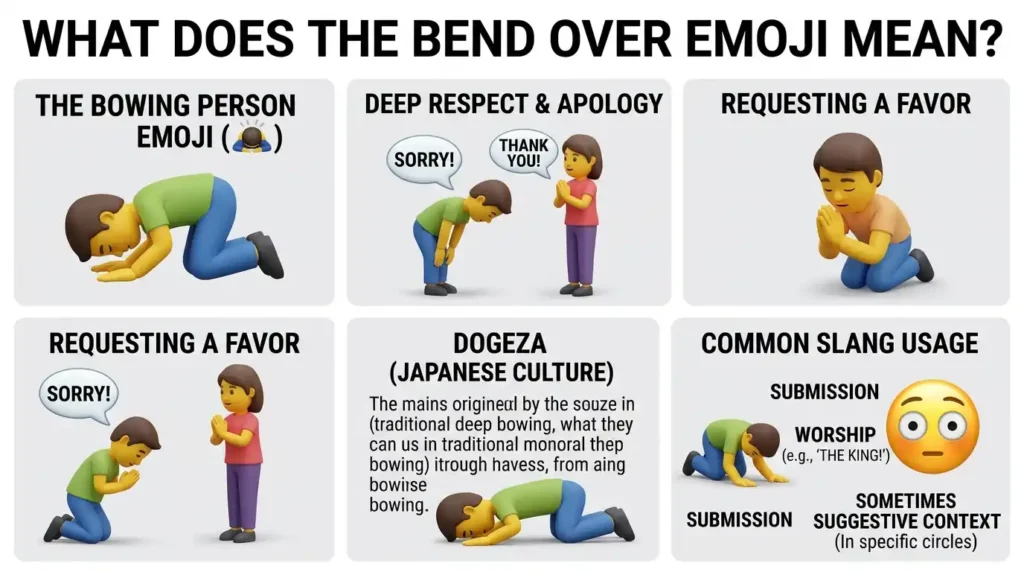
Here are six related interpretations and gestures worth understanding:
- 🙇 Person bowing: Often communicates a sincere apology, respect, gratitude, or a humble request. For example, “I’m really sorry 🙇.”
- 🙇♀️ Woman bowing: A gendered version of the bowing gesture. It can express appreciation, politeness, or an apology.
- 🙇♂️ Man bowing: Another version of the same gesture, often used when someone wants to show respect or acknowledge a mistake.
- 🧎 Person kneeling: Represents someone kneeling. Depending on the conversation, it may suggest prayer, exhaustion, or a dramatic reaction.
- 🙏 Folded hands: Commonly communicates thanks, prayer, hope, or a polite request. It can complement a bowing gesture.
- 🤦 Person facepalming: Represents frustration, embarrassment, or disbelief. It can work as a reaction when someone feels awkward about something they have done.
In everyday texting, 🙇 can make an apology feel more expressive than words alone. Friends might use it after forgetting a plan, while someone at work might send it to acknowledge a mistake politely.
On social media, the gesture can also become humorous. Someone might use it after making an embarrassing comment or asking followers for a favor. In a romantic conversation, it could suggest playful embarrassment or a dramatic request for forgiveness.
However, the phrase “bend over emoji” can also have a suggestive interpretation in certain private conversations. That does not mean the official emoji automatically carries a sexual meaning. The surrounding words, relationship, and intention matter.
A useful rule is to read the complete message rather than judging one symbol. The same gesture can look respectful in an apology, funny in a meme, and suggestive in a private joke.
Bend Over Emoji Meaning Table
| Emoji | Core meaning | Possible misread | Best used when |
|---|---|---|---|
| 🙇 | Apology and respect | Physical exercise | Saying sorry |
| 🙇♀️ | Woman bowing | Showing embarrassment only | Expressing politeness |
| 🙇♂️ | Man bowing | Kneeling or sleeping | Showing appreciation |
| 🧎 | Kneeling | Bowing forward | Describing a kneeling gesture |
| 🧎♀️ | Woman kneeling | Sitting down | Representing a kneeling person |
| 🧎♂️ | Man kneeling | Bending over | Describing a person kneeling |
| 🙏 | Thanks or prayer | High five | Making a polite request |
| 🤦 | Embarrassment or disbelief | Headache | Reacting to a mistake |
| 🤷 | Uncertainty | Indifference | Saying you don’t know |
| 💁 | Helpful or confident gesture | Sarcasm | Giving a playful response |
Ten Related Emoji Cards
🙇 Person Bowing
Meaning: Respect, humility, apology, or a polite request.
Example 1: I’m really sorry for being late 🙇
Example 2: Thank you for helping me so much 🙇
🙇♀️ Woman Bowing
Meaning: A feminine bowing gesture expressing appreciation or regret.
Example 1: I appreciate your kindness 🙇♀️
Example 2: Please forgive my mistake 🙇♀️
🙇♂️ Man Bowing
Meaning: A masculine bowing gesture associated with respect and apology.
Example 1: I owe you an apology 🙇♂️
Example 2: Thanks for your patience 🙇♂️
🧎 Person Kneeling
Meaning: A kneeling position that can communicate humility or a dramatic reaction.
Example 1: I’m exhausted after today’s work 🧎
Example 2: That was a serious request 🧎
🧎♀️ Woman Kneeling
Meaning: A woman in a kneeling position, sometimes used in dramatic reactions.
Example 1: Finally taking a break 🧎♀️
Example 2: I’m waiting for the big announcement 🧎♀️
🧎♂️ Man Kneeling
Meaning: A man kneeling, often representing a physical position or dramatic moment.
Example 1: That workout was difficult 🧎♂️
Example 2: I’m officially out of energy 🧎♂️
🙏 Folded Hands
Meaning: Gratitude, prayer, hope, or a respectful request.
Example 1: Please give me another chance 🙏
Example 2: Thank you for understanding 🙏
🤦 Person Facepalming
Meaning: Embarrassment, frustration, or disbelief.
Example 1: I forgot my own appointment 🤦
Example 2: Why did I say that? 🤦
🤷 Person Shrugging
Meaning: Uncertainty, confusion, or not knowing what to do.
Example 1: I honestly have no idea 🤷
Example 2: Let’s see what happens next 🤷
💁 Person Tipping Hand
Meaning: Offering information, showing confidence, or responding with playful attitude.
Example 1: Here’s what you need to know 💁
Example 2: Just sharing my opinion 💁
How to Use the Bend Over Emoji the Right Way?
The best way to use the bend over emoji is to match the gesture with your message. Since 🙇 is officially a bowing gesture, it works particularly well when you want to sound apologetic, respectful, grateful, or playfully embarrassed.
Here is how you can use it across popular social platforms.
WhatsApp 💬
WhatsApp is one of the easiest places to use bowing and kneeling emojis because personal conversations often include apologies, favors, and emotional reactions.
- Personal chats: Send 🙇 when you want to apologize for something small. Example: “Sorry, I forgot to reply earlier 🙇.”
- Family conversations: Use 🙏 when thanking someone for their support or asking politely for help.
- Friendships: A playful combination of 🙇 and 🤦 can show that you made a silly mistake.
- Emotional messages: Use a bowing gesture when you want your apology to feel sincere rather than casual.
- Status updates: Add 🧎 to a funny status about being tired after a long day.
For example, you could write:
“Please forgive me, I promise it won’t happen again 🙇🙏”
This sounds more expressive than sending the words alone.
Instagram 📸
Instagram emojis can add personality to captions, comments, bios, and Reels. The bowing gesture is particularly useful when responding to compliments or acknowledging someone’s support.
- Captions: Add 🙇 to a post thanking your followers.
- Comments: Use 🙏 when someone gives you a thoughtful compliment.
- Bios: A simple gesture can communicate a humble or playful personality, although it may not explain your profile by itself.
- Aesthetic posts: Use a single bowing emoji when the caption has a respectful or reflective tone.
- Reels: Add 🤦 to a funny video about making an embarrassing mistake.
Example caption:
“Grateful for everyone who supports my journey 🙇”
You can also use the emoji in replies when someone praises your work.
TikTok 🎵
TikTok is a popular place for expressive reactions, funny videos, and exaggerated online humor.
The bowing emoji can fit videos about apologizing, making mistakes, or dramatically asking someone for a favor.
For example:
- “Me apologizing after making the same mistake again 🙇”
- “When your friend finally agrees to help you 🙏”
- “That awkward moment when you realize what you just said 🤦”
Creators can use these gestures in video captions, pinned comments, and replies. However, the meaning depends on the video’s subject. A bowing emoji in a comedy video may look intentionally dramatic, while the same symbol in a serious apology can feel respectful.
On Facebook, these symbols work naturally in everyday posts, comments, and Messenger conversations.
You might use 🙇 when thanking someone for attending an event, 🙏 when requesting support, or 🤷 when responding to a question you cannot answer.
Example:
“Thank you all for the lovely birthday wishes. I truly appreciate them 🙇”
Keep the message simple. One relevant gesture is usually enough to make your intention clear.
Do’s and Don’ts of Using the Bend Over Emoji
A little attention to context can prevent awkward misunderstandings.
Do:
- Use 🙇 when you genuinely want to express an apology or respect.
- Consider your relationship with the person receiving the message.
- Match the gesture with the wording of your message.
- Use 🙏 for a polite request or expression of thanks.
- Check how the emoji appears on different devices.
- Use 🧎 when you specifically mean a kneeling position.
Don’t:
- Assume that every bending gesture has a romantic or suggestive meaning.
- Send 🙇 in a serious conversation without considering the tone.
- Use multiple gestures randomly just to decorate a message.
- Assume everyone understands the same emoji combination.
- Confuse a bowing gesture with a kneeling or exercise position.
- Interpret a single emoji as proof of someone’s intentions.
For example, receiving “I’m sorry 🙇” from a friend is generally more likely to communicate an apology than a hidden romantic message. Look at the complete conversation before making assumptions.
Why Do Bend Over Emojis Look Different on iPhone and Android?
Have you noticed that the same emoji sometimes looks slightly different on your friend’s phone? This happens because emojis have standardized character identities, but their visual designs are created by individual platform providers.
The Unicode Standard assigns characters to emoji symbols. For example, 🙇 is officially identified as the person bowing emoji. However, Unicode does not require Apple, Google, Samsung, or Microsoft to draw every emoji in exactly the same style. Unicode+1
Here is what you might notice:
- Shape: The person’s body position or proportions may look slightly different.
- Color: Clothing, skin tones, and other visual details can vary.
- Facial expression: Small design differences may affect how the gesture feels.
- Size: An emoji may appear larger or smaller depending on the application.
- Style: Some platforms use softer, rounded artwork, while others use a different illustration style.
How major platforms display emojis
| Platform | General visual approach |
|---|---|
| Apple | Apple-designed emoji artwork |
| Google’s own emoji artwork | |
| Samsung | Samsung-designed emoji artwork |
| Microsoft | Microsoft’s own emoji artwork |
For example, when you send 🙇 from an iPhone to an Android user, the recipient’s device or application may display its own version of the character.
The same principle applies to 🙇♀️, 🙇♂️, and the kneeling emoji family. Their appearance can change, but their underlying Unicode identities remain recognizable.
This is why you should focus on the gesture and message rather than assuming that a small visual difference changes the intended meaning.
Best Bend Over Emoji Combos: Copy & Paste
Emoji combinations can make a message more expressive. Since the bowing and kneeling gestures have several possible interpretations, choose combinations that support the tone you want.
Here are 15 combinations organized by common situations.
Romantic 🙇
- 👉 🙇🙏: Use this when playfully asking someone special for forgiveness.
- 👉 🙇💁: Use this for a lighthearted, confident conversation.
- 👉 🧎🙏: Use this for an exaggerated request in a playful private chat.
Cute 🥰
- 👉 🙇♀️🙏: Use this to thank someone sweetly.
- 👉 🙇♂️💁: Use this for a humorous, friendly reaction.
- 👉 🧎♀️🙇: Use this for a cute, dramatic reaction.
Flirty 😉
- 👉 🙇💁: Use this when responding playfully to a teasing comment.
- 👉 🧎🙏: Use this for an exaggerated favor request.
- 👉 🙇♂️🤷: Use this when jokingly acting unsure around someone.
Missing Someone 💭
- 👉 🙇🙏: Use this when asking someone to forgive your absence.
- 👉 🧎🤷: Use this for a dramatic reaction to waiting for a reply.
- 👉 🙇♀️💁: Use this in a playful message when restarting a conversation.
Good Night 🌙
- 👉 🙇🙏: Use this to thank someone for a lovely conversation.
- 👉 🧎♂️🤷: Use this as a funny reaction when you’re too tired to continue chatting.
- 👉 🙇♀️🙏: Use this to end a polite, friendly conversation.
These are creative combinations rather than official emoji definitions. You can adjust them according to your relationship and the message you want to send.
Trending Bend Over Emojis in 2026
In 2026, expressive body gestures remain useful in casual online conversations because they can communicate reactions without requiring long explanations. The person bowing emoji and related gestures are especially useful when people want to show politeness, embarrassment, or a dramatic reaction.
There is no reliable evidence that the bend over emoji is an officially ranked trending emoji in 2026. However, these related symbols offer several practical ways to communicate across messaging and social platforms.
1. 🙇 Person Bowing
This is the closest official match for the bend over emoji search. People can use it in apology messages, thank-you comments, and playful conversations. It works particularly well when someone wants to acknowledge a mistake.
2. 🧎 Person Kneeling
This gesture can appear in humorous captions and reactions. People may use it to represent exhaustion, dramatic requests, or a kneeling position.
3. 🙏 Folded Hands
This symbol remains recognizable in messages expressing gratitude, hope, and polite requests. It can also accompany a bowing gesture to make an apology feel more expressive.
4. 🤦 Person Facepalming
This emoji fits funny posts, relatable mistakes, and embarrassing moments. It can add a humorous reaction to a situation where someone realizes they have done something silly.
| Emoji | Why trending | Who uses it | Platform |
|---|---|---|---|
| 🙇 | Apologies and respectful reactions | Friends and creators | WhatsApp, Instagram |
| 🧎 | Dramatic and humorous gestures | Meme creators | TikTok, Facebook |
| 🙏 | Thanks and polite requests | General users | WhatsApp, Facebook |
| 🤦 | Relatable mistakes and humor | Social media users | TikTok, Instagram |
These are practical usage examples, not verified popularity rankings. Emoji habits continue to evolve as people develop new ways to express humor, emotions, and reactions online.
Bend Over Emoji Meaning in Different Contexts
The same emoji can communicate different feelings depending on the person sending it and the conversation taking place. Understanding these differences helps you avoid misunderstandings.
Romantic Conversations
In romantic conversations, 🙇 can become a playful gesture when someone is apologizing or asking for attention.
For example:
“Okay, I admit I was wrong 🙇”
A partner might understand this as a cute or humorous apology. However, it does not automatically indicate attraction or romantic interest.
Some private conversations may give bending gestures a suggestive meaning. If that happens, the surrounding words and relationship provide important clues.
Friendship
Friends often use expressive emojis to make ordinary conversations more entertaining.
For example:
“Please don’t be angry with me 🙇”
This can make a small apology feel less formal. Similarly, 🤦 can communicate embarrassment after a funny mistake.
Family Conversations
With family members, the bowing gesture can show appreciation, politeness, or regret.
For example:
“Thank you for everything you have done for me 🙏”
It can also help make a request sound more respectful.
Professional and Casual Communication
In professional conversations, 🙇 may be appropriate when acknowledging a mistake or expressing gratitude.
For example:
“Apologies for the delay. Thank you for your patience 🙇”
However, consider your workplace culture. A plain written apology may be better for formal emails or important business discussions.
Texting and Social Media Comments
In text messages, the emoji often adds emotional expression to short replies.
On social media, it can become a humorous reaction to a video, comment, or embarrassing situation.
For example:
“That was not supposed to happen 🤦”
Captions
Creators can use bowing and kneeling gestures in captions when posting funny, dramatic, or reflective content.
For example:
“Accepting my mistake and moving forward 🙇”
Ultimately, the most reliable way to understand an emoji is to consider the entire conversation. One symbol rarely tells the whole story.
How to Copy and Paste the Bend Over Emoji?
Want to use the bend over emoji in your next message? You can copy the closest official emoji directly from this line.
Copy and Paste
🙇
Person bowing
Copy
Other related gestures
🙇♀️ 🙇♂️ 🧎
Copy all
Follow these simple steps:
- Select the emoji you want to use.
- Copy it using your device’s copy option.
- Open WhatsApp, Instagram, or TikTok.
- Choose a conversation, caption, or comment box.
- Paste the emoji and send or publish your message.
You can also find these symbols through your phone’s emoji keyboard. On a computer, you can copy them from this page and paste them into supported applications.
Remember that the displayed artwork may differ between devices, even when you copy the same Unicode character.
Frequently Asked Questions:
1. What is the most popular bend over emoji?
🙇 is the closest official emoji to the bend over emoji search. It represents a person bowing and is commonly associated with apologies, respect, and polite requests.
2. What does 🙇 mean when someone sends it?
It often means the sender is apologizing, showing respect, or expressing gratitude. However, the intended meaning depends on the conversation, relationship, and surrounding words, not the sender’s gender.
3. Why do bend over emojis look different on iPhone vs Android?
Apple and Android devices use different emoji artwork. Unicode provides the standardized character, while platform providers create their own visual designs. Therefore, the same emoji can look slightly different.
4. Are bend over emojis used differently in other countries?
Yes, interpretation can vary with language, culture, and online communities. A bowing gesture may carry particular associations with respect or apology in some settings. Always consider the conversation rather than assuming everyone interprets it identically.
Conclusion
The bend over emoji is generally associated with the person bowing symbol, 🙇, although people may use the phrase for other bending or kneeling gestures. Its meaning can range from apology and respect to humor and playful reactions.
Choose the emoji that matches your message, consider your audience, and avoid assuming hidden meanings without context. A thoughtful gesture can make everyday digital conversations more expressive. 🙇

Nasrullah — Emoji Strategist & Content Writer
Nasrullah is a passionate emoji enthusiast and content writer who loves exploring the meanings, uses, and cultural context behind emojis. He creates simple, helpful, and easy-to-understand guides that help readers choose the right emoji for WhatsApp, Instagram, Facebook, texting, and everyday conversations.
With a focus on emoji meanings, combinations, social media usage, and modern digital communication, Nasrullah aims to make every emoji easier to understand and use with confidence. His content combines practical examples with clear explanations so readers can quickly find the meaning and usage they are looking for.
When he’s not researching emojis, Nasrullah enjoys exploring digital trends, writing useful online content, and learning about how people communicate in the digital world. 😊