Have you ever received a message with 😓 or 😅 and wondered what the sender was trying to say? Maybe someone was explaining an awkward situation, reacting to a stressful moment, or laughing at a mistake they almost made. The sweat emoji can express several feelings without requiring a long explanation.
The sweat emoji meaning depends on which version someone uses and what is happening in the conversation. Some sweat-related emojis suggest nervousness, while others communicate exhaustion, embarrassment, heat, or relief. You might see them in WhatsApp messages, Instagram comments, TikTok reactions, and everyday text conversations.
Although these emojis look similar, they do not always communicate the same emotion. A smiling face with sweat can make an awkward moment feel funny, while a worried face with sweat may suggest genuine stress. Let’s explore their meanings, examples, and practical uses. 😅💦
Sometimes a single drop of sweat says everything you cannot quite put into words. 😓
6. What Does Sweat Emoji Meaning Actually Represent? 😓
The sweat emoji usually represents nervousness, stress, embarrassment, physical effort, heat, or relief. However, its exact interpretation depends on the specific emoji. One of the most recognizable examples is 😓, the downcast face with sweat. It often communicates worry, disappointment, pressure, or feeling overwhelmed. People use it when something has gone wrong or when they are dealing with an uncomfortable situation.
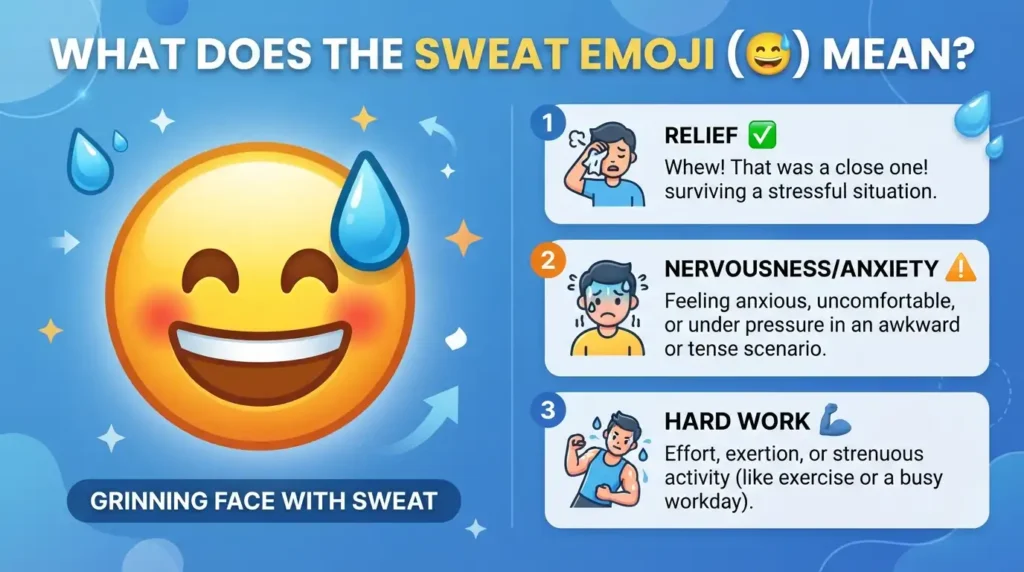
Another popular version is 😅, the grinning face with sweat. It often suggests nervous laughter, awkwardness, embarrassment, or relief after a difficult moment. For example, someone might write, “I almost missed my exam 😅.” The smile makes the situation feel lighter, even though the person may have been genuinely worried.
The 😰 emoji usually communicates anxiety or fear. It can represent a person feeling overwhelmed, particularly when something unexpected happens. Meanwhile, 😥 often suggests sadness, disappointment, or relief after a stressful experience. These expressions are related, but their emotional tones are different.
Physical discomfort is another important part of this emoji family. 🥵 can represent extreme heat, intense exercise, or feeling physically overwhelmed. The water droplets emoji 💦 can suggest sweating, splashing water, or physical activity, depending on the conversation. Similarly, 💧 can represent a single water droplet or moisture.
Other related expressions include 😩 for exhaustion, 😬 for awkwardness, and 😮💨 for a sigh of relief or frustration. These can help communicate feelings that are difficult to explain through ordinary words.
In texting, sweat emojis can make a message sound more emotional and natural. On Instagram and TikTok, they often appear in funny captions, relatable comments, and reactions to unexpected situations. They can also be used positively when someone finishes a challenging task.
Importantly, the sender’s relationship with the receiver matters. A friend might use 😅 to laugh about a small mistake, while someone you like might use it to soften a nervous or slightly flirty message. Neither interpretation is automatic. The surrounding words, conversation, culture, and platform all influence the meaning. Even the same emoji can communicate genuine anxiety or playful humor in different situations.
7. Sweat Emoji Meaning Table
Here is a quick comparison of the most useful sweat-related emojis and their common interpretations.
| Emoji | Core meaning | Possible misread | Best used when |
|---|---|---|---|
| 😓 | Stress or worry | Sadness | Facing a difficult situation |
| 😅 | Nervous laughter or relief | Genuine happiness | Laughing at an awkward moment |
| 😰 | Anxiety or fear | General sadness | Feeling overwhelmed |
| 😥 | Disappointment or relief | Ordinary sadness | Getting through a tough moment |
| 🥵 | Heat or exhaustion | Attraction | Feeling hot or overheated |
| 😩 | Frustration or exhaustion | Anger | Dealing with something difficult |
| 😬 | Awkwardness or tension | Disapproval | Reacting to an uncomfortable situation |
| 💦 | Sweat or splashing water | A suggestive meaning | Exercise or water-related posts |
| 💧 | Water or moisture | A tear | Discussing water or a single droplet |
| 😮💨 | Sigh or release of tension | Tiredness | Expressing relief or frustration |
8. Sweat Emoji Cards: 10 Related Expressions
1. 😓 Downcast Face With Sweat
Meaning: Worry, stress, disappointment, or feeling overwhelmed.
Example 1: I have so much work left today 😓
Example 2: That was a really difficult conversation 😓
2. 😅 Grinning Face With Sweat
Meaning: Nervous laughter, awkwardness, or relief.
Example 1: I sent the message to the wrong person 😅
Example 2: Somehow I finished everything before the deadline 😅
3. 😰 Anxious Face With Sweat
Meaning: Fear, nervousness, or intense anxiety.
Example 1: I hope everything goes well tomorrow 😰
Example 2: My interview starts in five minutes 😰
4. 😥 Sad but Relieved Face
Meaning: Disappointment, emotional pressure, or relief after difficulty.
Example 1: I thought I had lost my phone 😥
Example 2: Finally, the difficult part is over 😥
5. 🥵 Hot Face
Meaning: Extreme heat, physical exhaustion, or feeling overheated.
Example 1: This summer weather is unbelievable 🥵
Example 2: Just finished an intense workout 🥵
6. 😩 Weary Face
Meaning: Frustration, exhaustion, or being mentally drained.
Example 1: Another long meeting today 😩
Example 2: I cannot believe how much work is left 😩
7. 😬 Grimacing Face
Meaning: Awkwardness, discomfort, or nervous tension.
Example 1: That conversation became uncomfortable 😬
Example 2: I completely forgot about our appointment 😬
8. 💦 Sweat Droplets
Meaning: Sweating, splashing water, or physical activity.
Example 1: That workout was intense 💦
Example 2: Time for a refreshing swim 💦
9. 💧 Droplet
Meaning: A drop of water, moisture, or a small amount of liquid.
Example 1: Just one little drop of water 💧
Example 2: Staying hydrated throughout the day 💧
10. 😮💨 Face Exhaling
Meaning: Relief, frustration, tiredness, or releasing tension.
Example 1: Finally submitted my assignment 😮💨
Example 2: What a stressful day that was 😮💨
9. How to Use Sweat Emoji the Right Way?
Sweat-related emojis can make digital conversations feel more expressive. However, choosing the right one is important because 😅, 😓, and 😰 can communicate different emotional tones. Here is how to use them naturally across popular platforms.
WhatsApp 💬
WhatsApp is one of the easiest places to use sweat emojis because personal conversations often include jokes, updates, emotional reactions, and everyday situations.
– Personal chats: Use 😅 when sharing a funny mistake or an awkward experience.
Example: “I forgot to bring my keys again 😅”
– Family conversations: Use 🥵 when talking about hot weather, household work, or physical activity.
Example: “It is so hot outside today 🥵”
– Friendships: Use 😬 when reacting to an uncomfortable or embarrassing situation.
Example: “You really said that in front of everyone? 😬”
– Emotional messages: Use 😓 when explaining that you are worried or having a difficult day.
Example: “I have been dealing with so much lately 😓”
– Status updates: Use 💦 after a workout or 😮💨 after finishing a demanding task.
Example: “Finally done with today’s responsibilities 😮💨”
The key is to match the emoji with the message instead of adding one randomly.
Instagram 📸
Instagram emojis are commonly used to add emotion to captions, comments, Reels, and everyday posts.
For example, someone sharing a gym picture might use 💦 to emphasize a challenging workout. A creator posting a funny mistake could add 😅 to show that they are laughing at themselves.
Here are a few practical examples:
- Captions: “Survived another busy Monday 😅”
- Comments: “That ending caught me off guard 😰”
- Reels: “When you realize the deadline is tomorrow 😓”
- Aesthetic posts: Use 💧 with water, rain, or refreshing summer photography.
- Engagement: React to a relatable awkward moment with 😬.
You can also use these emojis in Instagram Stories when sharing everyday experiences. A simple caption with one appropriate emoji can communicate the mood without making the text look crowded.
TikTok 🎵
TikTok is particularly suitable for humorous and relatable reactions. Sweat emojis can help creators communicate nervousness, awkwardness, or the struggle behind a funny situation.
For example:
- “Me pretending I understood the instructions 😅”
- “When the teacher says this is an easy question 😰”
- “Trying to survive summer without air conditioning 🥵”
- “That moment when everyone looks at you 😬”
Creators can also use 😓 in videos about busy schedules, unexpected problems, or everyday frustrations. Meanwhile, 😮💨 works naturally in videos showing the relief of completing a difficult challenge.
The same emoji can sound humorous in one TikTok and genuinely emotional in another. The video itself provides important context.
Facebook users can include sweat emojis in posts, comments, and Messenger conversations. For instance, 😅 can make a funny personal update feel more relaxed, while 😓 can communicate frustration about a difficult day.
Examples:
- Post: “Finally finished cleaning the whole house 😮💨”
- Comment: “That was an unexpected ending 😅”
- Messenger: “I am running late, sorry 😓”
Use them naturally, especially when replying to friends and family. A well-chosen emoji can make a short response feel warmer and more expressive.
10. Dos and Don’ts of Using Sweat Emojis
Knowing when to use a particular emoji can prevent misunderstandings.
Do:
- Use 😅 to soften an awkward or embarrassing message.
- Choose 😓 when discussing genuine stress or worry.
- Use 🥵 for hot weather and intense physical activity.
- Consider your relationship with the receiver before sending an emotional reaction.
- Match the emoji with the overall tone of your message.
- Check how the emoji appears on different devices.
Don’t:
- Use 😅 automatically when someone shares something genuinely upsetting.
- Assume 😰 always means a serious emergency.
- Overload professional messages with emotional emoji reactions.
- Combine unrelated symbols without a clear reason.
- Assume 💦 always refers to physical sweating.
- Treat every sweat-related emoji as a romantic signal.
A useful tip: If your message is serious, choose an emoji carefully or leave it out. Sometimes plain words communicate your feelings more clearly.
11. Why Does Sweat Emoji Look Different on iPhone and Android?
Have you ever noticed that the same sweat emoji looks slightly different on an iPhone, Samsung phone, or computer? This happens because emojis have standardized character identities, but their visual designs can vary between operating systems and platforms.
The Unicode Standard provides a common system for representing emojis across digital devices. It helps different platforms recognize and display the same underlying emoji character. However, Unicode does not require every company to draw each emoji in exactly the same style.
Companies such as Apple, Google, Samsung, and Microsoft create their own emoji artwork. As a result, the 😅 emoji might have slightly different facial details, colors, shading, or proportions depending on the device.
Here are some differences you might notice:
- Shape: Facial outlines and sweat droplets can look slightly different.
- Color: Skin tones, highlights, and background details may vary.
- Expression: A smile or worried expression might appear more subtle on one platform.
- Size: Emojis can have different visual proportions in different applications.
- Style: Some designs appear more rounded, while others use different shading and details.
For example, someone using an iPhone might send 😓 to an Android user. Both devices generally recognize the same Unicode character, even if the artwork is not identical.
Your operating system, emoji font, application, and software updates can also affect how an emoji appears. Older devices may not support newer emoji characters, so they might display an empty box or another substitute.
There is no single universally correct visual design for these emojis. The important thing is the underlying character and its intended use. If you are unsure whether someone understood your message, the surrounding words are more helpful than comparing tiny differences in the artwork.
12. Best Sweat Emoji Combos: Copy & Paste
Combining sweat-related emojis can make a message more expressive. You can use them to show nervous laughter, physical effort, romantic nervousness, or relief after a difficult experience.
Here are 15 combinations grouped by mood. Each combination uses emojis from the related family.
Romantic ❤️
These combinations can add a playful, slightly nervous feeling to romantic conversations.
- 👉 😅💧 : Use this when you feel shy or nervous while talking to someone you like.
- 👉 🥵💦 : Use this for a playful reaction to an attractive picture or a warm romantic moment.
- 👉 😬😅 : Use this when you feel awkward but happy during a sweet conversation.
Cute 🥰
These combinations are suitable for friendly messages and playful everyday reactions.
- 👉 😅💦 : Use this when laughing about a funny little accident.
- 👉 😓💧 : Use this to express a small struggle in a cute, lighthearted way.
- 👉 😥😅 : Use this after getting through a difficult but funny situation.
Flirty 😉
These combinations can communicate playful nervousness or a cheeky reaction.
- 👉 🥵😅 : Use this when someone makes you feel flustered.
- 👉 😬💦 : Use this for a teasing reaction to an awkward moment.
- 👉 😅😮💨 : Use this after a nervous but enjoyable conversation.
Missing Someone 💭
These combinations can express emotional tension when someone is far away or has not replied.
- 👉 😓😮💨 : Use this when you miss someone and feel emotionally overwhelmed.
- 👉 😥💧 : Use this for a softer message about missing someone.
- 👉 😅😓 : Use this when you are nervous about sending someone a message.
Good Night 🌙
These combinations are useful for ending a tiring day or wishing someone a peaceful night.
- 👉 😮💨💧 : Use this after a long and exhausting day.
- 👉 😓😮💨 : Use this when you are finally ready to rest.
- 👉 😅😴 : Use this for a playful goodnight message after a busy day.
The best combinations are usually short and easy to understand. You do not need several emojis to communicate a complicated feeling. Two carefully selected symbols can be enough to make your message feel more personal.
13. Trending Sweat Emoji in 2026
Sweat-related emojis continue to fit naturally into everyday online communication because people regularly share reactions to awkward situations, busy schedules, hot weather, and unexpected moments.
In 2026, their usefulness is not limited to one social media trend. Different versions appear in ordinary conversations, funny videos, fitness updates, and relatable captions. Their popularity comes partly from their flexibility: the same emoji can support humor, frustration, or emotional expression depending on the accompanying words.
Here are four sweat-related emojis worth recognizing in current digital communication.
😅 Grinning Face With Sweat
This is a familiar choice for nervous laughter and awkward humor. People commonly use it when admitting a mistake, explaining an uncomfortable situation, or reacting to something unexpected.
Example: “I thought the meeting was tomorrow 😅”
It works especially well in WhatsApp chats, Instagram comments, and TikTok captions because it softens the tone.
😓 Downcast Face With Sweat
This expression is useful when someone wants to communicate pressure, disappointment, or a difficult day.
Example: “Three deadlines and one evening to finish everything 😓”
It often appears in conversations about work, studies, and everyday responsibilities.
🥵 Hot Face
The hot face is frequently used in summer posts, workout content, and reactions to uncomfortable temperatures.
Example: “Walking outside in this weather is impossible 🥵”
It can also communicate feeling flustered, but the surrounding message should make that interpretation clear.
💦 Sweat Droplets
This emoji is useful for discussing exercise, sweating, water activities, and energetic moments.
Example: “Another gym session completed 💦”
Its interpretation can change depending on the caption, so it is worth considering the audience before using it.
Sweat Emoji Usage at a Glance
| Emoji | Why trending | Who uses it | Platform |
|---|---|---|---|
| 😅 | Awkward humor and nervous reactions | Friends and creators | WhatsApp, TikTok |
| 😓 | Relatable stress and busy days | Students and workers | Instagram, Facebook |
| 🥵 | Heat, fitness, and playful reactions | Fitness enthusiasts and creators | Instagram, TikTok |
| 💦 | Exercise and water-related content | Fitness and lifestyle creators | Instagram, Facebook |
These are practical examples of common online uses, not an official popularity ranking or measured trend report.
As digital communication evolves, people continue to adapt familiar emojis to new jokes, situations, and conversational styles.
14. Sweat Emoji Meaning in Different Contexts
The same sweat emoji can communicate different feelings depending on who sends it, what they are discussing, and how the conversation develops. Understanding these differences can help you avoid confusing a playful reaction with a serious emotional response.
1. In Romantic Conversations
When someone uses 😅 while talking to a person they like, it may suggest nervousness, shyness, or playful embarrassment.
For example:
“Honestly, I was nervous before meeting you 😅”
The sender may be trying to make a personal confession feel less serious. Similarly, 🥵 might be used as a playful compliment or reaction to an attractive picture.
However, neither emoji automatically confirms romantic interest. Look at the actual conversation rather than assuming feelings from one symbol.
2. Between Friends
Friends often use sweat emojis to joke about everyday mistakes and uncomfortable situations.
For example:
“I waved at someone who wasn’t waving at me 😅”
Another friend might respond with 😬 to show secondhand embarrassment.
In this setting, the emojis often make an ordinary story more entertaining.
3. In Family Conversations
Family members can use these symbols when talking about daily responsibilities, household tasks, or difficult experiences.
For example:
“Finished cleaning the entire house today 😓”
A family member might reply with 😅 to acknowledge the effort humorously.
4. In Professional and Casual Communication
In casual work chats, 😅 can make a minor mistake sound less awkward.
Example: “I accidentally attached the wrong file 😅”
However, be careful when communicating about serious workplace problems. A worried face or plain explanation may be more appropriate than a joking expression.
5. In Regular Texting
Text messages often lack facial expressions and vocal tone. Sweat emojis can help communicate feelings that might otherwise be misunderstood.
For example:
- “I hope I pass the exam 😰”
- “That was close 😅”
- “I finally finished everything 😮💨”
The words surrounding the emoji help explain the sender’s intention.
6. In Social Media Comments
On Instagram and TikTok, these emojis often work as quick reactions.
Someone might comment 😅 under a funny mistake, 😬 under an awkward video, or 🥵 under a summer workout clip.
These short reactions help people respond without writing a complete sentence.
7. In Captions
Sweat emojis can make captions more relatable by showing the emotion behind a picture or video.
Examples:
- “The struggle was real today 😓”
- “Made it through another workout 🥵”
- “Almost gave up, but finished anyway 😅”
The best approach is to choose an emoji that supports the actual mood of your post.
15. How to Copy and Paste Sweat Emoji
Want to use the sweat emoji in your next message? You can copy it directly from the line below.
Copy and paste sweat emojis
😓 😅 😰 😥 🥵 💦
Copy emojisSelect an individual emoji or copy the complete collection.
Follow these simple steps:
- Find the emoji you want to use.
- Select it with your mouse or touch screen.
- Copy it using Ctrl + C on Windows or the copy option on your phone.
- Open WhatsApp, Instagram, or TikTok.
- Tap or click the message, caption, or comment field.
- Paste the emoji using Ctrl + V or your device’s paste option.
You can also access sweat-related symbols through your device’s emoji keyboard.
On Windows, press Windows + . (period) to open the emoji panel. On many smartphones, tap the smiley icon on your keyboard to browse available emojis.
Once copied, these Unicode emojis can generally be used in messages, comments, captions, and social media posts.
FAQs:
1. What is the most popular sweat emoji?
😅 is one of the most recognizable sweat-related emojis. People commonly use it to express nervous laughter, awkwardness, embarrassment, or relief after a stressful situation.
2. What does 😓 mean when someone sends it?
It can suggest worry, stress, disappointment, or feeling overwhelmed. The meaning depends on the conversation and the sender’s intention, not their gender.
3. Why do sweat emojis look different on iPhone vs Android?
Apple and Android manufacturers use their own emoji artwork. Although the underlying Unicode character is generally the same, its appearance, colors, and facial details can vary.
4. Are sweat emojis used differently in other countries?
Yes, interpretation can vary between cultures, online communities, and social groups. However, there is no single meaning that applies to everyone. Always consider the conversation and surrounding words.
17. Conclusion
The sweat emoji can express nervousness, embarrassment, stress, physical exhaustion, heat, and relief. 😅
Choosing the right version makes your WhatsApp messages, Instagram captions, and social media comments easier to understand.
Remember that context matters more than the emoji alone. Use these expressions naturally, and let your words communicate the feeling behind them. 💦

Nasrullah — Emoji Strategist & Content Writer
Nasrullah is a passionate emoji enthusiast and content writer who loves exploring the meanings, uses, and cultural context behind emojis. He creates simple, helpful, and easy-to-understand guides that help readers choose the right emoji for WhatsApp, Instagram, Facebook, texting, and everyday conversations.
With a focus on emoji meanings, combinations, social media usage, and modern digital communication, Nasrullah aims to make every emoji easier to understand and use with confidence. His content combines practical examples with clear explanations so readers can quickly find the meaning and usage they are looking for.
When he’s not researching emojis, Nasrullah enjoys exploring digital trends, writing useful online content, and learning about how people communicate in the digital world. 😊