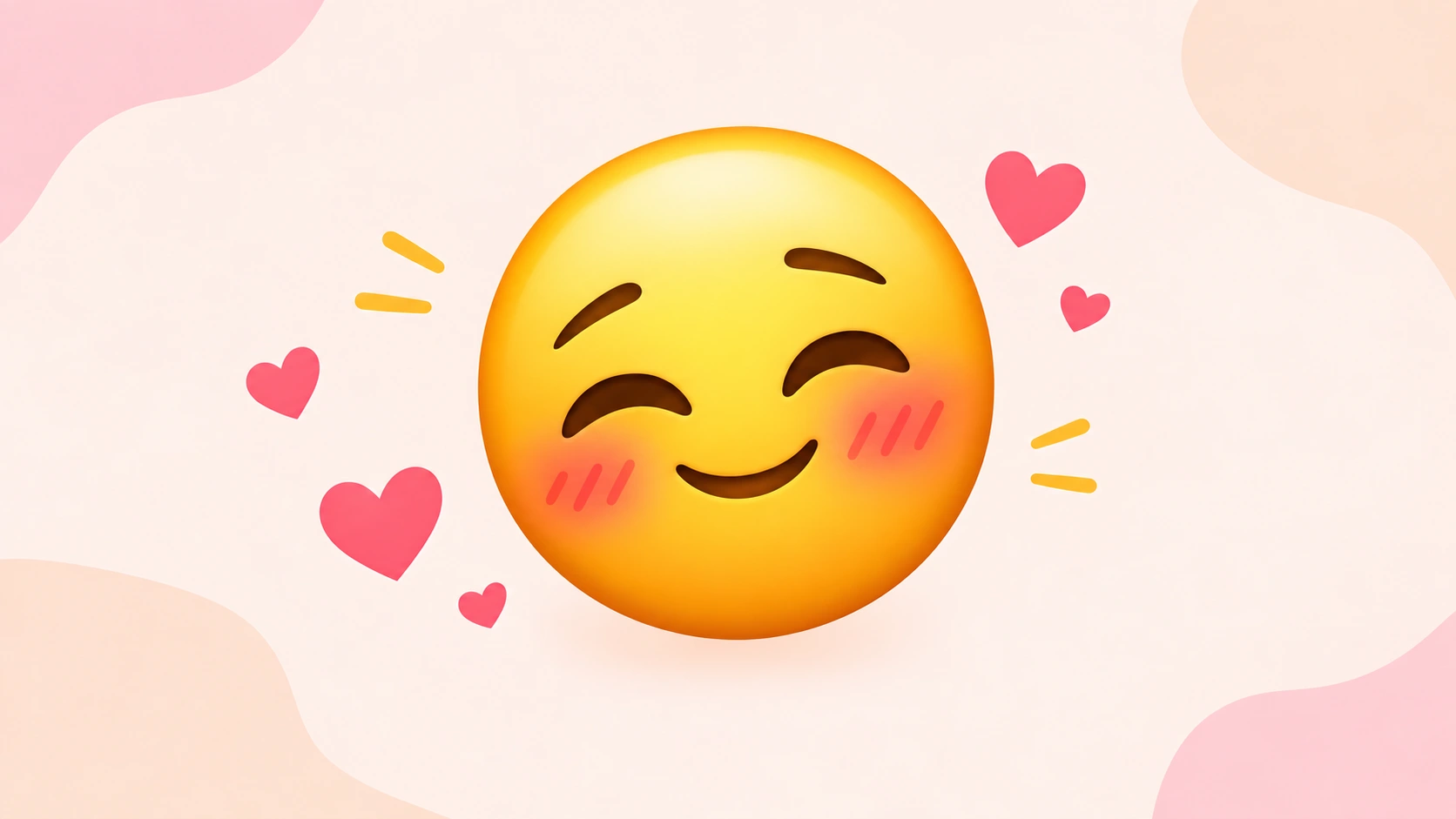
You get a sweet message from someone, smile at your screen, and suddenly you want to reply without making your feelings too obvious. That is where the blushing shy emoji can fit perfectly. 😊 It can add warmth, sweetness, embarrassment, affection, or a soft romantic feeling without spelling everything out.
The exact emoji people call the blushing shy emoji can vary, but 😊 Smiling Face with Smiling Eyes and ☺️ Smiling Face are especially common when someone wants to express a gentle, bashful smile. Other nearby emojis, such as 🥰, 😳, and 🫣, can make the feeling stronger or more obviously shy.
Its meaning is not fixed, though. A friend, partner, family member, or stranger may use it differently. The words around it, your relationship, the conversation, and even the platform can change how it feels. Let’s look at what this emoji communicates and how to use it naturally.
What Does the Blushing Shy Emoji Mean?
The blushing shy emoji usually communicates a gentle, bashful, pleased, or slightly embarrassed feeling. 😊 It can suggest that someone is happy about a compliment, quietly excited by attention, or smiling while feeling a little shy. In many chats, 😊 is the closest match to the everyday idea of a warm, blushing smile, while ☺️ can give an even softer and more old-fashioned shy-smile tone. The surrounding message matters just as much as the emoji itself.

In texting, this emoji can make a simple sentence feel warmer. “Thank you” is polite, while “Thank you 😊” can sound more appreciative and personal. In a romantic conversation, it may suggest affection or bashfulness, especially after a compliment. However, it does not automatically mean romantic interest. A friend can use it simply to show happiness or gratitude.
Related emojis can shift the emotional intensity. 🥰 often feels more openly affectionate, 😳 can make embarrassment more obvious, and 🫣 can suggest hiding because something feels awkward, exciting, or embarrassing. 😉 can add a playful or teasing tone, while 😌 can make the message feel calm and content.
Context is essential. “You remembered my birthday 😊” sounds thankful. “You looked really cute today 😊” may feel affectionate or slightly flirty. “I finally finished my work 😊” usually expresses satisfaction rather than romance. Culture, personal habits, and the relationship between two people can also affect interpretation. The safest approach is to read the complete message rather than treating one emoji as a secret code.
Meaning Table:
| Emoji | Core meaning | Possible misread | Best used when |
|---|---|---|---|
| 😊 | Warm, happy, bashful smile | Forced politeness | Sweet or friendly messages |
| ☺️ | Gentle, shy, content smile | Old-fashioned tone | Soft appreciation |
| 🥰 | Loving, affectionate happiness | Too romantic | Affectionate messages |
| 😳 | Embarrassment or surprise | Shock or discomfort | Awkward moments |
| 🫣 | Shyness, hiding, embarrassment | Fear | Bashful reactions |
| 😉 | Playful or teasing tone | Flirting | Light teasing |
| 😌 | Calm satisfaction | Indifference | Peaceful or pleased replies |
| 😍 | Strong admiration | Intense romance | Compliments and excitement |
| 🫶 | Affection and support | Overly emotional | Caring messages |
| 🙈 | Embarrassed or shy reaction | Literal hiding | Playful embarrassment |
Emoji Cards:
😊 Smiling Face with Smiling Eyes
Meaning: Warm happiness, kindness, appreciation, or gentle shyness.
Example 1: You always know how to make me smile 😊
Example 2: That was really sweet of you 😊
☺️ Smiling Face
Meaning: A soft, pleasant smile that can feel shy, sweet, or content.
Example 1: I’m glad you liked it ☺️
Example 2: That compliment made my day ☺️
🥰 Smiling Face with Hearts
Meaning: Affection, warmth, love, or feeling touched by someone.
Example 1: You remembered that little detail 🥰
Example 2: Aww, that is so sweet 🥰
😳 Flushed Face
Meaning: Embarrassment, surprise, bashfulness, or feeling caught off guard.
Example 1: You really said that to me? 😳
Example 2: Okay, now I’m blushing 😳
🫣 Face with Peeking Eye
Meaning: Shyness, nervous curiosity, embarrassment, or playful hiding.
Example 1: I’m too shy to look at the replies 🫣
Example 2: Did you really post that about me? 🫣
😉 Winking Face
Meaning: Playfulness, teasing, humor, or a possible flirty tone.
Example 1: You know exactly what I mean 😉
Example 2: Maybe I did that on purpose 😉
😌 Relieved Face
Meaning: Calm happiness, satisfaction, comfort, or quiet contentment.
Example 1: Everything worked out perfectly 😌
Example 2: Finally, a peaceful evening 😌
😍 Heart Eyes
Meaning: Strong admiration, excitement, attraction, or delight.
Example 1: That outfit looks amazing 😍
Example 2: This view is absolutely beautiful 😍
🫶 Heart Hands
Meaning: Affection, appreciation, emotional support, or care.
Example 1: Thanks for always being there 🫶
Example 2: Sending you lots of love 🫶
🙈 See-No-Evil Monkey
Meaning: Playful embarrassment, shyness, or pretending not to see something.
Example 1: Stop making me blush 🙈
Example 2: I did not just read that message 🙈
How to Use the Blushing Shy Emoji the Right Way?
The best way to use a blushing shy emoji is to let it support the feeling already present in your message. It works especially well when your words are warm, appreciative, slightly embarrassed, or playfully affectionate.
WhatsApp 💬
On WhatsApp, 😊 can soften everyday conversations without making them overly emotional. You might use it after thanking a friend, responding to a compliment, or acknowledging a thoughtful message.
For example:
“Thanks for checking on me 😊”
In a family chat, it can simply show warmth. With a close friend, it may communicate a shy reaction to teasing. In a romantic conversation, the same emoji can make a compliment feel more tender.
A WhatsApp status can also use ☺️ for a quiet, happy mood without needing a long caption.
Instagram 📸
Instagram gives the blushing shy emoji a more expressive setting. It can appear in captions, comments, replies, bios, or Reel conversations.
A comment such as “Okay, this is adorable 😊” sounds friendly and warm. After receiving a compliment, replying with “Thank you ☺️” can feel modest and appreciative.
When used with romantic or aesthetic content, 🥰 may make the affection more obvious, while 🫣 can communicate playful shyness.
TikTok 🎵
TikTok comments often move quickly between humor, reactions, compliments, and trends. Here, 😳 can make embarrassment or surprise clearer, while 😉 may create a teasing tone.
For example:
“Why did this actually make me emotional 😊”
or:
“Not me watching this three times 🫣”
The meaning comes from the comment and video together, not the emoji alone.
On Facebook, the emoji can work naturally in posts, comments, and Messenger. A friend might use 😊 after sharing good news, while 🙈 can add playful embarrassment to a funny personal story.
Because Facebook conversations include friends, relatives, colleagues, and wider communities, keeping the surrounding wording clear helps prevent an affectionate emoji from being misunderstood.
Do’s and Don’ts:
Do:
- Use the emoji to support the feeling of your message.
- Consider your relationship with the receiver.
- Read the whole conversation before choosing an emoji.
- Match the emoji to your actual tone.
- Remember that emojis may look different across devices.
Don’t:
- Assume 😊 automatically means romance.
- Use several emojis when one communicates the feeling clearly.
- Treat an emoji as a universal secret code.
- Add a shy emoji to a serious message without considering its effect.
- Combine unrelated emojis simply for decoration.
Why Does the Blushing Shy Emoji Look Different on iPhone and Android?
You may send 😊 to someone using an Android phone and notice that it does not look exactly the same as it does on your iPhone. That is normal.
Emoji characters are standardized through Unicode, which allows different devices and operating systems to recognize the same underlying character. However, Unicode does not require every company to draw that character in exactly the same way.
Apple, Google, Samsung, Microsoft, and other technology companies can create their own emoji artwork. As a result, the same emoji may have small differences in its facial shape, color, expression, shading, size, or overall style.
For example, 😊 still represents the same Unicode emoji when sent between supported devices, even if the smile, eyes, or color appear slightly different. ☺️ can also have visual differences depending on the platform.
These design differences can sometimes affect how an emoji feels. One version may look slightly softer, while another may appear more expressive. That does not necessarily mean the sender chose a different emoji or intended a different message.
If you’re discussing emoji meanings in chat, focus first on the character and surrounding context rather than assuming the visual design on your phone is universal. Platform-specific artwork is simply one part of how digital communication is displayed.
Best Blushing Shy Emoji Combos: Copy & Paste
Romantic ❤️
😊🥰
Use this for a sweet romantic reply that feels warm and affectionate.
☺️🫶
Use this when responding to a caring or heartfelt message.
🥰😊
Use this for a gentle message that combines affection with bashful happiness.
Cute 🥰
😊🙈
Use this when something cute makes you feel shy.
🫣😊
Use this for a playful, bashful reaction.
☺️🥰
Use this when something feels especially sweet and wholesome.
Flirty 😉
😉😊
Use this for light teasing with a soft smile.
😳😉
Use this when a playful message catches you off guard.
🫣😉
Use this for teasing that makes you want to hide a little.
Missing Someone 💭
🥰🫶
Use this to send affection to someone you miss.
😊🫶
Use this for a warm message showing that you are thinking of someone.
🫣🥰
Use this when missing someone feels sweet but slightly embarrassing to admit.
Good Night 🌙
😊😌
Use this for a peaceful and friendly good-night feeling.
🥰🫶
Use this when saying good night to someone close to you.
☺️😌
Use this for a gentle, calm bedtime message.
Trending Blushing Shy Emoji in 2026:
In 2026, shy and affectionate facial emojis remain useful in everyday digital communication because they can add emotional detail without requiring a long explanation. 😊, 🥰, 😳, and 🫣 can appear naturally in private chats, comments, captions, and reactions, although their exact tone depends on the conversation.
😊 is commonly useful for friendly warmth and appreciation. 🥰 tends to make affection more noticeable. 😳 is useful when the reaction is more visibly embarrassed or surprised, while 🫣 can add a playful “I cannot look” feeling.
| Emoji | Why trending | Who uses it | Platform |
|---|---|---|---|
| 😊 | Warm and easy to understand | Friends, families, couples | WhatsApp, Instagram |
| 🥰 | Expresses visible affection | Couples, friends, creators | WhatsApp, TikTok |
| 😳 | Strong reaction to awkward or surprising moments | Casual users and commenters | TikTok, Instagram |
| 🫣 | Playful shyness and curiosity | Younger and casual audiences | TikTok, Instagram |
These emojis are especially useful in social media emojis because they help people communicate reactions quickly. A creator might use 🫣 to respond to an unexpectedly personal comment, while a friend may use 😊 simply to show appreciation.
Their popularity should not be treated as a fixed ranking. Emoji habits change with online communities, trends, personal style, and the type of conversation. The same character can also become more playful, romantic, sarcastic, or sincere depending on the words around it.
Overall, emoji usage continues to evolve as people find new ways to combine familiar symbols with changing online language and social contexts.
Blushing Shy Emoji Meaning in Different Contexts
The meaning of a blushing shy emoji can change noticeably depending on who sends it and what was said immediately before it.
Romantic conversations
If someone sends 😊 after a romantic compliment, it can suggest that they feel pleased or shy about the attention. It may make a response softer without directly saying “I like you.” Still, the emoji alone does not establish romantic interest.
Friendship
Between friends, the same emoji can simply mean “that was sweet” or “you made me smile.” A playful exchange may also use 🙈 or 🫣 when someone feels embarrassed by teasing.
Family
In family chats, 😊 is often a simple sign of warmth, appreciation, or happiness. A parent, sibling, or relative may use it without any romantic meaning at all.
Professional or casual communication
In casual workplace conversations, 😊 can soften a friendly response, although the surrounding message should remain clear. In more formal communication, using fewer expressive emojis may be more appropriate depending on the relationship and setting.
Texting
Texting gives emojis a lot of emotional responsibility because short messages can otherwise seem flat. “Okay 😊” feels different from “Okay.” The emoji adds warmth, although the exact intention still depends on the conversation.
Social media comments
On Instagram or TikTok, 😳 may signal surprise, admiration, or embarrassment, while 🫣 can create a playful reaction. A comment’s meaning is often shaped by the post, caption, and community using it.
Captions
In captions, 🥰 can emphasize affection, while 😊 can keep the mood softer and more casual. The goal is not to find one perfect interpretation, but to choose a symbol that matches the emotion you want readers to notice.
How to Copy and Paste the Blushing Shy Emoji?
If you simply need the primary emoji, copy this:
😊
You can select the emoji, copy it, and paste it into WhatsApp, Instagram, TikTok, Facebook, Messenger, comments, captions, or text messages.
You can also copy these related options:
☺️ 🥰 😳 🫣 😉 😌 😍 🫶 🙈
On most modern devices, these characters can be inserted directly from the emoji keyboard. If a particular emoji does not display correctly on an older device or application, the issue may relate to software or Unicode support rather than the meaning of the emoji itself.
FAQs:
1. What is the most popular blushing shy emoji?
😊 is one of the most recognizable choices for a warm, gentle, or slightly bashful smile. However, people may use ☺️, 🥰, or other related emojis depending on the feeling they want to express.
2. What does 😊 mean when someone sends it?
😊 can mean happiness, warmth, appreciation, friendliness, or mild shyness. Its meaning depends on the message, relationship, and conversation rather than automatically indicating romantic interest.
3. Why do emojis look different on iPhone vs Android?
Emoji artwork is created by individual platforms and companies, while Unicode provides the underlying character standard. That is why the same emoji can have slightly different colors, shapes, expressions, or styles across devices.
4. Are blushing shy emojis used differently in other countries?
Emoji interpretation can vary between communities and cultures, but there is no single rule that applies to every country. Personal habits, online communities, age groups, and conversation context can all influence how an emoji is understood.
Conclusion:
The blushing shy emoji is useful when you want your message to feel warm, bashful, appreciative, or gently affectionate. 😊
Remember that the surrounding words and your relationship with the other person matter more than any single emoji.
Choose the symbol that matches your actual tone, and let the emoji add feeling rather than replace your message. 🫶

Nasrullah — Emoji Strategist & Content Writer
Nasrullah is a passionate emoji enthusiast and content writer who loves exploring the meanings, uses, and cultural context behind emojis. He creates simple, helpful, and easy-to-understand guides that help readers choose the right emoji for WhatsApp, Instagram, Facebook, texting, and everyday conversations.
With a focus on emoji meanings, combinations, social media usage, and modern digital communication, Nasrullah aims to make every emoji easier to understand and use with confidence. His content combines practical examples with clear explanations so readers can quickly find the meaning and usage they are looking for.
When he’s not researching emojis, Nasrullah enjoys exploring digital trends, writing useful online content, and learning about how people communicate in the digital world. 😊