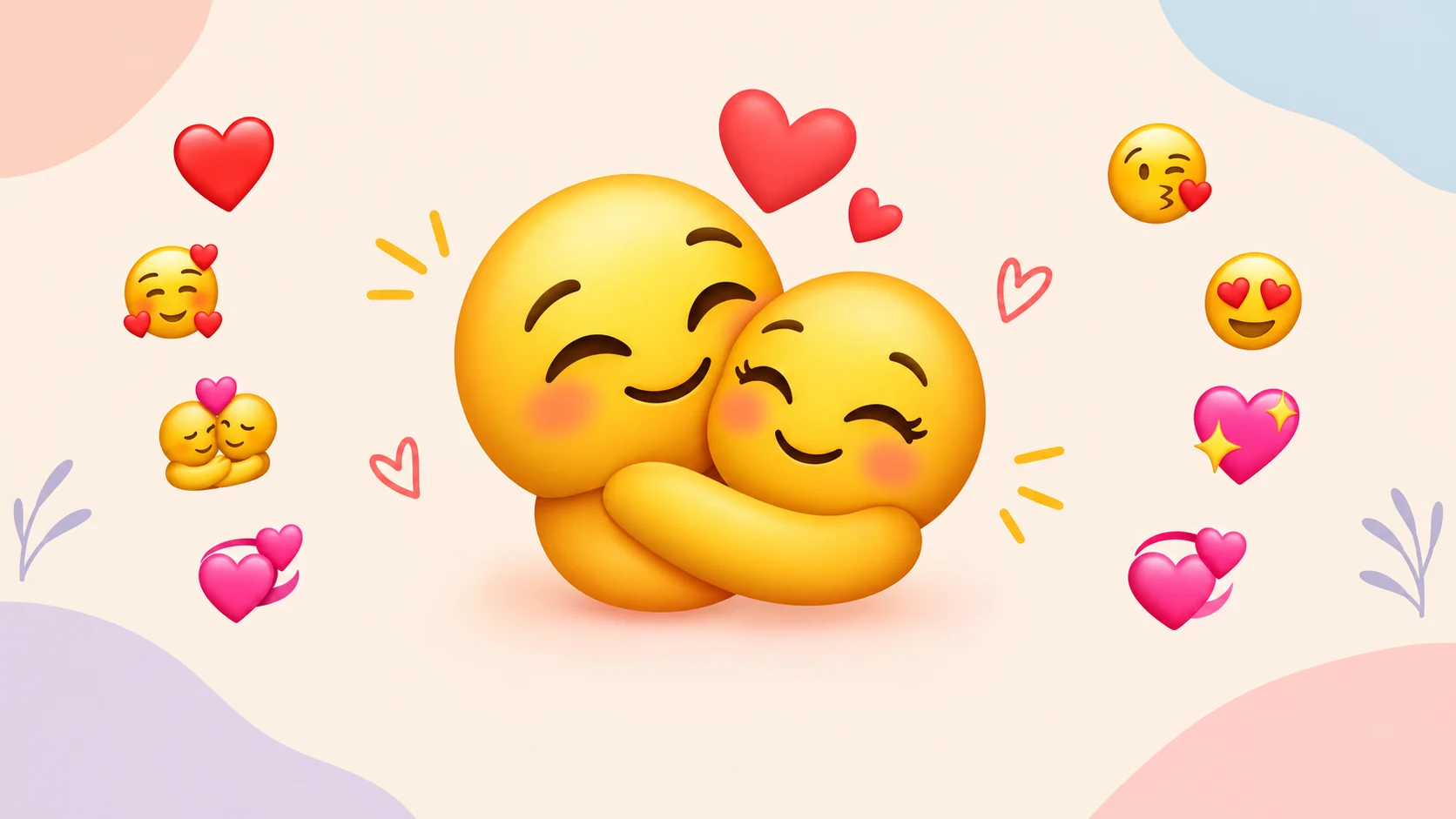
Have you ever received a message with 🫂 and wondered whether someone was comforting you, showing affection, or hinting that they wanted a real hug? The cuddle emoji can add warmth to a conversation without requiring a long explanation. It is often used to express comfort, closeness, emotional support, and a desire to hug someone.
People use this emoji in private chats, loving messages, friendship conversations, and social media comments. It can be especially meaningful when someone feels sad, misses another person, or simply wants to show that they care. However, the exact message depends on the situation. A cuddle emoji from a romantic partner may feel intimate, while the same symbol from a friend can offer reassurance and support.
In this guide, you will discover the cuddle emoji meaning in texting, how to use it on WhatsApp, Instagram, TikTok, and Facebook, and which emoji combinations work best for different moods. You will also find practical examples you can copy and paste. 💗
What Does the Cuddle Emoji 🫂 Mean?
The cuddle emoji 🫂 usually represents a hug, emotional comfort, affection, and human connection. It shows two people embracing, making it a natural choice when you want to express warmth without finding the perfect words. People often call it the cuddle emoji or hugging emoji because it can communicate the feeling of holding someone close.

Its meaning, however, is not limited to romance. You might send 🫂 to a friend who is having a difficult day, a family member you miss, or a partner who lives far away. It can also acknowledge someone’s feelings when a simple text response seems too cold.
In texting, 🫂 often communicates something like, “I’m here for you,” “Sending you a hug,” or “I wish I could hold you right now.” For example, if a friend says, “I’ve had a really rough week,” replying with “I’m sorry. Sending you a big hug 🫂” feels supportive and caring.
On social media, the emoji appears in heartfelt comments, emotional captions, supportive replies, and posts about missing loved ones. It can also make a short message feel more personal.
Other related emojis can add different shades of emotion. 🤗 often conveys cheerful, welcoming affection. ❤️ can make a message feel more loving, while 🩷 adds a softer, sweeter tone. 💗 can suggest growing affection, and 🥰 can make a hug feel especially tender.
Still, context matters. A cuddle emoji from a romantic partner might suggest intimacy, but receiving it from a close friend does not automatically mean romantic interest. Likewise, someone might use 🫂 simply because they do not know what else to say when another person feels upset.
The relationship between sender and receiver, the surrounding words, and the conversation’s mood all influence its interpretation. Platform design can also affect how the symbol looks, although the underlying emoji remains the same.
Ultimately, 🫂 is best understood as a gesture of closeness. It can express love, friendship, sympathy, reassurance, or a simple wish to give someone a comforting hug.
Cuddle Emoji Meaning Table
| Emoji | Core meaning | Possible misread | Best used when |
|---|---|---|---|
| 🫂 | Hugs, comfort, closeness | Romantic interest | Offering warmth or support |
| 🤗 | Friendly affection | Overly cheerful response | Greeting or cheering someone up |
| ❤️ | Love and care | Strong romantic feelings | Showing heartfelt affection |
| 🩷 | Soft affection | Romantic intention | Sending a sweet message |
| 💗 | Growing affection | Flirting | Expressing emotional warmth |
| 💕 | Shared affection | Romantic commitment | Celebrating closeness |
| 🥰 | Tenderness and adoration | Intense romantic interest | Reacting to something sweet |
| 😊 | Warmth and happiness | Politeness only | Keeping a message friendly |
| 🫶 | Love and appreciation | A romantic gesture | Showing gratitude or support |
| 💞 | Mutual affection | A promise of romance | Celebrating a close connection |
Cuddle Emoji Cards
🫂
Cuddle Emoji
Meaning: Hugs, comfort, and emotional closeness.
Example 1: I wish I could give you a hug right now 🫂
Example 2: You’ve been through so much. I’m here for you 🫂
🤗
Hugging Face Emoji
Meaning: Cheerful affection, welcoming hugs, and friendliness.
Example 1: Welcome back! 🤗
Example 2: Sending you a huge virtual hug today 🤗
❤️
Red Heart
Meaning: Love, deep affection, and emotional connection.
Example 1: Thank you for always being there for me ❤️
Example 2: Can’t wait to see you again ❤️
🩷
Pink Heart
Meaning: Gentle affection, sweetness, and warmth.
Example 1: Sending you some extra love today 🩷
Example 2: That was such a thoughtful thing to do 🩷
💗
Growing Heart
Meaning: Increasing affection and heartfelt warmth.
Example 1: Every day, I appreciate you more 💗
Example 2: That message made my whole day 💗
💕
Two Hearts
Meaning: Shared affection, sweetness, and closeness.
Example 1: So grateful to have you in my life 💕
Example 2: Here’s a little love for your day 💕
🥰
Smiling Face With Hearts
Meaning: Tender affection, adoration, and feeling loved.
Example 1: You remembered my favorite thing 🥰
Example 2: That is honestly the sweetest message 🥰
😊
Smiling Face
Meaning: Friendliness, happiness, and gentle warmth.
Example 1: I’m glad you’re feeling better 😊
Example 2: It was lovely talking to you today 😊
🫶
Heart Hands
Meaning: Love, gratitude, appreciation, and support.
Example 1: Thanks for checking on me 🫶
Example 2: You make difficult days easier 🫶
💞
Revolving Hearts
Meaning: Affection, emotional connection, and shared warmth.
Example 1: Sending a little love your way 💞
Example 2: Distance can’t stop me from caring about you 💞
How to Use the Cuddle Emoji the Right Way?
The cuddle emoji works best when it supports the message you actually want to send. You do not need a long sentence. Sometimes, adding 🫂 to a few sincere words makes your response feel more caring. The key is to match the emoji to the relationship and situation.
WhatsApp 💬
WhatsApp is a natural place to use the cuddle emoji because personal conversations often involve reassurance, affection, and everyday emotional support.
- Personal chats: Send “Wish you were here for a cuddle 🫂” to someone close to you.
- Family conversations: Comfort a relative with “Hope everything gets better soon 🫂.”
- Friendships: Reply to a friend’s difficult news with “I’m always here if you need me 🫂.”
- Emotional messages: Pair the emoji with a sincere sentence instead of relying on the symbol alone.
- Status updates: Use it in a short status about appreciating loved ones or missing someone.
For a romantic partner, “Sending you the tightest hug until I see you ❤️” can communicate affection. For a friend, a simpler supportive message may feel more appropriate.
Instagram 📸
Instagram emojis can make captions and comments feel more personal. The cuddle emoji is useful when a photo, reel, or post celebrates connection or expresses an emotional moment.
- Captions: “Some people feel like a warm hug 🫂.”
- Comments: “You deserve all the love and comfort.”
- Bios: Add the emoji if your profile reflects kindness, affection, or emotional openness.
- Aesthetic posts: Pair it with a gentle caption about home, closeness, or feeling safe.
- Reels: Use it when sharing a reunion, a friendship moment, or a heartfelt message.
Avoid assuming every viewer will interpret it romantically. In a public comment, it can simply express support.
TikTok 🎵
TikTok comments often mix genuine emotion with humor, playful exaggeration, and trends. The cuddle emoji can fit all these tones.
For an emotional video, you might comment, “Sending everyone here a hug 🫂.” Under a cute reunion clip, “This is the kind of moment that heals your heart” can communicate warmth.
It can also be used humorously when someone jokes about needing affection: “Me after one mildly inconvenient day 🫂.” In this case, the surrounding joke changes the tone.
For trends, follow the video’s context rather than assuming the emoji has a universal coded meaning. A heartfelt comment and a playful reaction can use the same symbol differently.
On Facebook, the cuddle emoji fits personal posts, comments, family updates, and Messenger conversations. You could comment “Thinking of you and sending a big hug 🫂” under a friend’s difficult update.
It can also accompany a reunion photo or a message to someone you have not seen for a long time. For more formal conversations, words alone may be better. The emoji is most effective when it feels natural rather than forced.
Dos and Don’ts of Using the Cuddle Emoji:
A thoughtful emoji can make a message warmer, but the words around it still matter.
Do
- Match 🫂 with a sincere message when someone needs comfort.
- Consider your relationship with the person receiving it.
- Use it naturally in affectionate messages and supportive comments.
- Check the overall tone before sending it.
- Remember that the emoji’s appearance can vary between devices.
Don’t
- Assume every hug emoji signals romantic interest.
- Send it as your only response to a serious situation when someone needs actual support.
- Add it to a formal message if it does not suit the conversation.
- Combine it with several hearts when a simple hug would communicate your feelings better.
- Assume everyone interprets emoji reactions in exactly the same way.
Why Does the Cuddle Emoji Look Different on iPhone and Android?
Have you ever sent 🫂 to someone and noticed that it looked slightly different on their phone? That is normal. Emojis have standardized digital identities, but their visual designs are created by individual platform developers.
The Unicode Standard assigns characters and defines how text characters are encoded. Companies such as Apple, Google, Samsung, and Microsoft can then design their own artwork to represent those characters on their operating systems and apps.
As a result, the cuddle emoji may vary slightly depending on the device.
- Shape: The figures and their arms may have slightly different outlines.
- Color: Skin tones, clothing details, and other visual elements can vary.
- Style: Some designs appear flatter, while others use shading and more dimensional details.
- Size: The emoji may look larger or smaller depending on the font, app, and screen.
- Expression and detail: Small visual differences can affect how an embrace appears.
For example, you might send 🫂 from an iPhone to a friend using an Android phone. The artwork displayed on each device may not look identical, but the underlying emoji character is still the same.
The receiving app, operating system, and font support can all affect how an emoji is displayed. If a device or application does not support a particular character, it may show a placeholder instead.
Neither Apple’s design nor Google’s or Samsung’s design is automatically the correct visual version. These are different representations of the same standardized character.
If you are using the cuddle emoji in a message, caption, or comment, there is usually no need to worry about these small differences. Focus on the message you want to communicate, because the surrounding words provide important context.
Best Cuddle Emoji Combos: Copy and Paste
Want to make your messages feel sweeter? These cuddle emoji combinations are easy to copy and use in romantic chats, friendly conversations, and comforting messages.
Romantic ❤️
- 🫂❤️: Use this to send a loving hug to your partner.
- 🫂🥰: Share a tender moment with someone special.
- 🫂💕: Express affection when you wish you could be together.
Cute 🥰
- 🫂🩷: Send a gentle, affectionate virtual cuddle.
- 🤗🫂: Use this for a cheerful double-hug message.
- 🫂💗: Add warmth to a sweet message for someone close.
Flirty 😉
- 🫂❤️: Hint at wanting a hug from someone you like.
- 🥰🫂: Respond to an affectionate message with a playful, tender tone.
- 🫂💕: Suggest that you would enjoy spending time close together.
Missing Someone 💭
- 🫂💞: Send a hug to someone who lives far away.
- 🫂❤️: Tell a loved one you are thinking about them.
- 🫂🥰: Express how much you miss someone’s closeness.
Good Night 🌙
- 🫂🩷: Wish someone a peaceful night with affection.
- 🫂💕: Send a warm goodnight message to a partner.
- 🫂🤗: Finish a friendly conversation with a comforting virtual hug.
You can use these combinations on WhatsApp, Instagram, TikTok, Facebook, and other messaging platforms. Add a few words whenever the meaning might be unclear, especially if you are sending the combination to someone who may interpret it differently.
Trending Cuddle Emoji in 2026
The cuddle emoji 🫂 fits the ongoing style of online communication in which people use short, expressive messages to communicate feelings. However, its popularity can vary across communities and platforms, and there is no single verified ranking that establishes it as the most popular hugging emoji in 2026.
Rather than treating every use as a trend, it helps to understand the different ways people use this emoji family in everyday conversations.
🫂 The comforting hug: This emoji suits supportive comments, emotional conversations, and messages to people who need reassurance. It can communicate warmth without making a situation about yourself.
🤗 The cheerful hug: This symbol works well for friendly greetings, welcoming someone back, and reacting to happy news. Its brighter appearance can make a message feel more upbeat.
🥰 The affectionate reaction: People can use this emoji to respond to thoughtful gestures, sweet messages, and moments that make them feel loved. Depending on the relationship, it may feel romantic or simply affectionate.
🩷 The gentle heart: This heart can complement soft, caring captions and messages. It may appear in conversations about friendship, appreciation, and romantic affection.
These emojis can appear in WhatsApp messages, Instagram comments, TikTok reactions, Facebook posts, and personal captions. Creators may use them to establish an emotional tone, while everyday users may simply add them to messages they want to make warmer.
The same emoji can also shift meaning with its surroundings. For instance, 🫂 under a vulnerable personal post may communicate genuine sympathy, while the same emoji in a playful conversation may express an exaggerated need for a hug.
Here is a practical overview of their common online uses.
| Emoji | Why trending | Who uses it | Platform |
|---|---|---|---|
| 🫂 | Emotional support and virtual hugs | Friends, families, couples | WhatsApp, Instagram |
| 🤗 | Friendly reactions and greetings | General users, creators | Facebook, Messenger |
| 🥰 | Sweet and affectionate responses | Friends, partners, creators | TikTok, Instagram |
| 🩷 | Soft, expressive affection | General users, couples | Captions, comments |
These are examples of common communication patterns, not measured popularity rankings. Emoji usage continues to evolve as online communities develop new ways to express feelings and interpret familiar symbols.
Cuddle Emoji Meaning in Different Contexts
The cuddle emoji can communicate different feelings depending on who sends it and what is happening in the conversation. Looking at the context is more helpful than trying to assign one fixed meaning to the symbol.
Romantic conversations
When a partner sends 🫂, it may express affection, reassurance, or a wish to be physically close. For example:
“I wish you were here with me tonight 🫂”
In an established relationship, this may feel intimate. Between people who are just getting to know each other, it might be a friendly gesture instead.
Friendship
Friends often use the cuddle emoji to offer emotional support or show that they care.
“That sounds exhausting. Sending you a hug 🫂”
The message communicates solidarity without necessarily implying romance.
Family conversations
A family member might send it after hearing difficult news, during a stressful period, or when everyone is missing each other.
“Can’t wait until we all get together again 🫂”
Here, the emphasis is on family closeness and comfort.
Professional or casual communication
In a workplace conversation, the emoji may be appropriate between colleagues who already communicate warmly. However, it can feel too personal in a formal email or an unfamiliar professional relationship.
If someone shares difficult news in a work chat, a considerate written response may be more suitable than an emoji alone.
Texting
In private messages, 🫂 can soften a short response or replace a longer expression of sympathy. Its meaning depends heavily on the conversation before it.
Social media comments
Under an emotional post, it can communicate support without requiring a detailed public reply. Under a funny video, it may be playful or ironic.
Captions
In captions, the cuddle emoji can emphasize reunion, closeness, or appreciation for loved ones.
For example: “A little reminder to hold your favorite people close 🫂”
Ultimately, consider the relationship, the words around the emoji, and the sender’s usual communication style before drawing conclusions.
How to Copy and Paste the Cuddle Emoji?
Want to use the cuddle emoji in your next message? You can copy it directly from the line below.
Copy the cuddle emoji
🫂
Copy emoji
Tap the button to copy the emoji.
Follow these simple steps:
- Select the emoji above if you prefer manual copying.
- Copy it using your device’s copy command.
- Open WhatsApp, Instagram, TikTok, Facebook, or your preferred messaging app.
- Paste the emoji into a message, caption, comment, or status.
- Add a few words if you want to make your intention clearer.
You can also save the emoji in a notes app for quick access. If it appears as an empty box on your device, your operating system or application may not support its display correctly.
17. Frequently Asked Questions
1. What is the most popular cuddle emoji?
The 🫂 emoji is the most direct choice when you want to represent a hug or cuddle. The 🤗 emoji is another familiar option for cheerful affection and friendly greetings.
2. What does 🫂 mean when someone sends it?
It usually expresses a hug, comfort, affection, or emotional support. The sender might be offering reassurance, missing you, or simply responding warmly. Consider the conversation and your relationship rather than assuming a particular romantic intention.
3. Why do emojis look different on iPhone vs Android?
Unicode standardizes the underlying emoji character, while Apple, Google, Samsung, and other companies create their own artwork. Small differences in shape, color, and style are normal, even when the same character is sent between devices.
4. Are cuddle emojis used differently in other countries?
Interpretations can vary between cultures, communities, and individuals. Some people use hugging emojis freely with friends, while others reserve them for close relationships. Online communities also develop their own habits, so the surrounding message is important.
Conclusion
The cuddle emoji 🫂 is a simple way to express warmth, affection, and emotional support in everyday conversations. Its meaning can be friendly, romantic, or comforting depending on the situation. Choose combinations that match your feelings, and add words whenever you need extra clarity. A thoughtful hug emoji can make a message feel a little more human. 💗
Do you like this personality?

Nasrullah — Emoji Strategist & Content Writer
Nasrullah is a passionate emoji enthusiast and content writer who loves exploring the meanings, uses, and cultural context behind emojis. He creates simple, helpful, and easy-to-understand guides that help readers choose the right emoji for WhatsApp, Instagram, Facebook, texting, and everyday conversations.
With a focus on emoji meanings, combinations, social media usage, and modern digital communication, Nasrullah aims to make every emoji easier to understand and use with confidence. His content combines practical examples with clear explanations so readers can quickly find the meaning and usage they are looking for.
When he’s not researching emojis, Nasrullah enjoys exploring digital trends, writing useful online content, and learning about how people communicate in the digital world. 😊