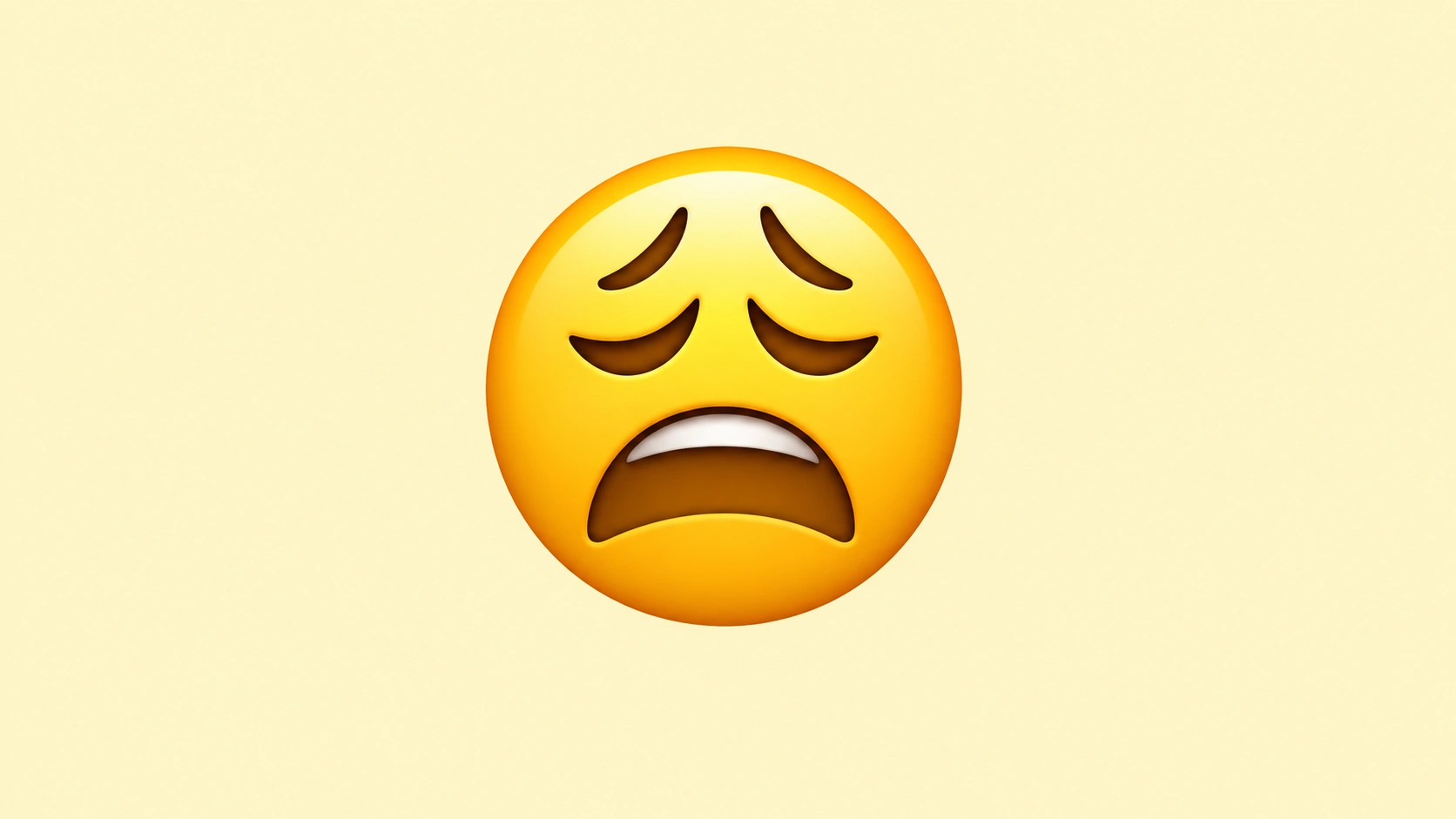
You open your phone after a ridiculously long day, see one more message waiting for a reply, and think, “I just can’t anymore.” Then you send 😩. Somehow, that tiny face communicates the exhaustion, frustration, or emotional overload you might struggle to put into words.
The weary emoji 😩 usually represents feeling extremely tired, overwhelmed, frustrated, or emotionally drained. It can describe physical exhaustion, but people also use it when something is annoying, difficult, embarrassing, dramatic, or simply too much to handle. In texting, the exact meaning depends heavily on the conversation around it.
On WhatsApp, 😩 might be a genuine response to a stressful day. On Instagram or TikTok, it can be exaggerated for humor, attraction, embarrassment, or relatable frustration. A close friend may send it jokingly, while someone you barely know could use it simply to show annoyance.
That is why understanding weary emoji meaning requires looking at context, wording, relationship, and tone rather than treating 😩 as having one fixed definition. Let’s break down how people actually use it online. 😩💬
Sometimes 😩 says “I’m exhausted,” “I’m frustrated,” and “this is too much” all at once.
What Does the Weary Emoji Mean? 😩
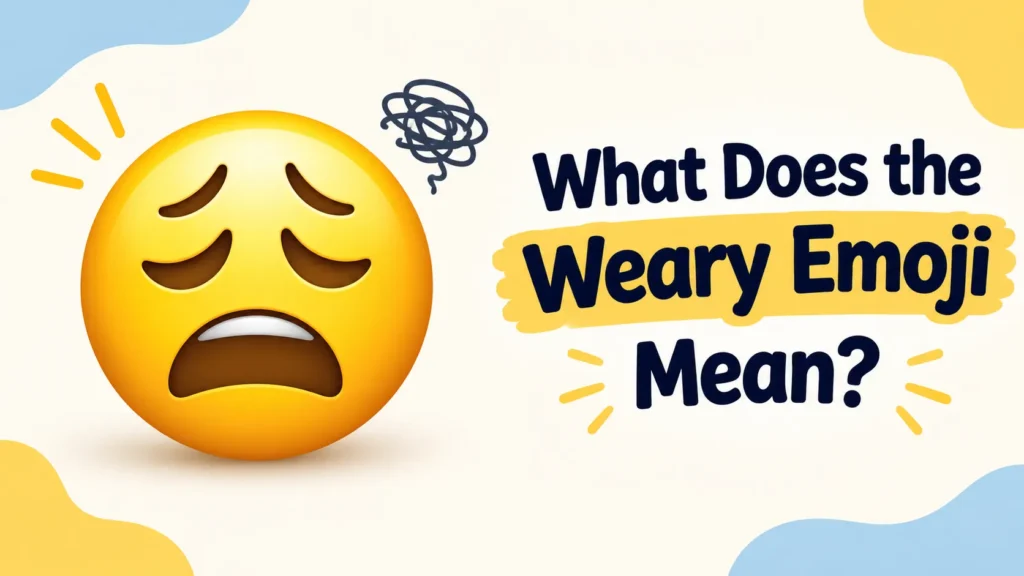
The weary emoji 😩 is officially associated with a face showing intense tiredness, distress, or emotional strain. In everyday digital communication, however, people use it much more flexibly. It can mean “I’m exhausted,” “I can’t deal with this,” “Why is this happening?” or even “This is ridiculously attractive.” The surrounding words usually tell you which interpretation makes the most sense.
In texting, 😩 often works as an emotional reaction. Someone might say, “I have three assignments due tomorrow 😩.” Here, it communicates genuine stress and exhaustion. A friend might write, “He sent another five-minute voice note 😩,” where the emoji adds playful frustration.
On WhatsApp, the emoji can appear in personal chats, family conversations, group messages, and status updates. It can express physical tiredness, emotional overload, disappointment, or dramatic humor. In a casual friendship, “Not another Monday 😩” is probably not a serious statement. It is more likely a relatable complaint.
On social media, the range becomes even wider. Instagram captions may use 😩 to exaggerate a reaction to food, fashion, a celebrity, or an attractive photo. TikTok comments often use it humorously when a video feels painfully relatable or unexpectedly impressive.
Several related emojis can change the emotional shade. 😫 generally feels more intensely frustrated or exhausted, while 😓 can suggest stress or nervous relief. 😥 may lean toward sadness or disappointment. 😭 usually makes the emotion much more dramatic, while 😮💨 can suggest a sigh of relief, exhaustion, or resignation.
The sender’s relationship with you matters too. A romantic partner using 😩 may simply be complaining, but in a flirty conversation it can carry a playful attraction-related tone. Context always wins.
Meaning Table:
| Emoji | Core meaning | Possible misread | Best used when |
|---|---|---|---|
| 😩 | Weary, overwhelmed, frustrated | Anger or sadness | Something feels like too much |
| 😫 | Extreme frustration or exhaustion | Serious distress | A situation is intensely difficult |
| 😓 | Stress, worry, tiredness | Sadness | You feel pressured or relieved |
| 😥 | Sadness, disappointment | Anxiety | Something went wrong emotionally |
| 😰 | Anxiety, nervous stress | Physical fear | You are worried about something |
| 😢 | Sadness, hurt | Deep emotional distress | You feel genuinely sad |
| 😭 | Intense crying or dramatic emotion | Serious grief | A reaction is extremely emotional |
| 😮💨 | Sighing, relief, exhaustion | Boredom | You are letting out a big sigh |
| 😞 | Disappointment, low mood | Anger | Something did not go as hoped |
| 😔 | Sadness, reflection | Depression | You feel down or thoughtful |
| 🥱 | Sleepiness, boredom | Exhaustion | You are tired or ready for bed |
| 😵💫 | Confusion, overwhelm | Illness | Something has left you mentally scrambled |
Exactly 10 Emoji Cards:
😩 Weary Face:
Meaning: Feeling exhausted, overwhelmed, frustrated, or emotionally drained.
Example 1: I have been working all day 😩
Example 2: Why does everything have to happen today? 😩
😫 Tired Face:
Meaning: Strong physical or emotional exhaustion and frustration.
Example 1: This project is taking forever 😫
Example 2: I really need a break 😫
😓 Downcast Face with Sweat:
Meaning: Stress, nervousness, pressure, or tired relief.
Example 1: I finally finished the presentation 😓
Example 2: That was way more stressful than expected 😓
😥 Sad but Relieved Face:
Meaning: Sadness, disappointment, or relief after something difficult.
Example 1: I missed the last bus 😥
Example 2: At least everything worked out in the end 😥
😰 Anxious Face with Sweat:
Meaning: Worry, nervousness, fear, or emotional pressure.
Example 1: I hope they liked my idea 😰
Example 2: The results come out tomorrow 😰
😢 Crying Face:
Meaning: Sadness, hurt feelings, or genuine emotional disappointment.
Example 1: That ending made me cry 😢
Example 2: I really wanted to be there 😢
😭 Loudly Crying Face:
Meaning: Intense crying or an exaggerated emotional reaction.
Example 1: This movie destroyed me 😭
Example 2: I cannot believe you actually did that 😭
😮💨 Face Exhaling:
Meaning: A sigh expressing relief, exhaustion, frustration, or resignation.
Example 1: Finally, the meeting is over 😮💨
Example 2: I thought I was going to miss the deadline 😮💨
😞 Disappointed Face:
Meaning: Sadness, disappointment, discouragement, or a low mood.
Example 1: I really thought we would win 😞
Example 2: Guess I have to try again tomorrow 😞
😔 Pensive Face:
Meaning: Quiet sadness, regret, reflection, or feeling down.
Example 1: I should have called earlier 😔
Example 2: Some days are just harder than others 😔
How to Use the Weary Emoji the Right Way 😩
The best way to use 😩 is to let the surrounding message establish the emotion. Because the emoji can represent exhaustion, frustration, embarrassment, dramatic humor, or even playful attraction, context prevents confusion.
WhatsApp 💬
In personal WhatsApp chats, 😩 is excellent for everyday complaints. You can send “I have to wake up at 6 tomorrow 😩” to express dread about an early morning. With friends, it can make a minor problem sound playfully dramatic: “You finished the snacks already? 😩”
Family conversations can use it more casually too. “Mom asked me to clean my room again 😩” communicates annoyance without necessarily sounding genuinely angry. It also works in status updates such as “Long day 😩.”
Instagram 📸
Instagram users often use 😩 in captions and comments when they want an exaggerated emotional reaction. A food post might inspire “That looks so good 😩.” A fashion photo could receive “This outfit 😩.” In these cases, the emoji is not necessarily saying the person is tired. It can mean “I love this so much” or “This is too good.”
It can also add a dramatic touch to Reels captions and casual comments.
TikTok 🎵
TikTok makes playful interpretations especially common. Someone might comment 😩 on an extremely relatable video, an attractive creator’s post, or a humorous situation. The tone can range from genuine frustration to exaggerated amusement or attraction.
On Facebook, 😩 works in posts, comments, and Messenger. “Traffic was horrible today 😩” is straightforward, while “I forgot my coffee at home 😩” is a lighter complaint.
The safest rule is simple: match 😩 to the emotional intensity of your message. If the conversation is serious, consider whether the dramatic appearance of the emoji could make your message seem less serious.
Dos and Don’ts:
Do:
- Use 😩 when something genuinely feels exhausting or overwhelming.
- Consider who you’re talking to.
- Let your words clarify the intended emotion.
- Use related emojis such as 😮💨 or 😓 when they better match your feeling.
- Check how the emoji renders on your device.
Don’t:
- Assume 😩 always means physical tiredness.
- Treat every use as romantic or flirty.
- Add several emotional emojis when one communicates the point.
- Use it casually when someone is discussing a serious situation.
- Assume everyone interprets emoji reactions exactly the same way.
Why Does the Weary Emoji Look Different on iPhone and Android?
If you send 😩 from an iPhone to someone using Android and notice that the face looks slightly different, nothing has gone wrong. Emojis are standardized as characters through Unicode, but the visual artwork is created separately by technology companies and operating-system developers.
Apple, Google, Samsung, Microsoft, and other platforms can give the same Unicode emoji their own visual treatment. As a result, the shape of the eyes, mouth, eyebrows, colors, shading, and overall expression may vary.
The underlying character remains the same. Think of Unicode as the shared identity of the emoji and each platform’s artwork as its own illustration of that identity.
For 😩, small visual differences can matter because facial emojis communicate emotion through tiny details. One version might appear slightly more dramatic, while another may look more exhausted or distressed. Those differences can influence how a recipient personally reads the expression.
This is also why screenshots of emoji conversations can look different from the original message. A person viewing an emoji on an Apple device may see a different design from someone viewing the same character on a Samsung or Google device.
It is important not to assume that one design is the “correct” version. Platform artwork is simply different. Unicode provides the underlying standard that allows devices and apps to recognize the character, while individual companies decide how that character is visually represented.
So if someone sends you 😩 and their version looks slightly different, the basic emoji identity has not changed. The surrounding words and conversation still provide the strongest clue to what the sender intended.
Best Weary Emoji Combos, Copy & Paste:
Romantic ❤️
1.😩❤️ – Use this for playful emotional affection toward someone you love.
2.😩🥰❤️ – Use this when affection feels almost too much to handle.
3.😩❤️😮💨 – Use this for a dramatic but affectionate romantic reaction.
Cute 🥰
1.😩🥰 – Use this when something adorable overwhelms you.
2.😩🥰😭 – Use this for an exaggerated reaction to something extremely cute.
3.😩😔🥰 – Use this when missing someone has a soft, affectionate tone.
Flirty 😉
1.😩😉 – Use this for a playful, teasing reaction in a flirtatious chat.
2.😩🥰😉 – Use this when someone’s charm has you dramatically flustered.
3.😩❤️😉 – Use this for a light romantic hint without saying too much.
Missing Someone 💭
1.😩😔 – Use this when you are emotionally tired from missing someone.
2.😩😢❤️ – Use this for a more heartfelt message about missing someone.
3.😩😮💨😔 – Use this when you miss someone and feel emotionally drained.
Good Night 🌙
1.😩🥱 – Use this when you’re exhausted and ready to sleep.
2.😩😮💨🥱 – Use this after a long, tiring day.
3.😩😔🥱 – Use this for a soft good-night message when you’re feeling worn out.
Trending Weary Emoji in 2026:
In 2026, 😩 continues to fit naturally into the fast, expressive style of everyday digital conversation. Its appeal comes partly from its flexibility. People can use it literally for exhaustion or exaggerate it for humor, frustration, attraction, and relatable reactions.
😩 commonly appears when someone wants to say that a situation is “too much.” 😫 pushes the feeling toward stronger frustration or exhaustion, while 😮💨 can create a calmer sense of finally getting through something. 😭 is often used for highly dramatic emotional reactions, including situations where the user is not literally crying.
On TikTok and Instagram, these expressions often appear in comments and captions where exaggeration is part of the communication style. In WhatsApp conversations, they tend to be more personal and directly connected to the words being exchanged.
| Emoji | Why trending | Who uses it | Platform |
|---|---|---|---|
| 😩 | Relatable frustration and dramatic reactions | Everyday users | WhatsApp, TikTok |
| 😫 | Stronger exhaustion or frustration | Friends and creators | Instagram, WhatsApp |
| 😮💨 | Sighs, relief, and emotional fatigue | Casual users | WhatsApp, TikTok |
| 😭 | Highly expressive reactions | Social media users | TikTok, Instagram |
The broader pattern is that emoji meanings continue to evolve through everyday conversations, memes, comments, and changing online communication habits rather than staying limited to one dictionary definition.
Weary Emoji Meaning in Different Contexts
The same 😩 can feel completely different depending on who sends it and what comes before it.
Romantic conversations:
“I’ve been thinking about you all day 😩” can sound affectionate or flirtatious. In this setting, the emoji may communicate emotional intensity rather than literal exhaustion.
Friendship:
“Another assignment? 😩” usually means, “Seriously? I have to do this again?” Among close friends, exaggerated frustration is common and rarely indicates serious distress.
Family:
“I have to cook for everyone tonight 😩” can be a simple humorous complaint. Family members often understand the intended tone from the relationship itself.
Professional or casual communication:
In a workplace chat, 😩 may be appropriate among colleagues who communicate casually, such as “That spreadsheet is huge 😩.” In a formal professional conversation, however, it may be better to explain the problem directly rather than relying on an emotional emoji.
Texting:
Text messages give 😩 enormous flexibility. “I’m so tired 😩” is literal, while “That song is stuck in my head 😩” is playful frustration.
Social media comments:
On Instagram or TikTok, 😩 can become dramatically expressive. A user may comment it simply because a video is funny, impressive, attractive, or relatable.
Captions:
A caption like “Monday again 😩” communicates relatable exhaustion without requiring a long explanation.
The key is to read the complete message, not just the emoji. Words, punctuation, relationship, and platform culture all help determine what the sender probably intended.
How to Copy and Paste the Weary Emoji
Want to use the weary emoji immediately? Copy it here:
😩
On a phone or computer, select 😩, copy it, and paste it wherever you need it. You can use it in WhatsApp messages, Instagram captions, TikTok comments, Facebook posts, Messenger conversations, text messages, and other apps that support Unicode emoji characters.
You can also save the emoji in a frequently used emoji section or keyboard so you do not have to search for it every time.
For quick copy and paste, try these:
😩 😩😫 😩😮💨 😩🥰 😩❤️
Remember that the visual design may change slightly between platforms, but the underlying emoji character remains the same.
FAQ:
1. What is the most popular weary emoji?
The main weary emoji is 😩, commonly used for exhaustion, frustration, overwhelm, and dramatic emotional reactions. Its exact tone depends on the conversation.
2. What does 😩 mean when someone sends it?
It can mean “I’m exhausted,” “I’m frustrated,” “this is too much,” or “I can’t handle this.” It can also be playful or flirty in the right context. The meaning does not depend on gender stereotypes.
3. Why do emojis look different on iPhone vs Android?
Unicode identifies the emoji character, while companies such as Apple and Google create their own artwork. That’s why the same 😩 character can have slightly different facial details or styling across devices.
4. Are weary emojis used differently in other countries?
Emoji interpretation can vary between communities, languages, cultures, and online spaces. However, individual context matters greatly, so it is better to read the full message than assume a universal interpretation.
Conclusion
The weary emoji 😩 is a flexible way to express exhaustion, frustration, overwhelm, and dramatic emotion. Its meaning can shift from serious tiredness to playful humor or flirtation depending on context.
Use it with words that make your intended tone clear, especially when the conversation is sensitive. With the right context, 😩 can make an everyday message feel instantly more expressive. 💬😩

Nasrullah — Emoji Strategist & Content Writer
Nasrullah is a passionate emoji enthusiast and content writer who loves exploring the meanings, uses, and cultural context behind emojis. He creates simple, helpful, and easy-to-understand guides that help readers choose the right emoji for WhatsApp, Instagram, Facebook, texting, and everyday conversations.
With a focus on emoji meanings, combinations, social media usage, and modern digital communication, Nasrullah aims to make every emoji easier to understand and use with confidence. His content combines practical examples with clear explanations so readers can quickly find the meaning and usage they are looking for.
When he’s not researching emojis, Nasrullah enjoys exploring digital trends, writing useful online content, and learning about how people communicate in the digital world. 😊