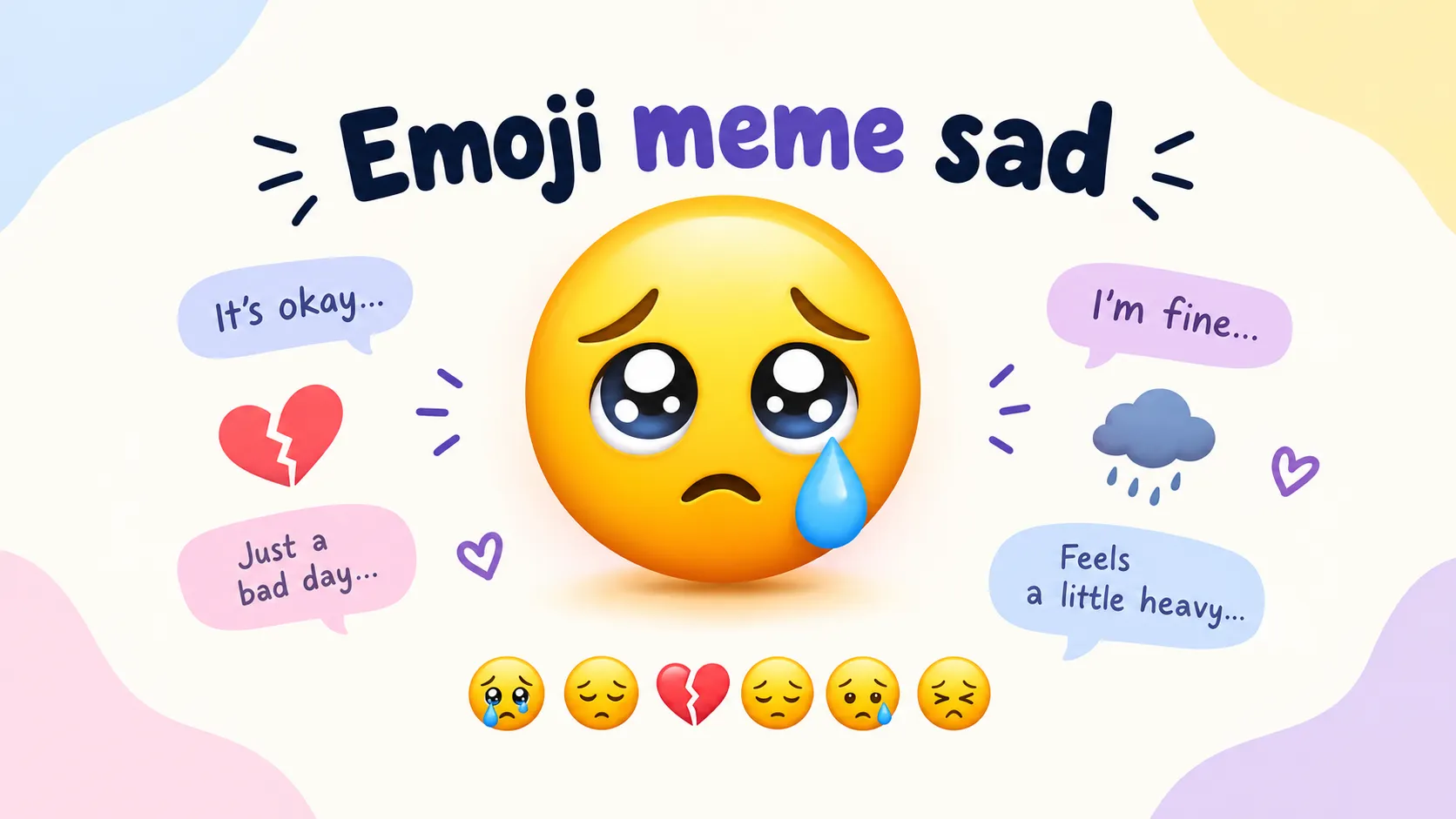
You see your favorite snack disappear, your plans get canceled, or your friend replies with a painfully dry message. Instead of explaining your feelings, you send a sad face and let the internet understand the situation. That is where the emoji meme sad trend fits into everyday conversations. 😭
Sad emoji memes combine recognizable facial expressions with relatable situations, playful exaggeration, and sometimes a little self-deprecating humor. They can express genuine disappointment, pretend heartbreak, awkward embarrassment, or the kind of sadness that makes a situation funny. The same face might appear in a WhatsApp group chat, an Instagram comment, or a TikTok video about an everyday struggle.
However, not every sad emoji meme is a joke. Some people use these expressions to communicate real hurt or loneliness. The surrounding words, your relationship with the sender, and the situation all help reveal the intended tone. Understanding these differences makes it easier to choose the right reaction, avoid awkward misunderstandings, and create captions that feel natural.
Whether you want to understand a meme someone sent you or find a reaction for your next post, this guide covers the meanings, examples, combinations, and practical uses of sad emoji memes.
One sad face can turn a tiny disappointment into a dramatic, relatable, and surprisingly funny moment. 😢
What Does Emoji Meme Sad Mean? 😢
An emoji meme sad usually represents a sad facial expression used to react to an amusing, disappointing, awkward, or emotional situation. Unlike a regular sad emoji sent to communicate feelings, a sad emoji meme often adds humor through exaggeration. It can make an ordinary inconvenience look like a personal tragedy, even when everyone involved knows the situation is not that serious.
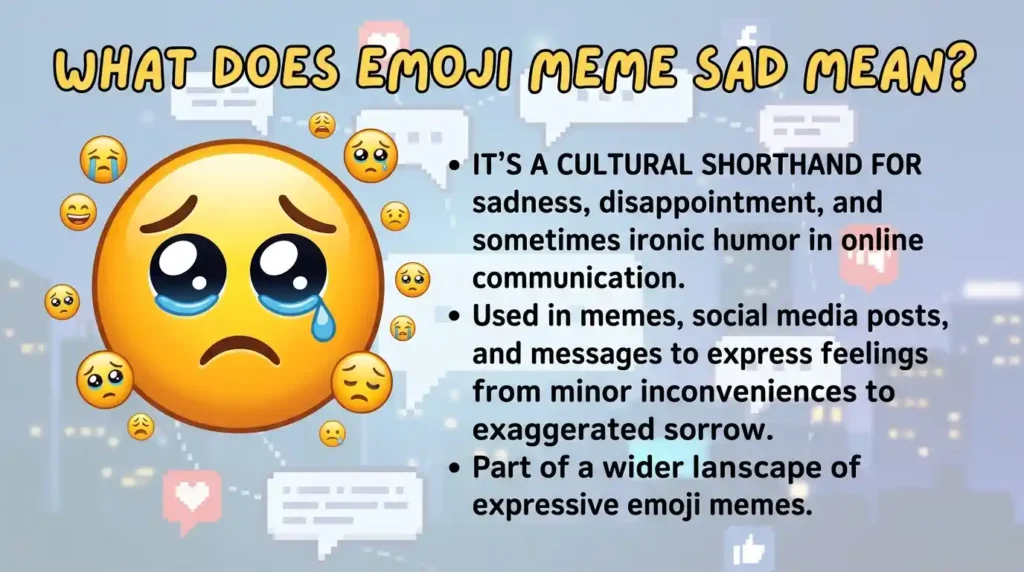
For example, imagine someone saying, “The weekend is over, and tomorrow is Monday.” Replying with 😭 can express exaggerated sadness that other people immediately recognize. The reaction becomes funny because the emotion is much bigger than the problem.
Common meanings behind sad emoji memes
- 😢 Sadness: A gentle expression of disappointment, sympathy, or feeling down.
- 😭 Dramatic reactions: Overwhelming sadness, exaggerated frustration, or laughter that feels impossible to contain.
- 😔 Quiet disappointment: Regret, embarrassment, or a low mood that does not need a dramatic reaction.
- 🥺 Emotional pleading: A cute, vulnerable expression used to ask for sympathy or affection.
- 💔 Heartbreak: Disappointment involving relationships, rejection, or something emotionally important.
- 😞 Letdown: A situation that did not turn out as hoped.
These interpretations overlap, and people frequently use the same expression in different ways.
What does it mean in texting?
In texting, a sad emoji meme can replace a long explanation. If your friend cancels a movie night and you reply, “My evening is ruined 😭,” you may be joking rather than expressing genuine distress.
On social media, the same expression can become part of a reaction meme, a relatable caption, or a comment beneath an unfortunate video. The humor often comes from recognizing your own experiences in somebody else’s exaggerated reaction.
Can a sad emoji meme be positive?
Yes. It can communicate affection, playful teasing, or shared excitement. Someone might write, “You finished the entire series without me 😭,” showing mock betrayal rather than serious anger.
Still, context matters. A friend who knows your humor may understand the joke immediately, while someone unfamiliar with your style might interpret it literally. Relationship dynamics, wording, culture, and platform presentation all influence interpretation. When a conversation involves genuine pain, respond to the person’s words instead of assuming every sad face is a meme.
Sad Emoji Meaning Table
| Emoji | Core meaning | Possible misread | Best used when |
|---|---|---|---|
| 😢 | Sadness or sympathy | Genuine distress mistaken for a joke | Showing gentle disappointment |
| 😭 | Intense emotion or dramatic reaction | Crying confused with laughter | Reacting dramatically to relatable moments |
| 😔 | Quiet sadness or regret | Disinterest or coldness | Expressing disappointment thoughtfully |
| 🙁 | Mild unhappiness | Annoyance or dissatisfaction | Responding to a small letdown |
| ☹️ | Clear displeasure | Anger rather than sadness | Showing that something went wrong |
| 🥺 | Vulnerability or pleading | Manipulation or exaggerated cuteness | Making a playful request |
| 💔 | Heartbreak or emotional loss | A serious relationship problem | Discussing rejection or disappointment |
| 😞 | Discouragement | Frustration or tiredness | Sharing an unsuccessful outcome |
| 😿 | Sadness with a cat-like expression | Pet-related sadness only | Cute, playful, or animal-themed reactions |
| 😩 | Frustration or emotional exhaustion | Physical tiredness alone | Reacting to an overwhelming situation |
Exactly 10 Sad Emoji Cards
😢
Redundant tears 😢
Meaning: Gentle sadness, sympathy, or disappointment.
Example 1: I was really hoping we could meet today 😢
Example 2: That ending was much sadder than I expected 😢
😭
Loudly crying face 😭
Meaning: Intense emotion, dramatic disappointment, or exaggerated sadness.
Example 1: My favorite show just ended 😭
Example 2: Everyone got the joke except me 😭
😔
Pensive face 😔
Meaning: Regret, quiet disappointment, or thoughtful sadness.
Example 1: I should have called you earlier 😔
Example 2: Another weekend stuck indoors 😔
🙁
Slightly frowning face 🙁
Meaning: Mild unhappiness or a small disappointment.
Example 1: The cafe is closed already 🙁
Example 2: I missed the last bus 🙁
☹️
Frowning face ☹️
Meaning: Noticeable displeasure, unhappiness, or dissatisfaction.
Example 1: The event was canceled again ☹️
Example 2: That was not the result I wanted ☹️
🥺
Pleading face 🥺
Meaning: Vulnerability, affection, or a request for sympathy.
Example 1: Can we please watch one more episode? 🥺
Example 2: Please do not leave without saying goodbye 🥺
💔
Broken heart 💔
Meaning: Heartbreak, emotional disappointment, or a painful ending.
Example 1: We are going our separate ways 💔
Example 2: They removed my favorite scene 💔
😞
Disappointed face 😞
Meaning: Discouragement, dissatisfaction, or an unwanted outcome.
Example 1: I studied hard, but the test was difficult 😞
Example 2: Our plans did not work out after all 😞
😿
Crying cat 😿
Meaning: Cute, exaggerated sadness with a cat-like expression.
Example 1: My cat ignored me all morning 😿
Example 2: No treats left in the cupboard 😿
😩
Weary face 😩
Meaning: Frustration, exhaustion, or being overwhelmed.
Example 1: Three assignments due on the same day 😩
Example 2: My internet stopped working during the meeting 😩
How to Use Emoji Meme Sad the Right Way?
The best sad emoji meme matches the feeling you want to communicate. A dramatic reaction works for everyday inconveniences, while a softer expression may be better when you want to show disappointment without making a conversation feel heavy.
WhatsApp 💬
WhatsApp chats are often personal, so your relationship with the recipient matters.
- Personal chats: React to a canceled plan with, “There goes my perfect evening 😭.”
- Family conversations: Add a playful expression when someone finishes the last piece of cake.
- Friendships: Share a dramatic reaction when your friends make plans without you.
- Emotional messages: Choose a gentler expression when someone shares genuinely disappointing news.
- Status updates: Use a short line such as, “Me waiting for the weekend to arrive 😩.”
For private conversations, remember that a meme can be misunderstood if the other person does not know you are joking.
Instagram 📸
Instagram emojis can help captions and comments communicate emotion quickly.
- Captions: Pair a relatable photo with “Expectation versus reality 😭.”
- Comments: React to an unfortunate but funny moment with a short expression.
- Bios: A sad expression can support a deliberately dramatic or humorous profile style, although it may also suggest genuine sadness.
- Aesthetic posts: Use a softer expression alongside a reflective caption or a nostalgic image.
- Reels: Add a sad reaction to a clip about relatable struggles, unexpected endings, or everyday mishaps.
For example, a Reel showing an empty snack cupboard might use the caption, “The tragedy nobody prepared me for 😔.” The humor comes from the situation, not the emoji alone.
TikTok 🎵
TikTok is especially suited to expressive reactions because short videos often rely on recognizable emotions, timing, and shared jokes.
You might comment 😭 when a creator describes an embarrassing experience that feels familiar. A caption such as “When the alarm rings five minutes after you fall asleep 😩” can also turn an ordinary problem into a relatable meme.
Sad expressions can communicate irony, playful exaggeration, or genuine sympathy. Before copying a reaction from a trend, consider whether the original context was humorous or serious. A reaction that feels funny under a comedy video might appear insensitive beneath a personal account of hardship.
Facebook posts, comments, and Messenger conversations use sad expressions in both humorous and serious ways. Friends might share a meme about Monday mornings, while family members use softer reactions to acknowledge disappointing news.
For example, “The family gathering ended too soon 😢” could communicate real affection or playful disappointment, depending on the conversation.
The practical rule is simple: let your words and the situation guide the emoji. A familiar meme can make ordinary communication more expressive, but it should never replace a thoughtful response when somebody needs support.
Do’s and Don’ts
Do
- Use sad expressions to reinforce the emotion behind your message.
- Consider whether the recipient understands your humor.
- Match the reaction to the situation, from mild disappointment to dramatic frustration.
- Check how the emoji appears on different devices when its expression matters.
- Use a short caption to make a meme’s intended joke clearer.
Don’t
- Send a dramatic crying reaction to every serious message.
- Assume everyone interprets sad emoji memes in the same way.
- Fill a sensitive conversation with humorous reactions.
- Mix unrelated symbols into a meme without a clear reason.
- Assume that a sad expression automatically signals romantic interest.
A useful example is the difference between “You forgot our plans 😭” and “I’m really hurt that you forgot our plans.” The first could be playful, while the second clearly expresses a concern. When the situation matters, clarity is more helpful than relying on an emoji alone.
Why Do Emoji Meme Sad Look Different on iPhone and Android?
Have you ever sent a sad emoji to a friend and noticed that it looked slightly different on their phone? That is normal. Emojis use Unicode standards, which assign recognized characters to emoji symbols, but the visual artwork is created by individual platform and software developers.
Companies such as Apple, Google, Samsung, and Microsoft can design their own versions of the same character. As a result, the expression may have different proportions, colors, shading, tears, or facial details.
For example, 😭 may look more dramatic on one device and slightly different on another. Those visual differences can influence how a person perceives a meme, particularly when the joke depends on an exaggerated expression.
Here are the main differences you may notice:
- Shape: Eyes, eyebrows, and mouths can have different proportions.
- Color: Skin, tears, and facial details may use different shades.
- Expression: Small design changes can make a face appear more intense or subtle.
- Size and style: Some designs look flatter, while others use stronger shading or three-dimensional effects.
- Software support: Older devices may display some newer emoji characters differently or fail to support them properly.
The underlying character can still be the same even when its appearance changes. This is why the same sad emoji meme may feel slightly funnier or more serious depending on the recipient’s device.
When a reaction is important, add a few words to clarify your intention. You do not need to worry about finding one universally correct design. Instead, focus on whether the expression communicates the emotion you intended.
Best Emoji Meme Sad Combos: Copy and Paste
These sad emoji combinations are useful for relatable jokes, dramatic reactions, affectionate messages, and playful disappointment. Each combination uses the selected sad emoji family, so you can copy it directly into a chat or caption.
Romantic ❤️
- 👉 🥺💔: Use this for a tender message about missing someone you care about.
- 👉 😢🥺: Send this when you want to express affection and a little sadness.
- 👉 😔💔: Use this for a reflective caption about a difficult romantic moment.
Cute 🥰
- 👉 🥺😿: Share this when a cute situation makes you feel emotional.
- 👉 😢🥺: Use this for a gentle, slightly dramatic reaction.
- 👉 😭😿: Send this when something adorable is almost too much to handle.
Flirty 😉
- 👉 🥺😔: Use this when playfully asking someone to spend more time with you.
- 👉 😭🥺: Send this when someone teases you and you want to exaggerate your reaction.
- 👉 😢🥺: Try this for a playful request for attention from someone who knows your humor.
Missing Someone 💭
- 👉 😔💔: Use this when you miss someone and feel a little lonely.
- 👉 😢😭: Share this when distance makes you feel especially emotional.
- 👉 🥺💔: Send this with a message about wishing someone were nearby.
Good Night 🌙
- 👉 😔🥺: Use this when you wish you could talk a little longer before bed.
- 👉 😢💔: Share this when saying goodbye feels unexpectedly difficult.
- 👉 😭😩: Use this for a dramatic reaction to an early bedtime or an alarm waiting in the morning.
These combinations are suggestions rather than fixed codes. The same pair can be playful between close friends and more serious in a personal conversation. Add a few words whenever you want the intended meaning to be unmistakable.
Trending Emoji Meme Sad in 2026
Sad expressions remain useful in online communication because they are easy to recognize and adaptable to many situations. In 2026, people can encounter these reactions in short-form videos, meme captions, comment threads, private messages, and posts about familiar everyday struggles.
However, there is an important distinction between commonly used expressions and verified trend rankings. The examples below describe practical ways these emojis appear in digital conversations, not a measured ranking of the most popular emojis in 2026.
Four expressions used in relatable reactions
😭 Dramatic reactions
The loudly crying face is useful when a situation deserves an exaggerated response. Someone might use it after a favorite character leaves a show or when a funny video describes an all-too-familiar problem.
😢 Gentle disappointment
This expression suits softer reactions. It can accompany a post about canceled plans, an emotional story, or a small disappointment that does not require dramatic humor.
🥺 Cute vulnerability
The pleading face works well in playful requests, affectionate exchanges, and memes built around wanting something badly. Its tone depends on whether the request is sincere, teasing, or deliberately exaggerated.
😩 Frustrated reactions
This face can accompany relatable complaints about deadlines, technical problems, busy schedules, or exhausting routines. It is particularly useful when the reaction combines frustration with humor.
Where these expressions appear
| Emoji | Why trending | Who uses it | Platform |
|---|---|---|---|
| 😭 | Exaggerated reactions and relatable jokes | Meme creators and everyday users | TikTok, Instagram |
| 😢 | Gentle sadness and emotional responses | Friends, families, and commenters | WhatsApp, Facebook |
| 🥺 | Cute requests and affectionate reactions | Friends, couples, and creators | Instagram, TikTok |
| 😩 | Everyday frustration and dramatic complaints | Students, workers, and meme fans | Facebook, TikTok |
These are illustrative usage patterns, not claims about current platform rankings or measured popularity.
A useful observation is that emoji language continues to evolve as online communities adapt familiar expressions to new jokes, situations, and styles of communication.
Emoji Meme Sad Meaning in Different Contexts
A sad emoji meme does not communicate exactly the same emotion in every conversation. The surrounding words, the relationship between the people involved, and the seriousness of the situation all affect how a reaction is understood.
Romantic conversations
In romantic chats, a sad expression may show that someone misses their partner, feels disappointed about canceled plans, or wants a little reassurance.
Example: “You left before I could say goodbye 🥺”
This could be affectionate and playful, but the same message might express genuine sadness if the situation is emotionally difficult.
Friendship
Friends often use dramatic sad reactions to joke about small disappointments, such as being left out of a game or finding out that everyone met without them.
Example: “You all went out without me 😭”
If playful teasing is normal in the friendship, the reaction may be understood immediately. Otherwise, a direct question can prevent confusion.
Family conversations
Family chats often mix humor with genuine affection. A sad reaction might follow an announcement that a relative is leaving, a family event has ended, or somebody ate the last piece of dessert.
Example: “You finished the last slice? 😢”
The situation helps distinguish a real complaint from a joke.
Professional and casual communication
In casual workplace chats, a frustrated expression can acknowledge an inconvenient schedule or a difficult deadline. However, a dramatic meme might not be appropriate in a formal email or a sensitive discussion.
Example: “The deadline moved to tomorrow 😩”
Consider the workplace culture and the recipient before using informal reactions.
Texting and social media comments
In private messages, emojis can reflect shared experiences and personal humor. In public comments, however, people may not know the original context.
A reaction beneath a funny video may seem lighthearted, while the same expression beneath someone’s account of a personal loss may appear dismissive.
Captions and memes
Captions often use exaggerated sadness to make ordinary problems relatable.
Example: “Me checking my bank balance after one shopping trip 😭”
The humor comes from the contrast between the dramatic expression and a familiar situation. When the context is clear, the emoji helps deliver the joke without requiring a long explanation.
How to Copy and Paste Emoji Meme Sad
Copying a sad emoji takes only a few seconds. You can use the symbol in messages, comments, captions, bios, and status updates.
Copy this emoji: 😭
Copy-paste sad emoji
Tap the button to copy the emoji, then paste it wherever you want to use it.
😭 😢 😔 🥺 💔
Copy emojis
Follow these simple steps:
- Select the emoji you want to use.
- Copy it using your device’s copy command or the button above.
- Open WhatsApp, Instagram, TikTok, Facebook, or your preferred messaging app.
- Paste the emoji into a message, comment, or caption.
- Add words if you want to make the intended emotion clearer.
You can also open your phone’s emoji keyboard and search for terms such as “crying,” “sad,” or “broken heart.” The exact search results depend on your keyboard and device.
Remember that copying an emoji copies its character, not necessarily the exact visual design you see on your screen. The recipient’s device may display a slightly different version.
Frequently Asked Questions
1. What is the most popular emoji meme sad?
There is no single verified winner for every platform or community. The loudly crying face 😭 is a familiar choice for exaggerated reactions, dramatic jokes, and relatable online situations.
2. What does 😭 mean when someone sends it?
It can express sadness, frustration, exaggerated disappointment, or laughter, depending on the conversation. Look at the message and your relationship with the sender rather than assuming the meaning based on their gender.
3. Why do sad emojis look different on iPhone vs Android?
Unicode identifies the emoji character, but Apple, Google, Samsung, and other companies create their own artwork. Differences in color, shape, and facial details can change its appearance without changing the underlying character.
4. Are sad emoji memes used differently in other countries?
Interpretations can vary across cultures, languages, and online communities. A reaction understood as playful exaggeration in one group might be read more literally in another. Consider the conversation and the people involved instead of assuming everyone shares the same interpretation.
Conclusion
Sad emoji memes make everyday disappointments, emotional moments, and relatable jokes easier to express. 😭
Choose an expression that fits your situation, whether you want to be playful, affectionate, or genuinely sympathetic.
When the meaning matters, add a few words so your reaction is understood as intended. A little context can make all the difference. 💙

Nasrullah — Emoji Strategist & Content Writer
Nasrullah is a passionate emoji enthusiast and content writer who loves exploring the meanings, uses, and cultural context behind emojis. He creates simple, helpful, and easy-to-understand guides that help readers choose the right emoji for WhatsApp, Instagram, Facebook, texting, and everyday conversations.
With a focus on emoji meanings, combinations, social media usage, and modern digital communication, Nasrullah aims to make every emoji easier to understand and use with confidence. His content combines practical examples with clear explanations so readers can quickly find the meaning and usage they are looking for.
When he’s not researching emojis, Nasrullah enjoys exploring digital trends, writing useful online content, and learning about how people communicate in the digital world. 😊