If you’ve seen the gun emoji meme in a WhatsApp chat, TikTok comment, Instagram caption, or group conversation, you may have wondered what the sender actually meant. 🔫Is it supposed to be threatening? Is it a joke? Is it simply being used to make a reaction look ridiculously dramatic?
Usually, context gives you the answer.
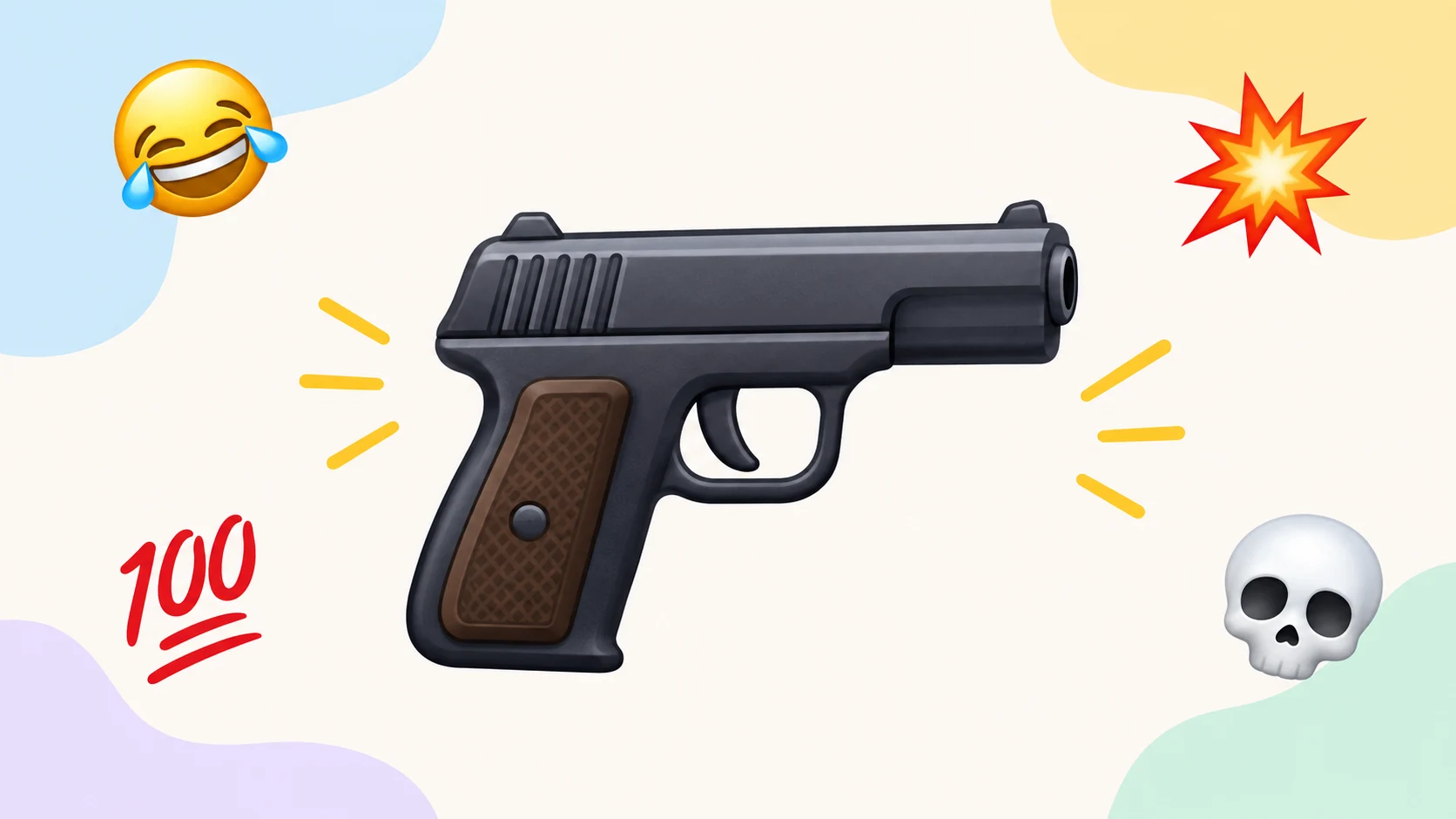
The 🔫 emoji represents a pistol or handgun, but online communication has given it many informal uses. People may use it as part of a meme, an exaggerated reaction, playful frustration, mock drama, or a visual punchline. In many conversations, the intent is not literal at all. Someone might send it after a terrible joke, an embarrassing moment, an unexpectedly attractive photo, or a frustrating situation. Other times, however, it can carry a genuinely aggressive meaning, so the surrounding message matters.
The way the emoji appears can also differ between platforms because Apple, Google, Samsung, Microsoft, and other companies create their own emoji artwork. That means the same Unicode character can look slightly different depending on the device. 🔫💀😂
The gun emoji can make a reaction feel dramatically over-the-top, which is exactly why it works so well in memes and casual internet humor.
What Does the Gun Emoji Meme Mean?
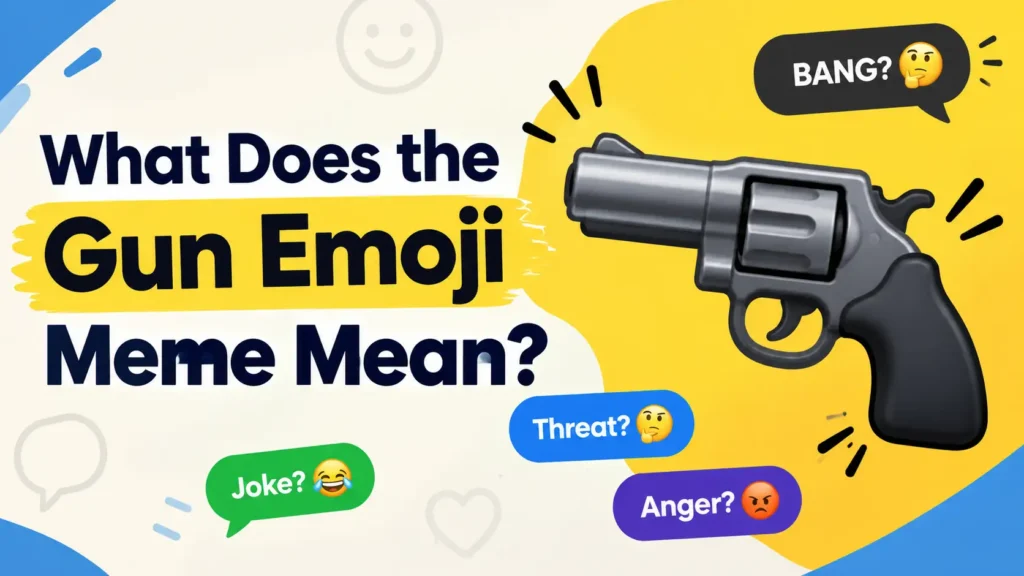
The gun emoji meme is usually a humorous or exaggerated way of reacting to something, but 🔫 does not have one universal interpretation. Its original visual concept is a handgun, so its meaning can range from literal references to weapons to completely unserious internet humor. In texting, the surrounding words, relationship between the people, and situation are especially important.
In a casual meme, 🔫 can represent mock frustration. For example, someone might post, “My Wi-Fi stopped working again 🔫,” where the emoji communicates exaggerated annoyance rather than an actual threat. A friend might reply to an embarrassing story with “Bro, why would you tell us this 🔫😂,” using the emoji as comic exaggeration.
It can also appear alongside 💀 when someone finds a situation unbelievably funny. The combination can create an intentionally dramatic reaction, especially in comments and group chats. 😂 and 🤣 can make the humorous intention even clearer, while 😭 can communicate exaggerated emotional suffering.
There are also situations where 🔫 is used for dramatic approval or surprise. A person might see an impressive gaming clip and comment, “That shot 🔫🔥.” However, because 🔫 has an inherently violent visual meaning, it should not automatically be treated as harmless. In a serious argument, directed at a person, or combined with threatening language, the same symbol can feel intimidating.
Context is therefore everything. Your relationship with the sender matters too. A close friend who regularly uses absurd memes may use 🔫 completely differently from a stranger or someone involved in an argument.
Meaning Table:
Here are several closely related symbols commonly seen around this style of meme communication:
| Emoji | Core meaning | Possible misread | Best used when |
|---|---|---|---|
| 🔫 | Pistol, dramatic reaction | Actual threat | Memes and exaggerated reactions |
| 💥 | Impact or explosion | Aggression | Dramatic or energetic reactions |
| 🎯 | Accuracy or perfect aim | Literal target | Games, jokes, precise reactions |
| 💀 | Extreme laughter or shock | Death-related meaning | Absurd memes and funny moments |
| 😂 | Strong laughter | Insincere reaction | Clearly funny situations |
| 🤣 | Very strong laughter | Excessive reaction | Ridiculous memes |
| 😭 | Overwhelmed emotion | Actual sadness | Dramatic internet reactions |
| 😈 | Mischievous mood | Negative intent | Playful teasing |
| 🫡 | Respect or acknowledgment | Formal seriousness | Jokes, agreement, reactions |
| 🤯 | Shock or amazement | Confusion | Surprising content |
🔫 Gun Emoji:
Meaning: A pistol symbol often used literally or as dramatic internet humor.
Example 1: That ending was crazy 🔫
Example 2: My alarm went off at 5 AM 🔫
💥 Collision:
Meaning: Impact, explosive energy, or an exaggerated dramatic moment.
Example 1: That plot twist 💥
Example 2: The final move was insane 💥
🎯 Direct Hit:
Meaning: Accuracy, perfect timing, or getting something exactly right.
Example 1: You understood the assignment 🎯
Example 2: That comeback was perfect 🎯
💀 Skull:
Meaning: Extreme laughter, shock, embarrassment, or absurdity in casual internet language.
Example 1: I cannot believe you posted that 💀
Example 2: That comment finished me 💀
😂 Face With Tears of Joy:
Meaning: Genuine laughter or amusement.
Example 1: Your message actually made me laugh 😂
Example 2: Why is this so funny 😂
🤣 Rolling on the Floor Laughing:
Meaning: Very strong amusement or an intentionally exaggerated laugh.
Example 1: This video is ridiculous 🤣
Example 2: Your reaction took me out 🤣
😭 Loudly Crying Face:
Meaning: Overwhelming emotion, dramatic frustration, or laughter depending on context.
Example 1: I waited all day for nothing 😭
Example 2: Why did you remind me of that 😭
😈 Smiling Face With Horns:
Meaning: Mischief, playful trouble, teasing, or cheeky intent.
Example 1: I might cause some trouble tonight 😈
Example 2: You know exactly what you’re doing 😈
🫡 Saluting Face:
Meaning: Respect, acknowledgment, agreement, or playful acceptance.
Example 1: Understood, boss 🫡
Example 2: You survived the whole week 🫡
🤯 Exploding Head:
Meaning: Extreme surprise, disbelief, or amazement.
Example 1: That reveal was unbelievable 🤯
Example 2: You actually solved it 🤯
How to Use the Gun Emoji Meme the Right Way:
Using 🔫 in casual online communication depends heavily on knowing your audience. In a meme-filled conversation with close friends, it may simply be a visual way to exaggerate frustration or surprise. In a serious conversation, however, the same emoji can appear much more aggressive.
WhatsApp 💬
On WhatsApp, 🔫 commonly appears in private chats, group conversations, memes, and humorous reactions. Friends may use it after an annoying situation, such as a broken internet connection, an impossible homework question, or a ridiculous plot twist.
For example:
“Another meeting tomorrow morning 🔫😂”
Here, the surrounding 😂 makes the exaggerated joke easier to understand.
In family conversations, be more careful. A parent, relative, or older family member may interpret the symbol more literally than a friend who spends a lot of time online.
WhatsApp Status updates can also use 🔫 as part of a meme-style statement, but the audience is usually broader than a private chat. If coworkers, relatives, or acquaintances can see your status, think about how the image could be interpreted.
Instagram 📸
Instagram users may place 🔫 in comments, captions, or reactions to make something feel dramatic. A creator might post a funny reel about waking up early, and a commenter could respond with a humorous reaction involving the emoji.
The same principle applies to captions. If the content is clearly comedic, surrounding context can make the intent easier to understand.
TikTok 🎵
TikTok has a particularly strong culture of exaggerated reactions, memes, irony, and inside jokes. As a result, 🔫 may appear in comments where the user is pretending to be dramatically overwhelmed by a video.
For example, someone might comment:
“Why did you make this so relatable 🔫😭”
The combination suggests dramatic humor rather than a literal statement.
Still, trends change quickly. A symbol that feels obviously playful in one community may be interpreted differently somewhere else.
On Facebook, 🔫 can appear in posts, comments, Messenger conversations, and shared memes. Because Facebook audiences can be mixed, including friends, relatives, coworkers, and older users, context is particularly important.
Dos and Don’ts:
Do:
- Use 🔫 when the surrounding message clearly establishes a playful or meme-like tone.
- Consider who will receive or see the message.
- Match the emoji with the tone of your words.
- Use 😂, 🤣, 😭, or 💀 when you want to make obvious humor clearer.
- Remember that different devices can display the same emoji differently.
Don’t:
- Assume everyone will interpret 🔫 as a joke.
- Send it during a serious argument with someone.
- Use it alongside direct threatening language.
- Add it randomly to sensitive conversations.
- Assume an emoji automatically makes an aggressive message harmless.
Why Does the Gun Emoji Look Different on iPhone and Android?
If you send 🔫 between an iPhone and Android phone and notice that it looks different, that is normal. Emojis are standardized through Unicode, which gives compatible systems a common character that devices can recognize.
Unicode does not force every company to draw the emoji exactly the same way. Apple, Google, Samsung, Microsoft, and other technology companies create their own visual designs for emoji characters.
That means the same 🔫 character can have differences in shape, proportions, shading, color, and overall visual style. The underlying character remains the same even when the artwork changes.
This is important when discussing emoji meanings because visual design can influence how people perceive a symbol. A particular rendering might look more cartoon-like or more realistic, while another might appear simpler.
The gun emoji has also changed visually across platforms over time. Some platforms have used a toy-like water pistol design, while others have displayed a more conventional firearm-inspired appearance. This difference can affect the emotional impression of a message.
For example, two people can technically send the same Unicode emoji but see noticeably different artwork. One person may see a colorful, playful-looking pistol, while another may see a design that appears more serious.
So there is no single platform design that is automatically the “correct” version. The Unicode character provides the common digital identity, while each platform decides how that character is visually represented.
If you are creating a meme intended for a broad audience, remember that your readers may not see exactly the same artwork you see on your phone.
Best Gun Emoji Meme Combos, Copy & Paste:
Romantic ❤️
1.👉 🔫❤️ , Use this as exaggerated romantic humor when the conversation is already playful.
2.👉 ❤️🔫😂 , Use this for a jokingly dramatic reaction to affection.
3.👉 🔫🥰❤️ , Use this for an intentionally over-the-top cute reaction.
Cute 🥰
1.👉 🔫🥰 , Use this when something is ridiculously cute and you’re reacting dramatically.
2.👉 🥰😂🔫 , Use this for playful exaggeration after seeing something adorable.
3.👉 🔫😭🥰 , Use this when cuteness feels emotionally overwhelming in a meme-style conversation.
Flirty 😉
1.👉 🔫😈 , Use this for mischievous teasing between people who already understand the joke.
2.👉 😉🔫😂 , Use this for a playful reaction to a teasing message.
3.👉 😈🔫🥰 , Use this for cheeky, exaggerated flirting in a clearly casual chat.
Missing Someone 💭
1.👉 🔫😭 , Use this for exaggerated frustration about missing someone.
2.👉 😭🔫❤️ , Use this for a dramatic but affectionate message to someone you miss.
3.👉 💭😭🔫 , Use this for humorous longing in a meme-style conversation.
Good Night 🌙
1.👉 🌙🔫😭 , Use this when you’re dramatically complaining about going to sleep.
2.👉 🌙🥰🔫 , Use this for a playful good-night message with an exaggerated twist.
3.👉 🌙❤️🔫 , Use this for humorous affection before bedtime.
Trending Gun Emoji Meme in 2026:
In 2026, the 🔫 emoji continues to fit naturally into the broader language of reaction memes, especially when users want to exaggerate frustration, disbelief, embarrassment, or dramatic humor. It commonly appears in informal comments, group chats, captions, and short-form video discussions.
One reason it works so well is that internet humor often depends on exaggeration. Instead of writing a long explanation such as “I am so frustrated by this ridiculous situation,” someone can use a short sentence followed by 🔫 to create a deliberately dramatic reaction.
💀 and 😂 are particularly useful around meme-style reactions because they help establish a humorous tone. 😭 can push the reaction toward exaggerated emotional suffering, while 🎯 can be used when the joke involves accuracy or a perfectly timed comment.
These uses are not fixed rules. Communities develop their own slang and conventions, and the same symbol can shift meaning depending on the creator, audience, and conversation.
| Emoji | Why trending | Who uses it | Platform |
|---|---|---|---|
| 🔫 | Dramatic meme reactions | Casual users and meme communities | TikTok, Instagram, WhatsApp |
| 💀 | Absurd humor and laughter | Meme audiences | TikTok, Instagram, chats |
| 😂 | Clear humorous reaction | General social media users | Facebook, Instagram, WhatsApp |
| 😭 | Dramatic emotional humor | Younger online communities and casual users | TikTok, Instagram, chats |
The larger pattern is simple: emoji usage keeps evolving as people combine familiar symbols with changing internet slang, humor, and community-specific meanings.
Gun Emoji Meme Meaning in Different Contexts:
The same 🔫 can communicate very different things depending on where it appears.
Romantic conversations:
In a romantic chat, 🔫 can be intentionally absurd. Someone might receive a very sweet message and respond with a dramatic meme reaction. However, it should not be assumed to represent affection on its own.
Friendship:
Among close friends, the emoji may be used as playful frustration. A friend who sends an annoying spoiler might receive a joking “You really did that 🔫” response.
Family:
Family conversations require more awareness. Not every relative uses online meme language in the same way, so a symbol that seems obviously funny to one person may seem aggressive to another.
Professional or casual communication:
In casual workplace chats, using 🔫 can be risky because coworkers may not share the same humor or communication style. In a professional setting, clearer language is generally safer.
Texting:
In one-to-one texting, context comes from the messages immediately before it. A sentence such as “This homework is impossible 🔫” can read as dramatic humor, especially among friends.
Social media comments:
Comments often rely on shared internet culture. A creator’s followers may immediately recognize 🔫 as an exaggerated reaction, particularly when the post itself is humorous.
Captions:
In captions, the audience has less conversational context. If you use 🔫, surrounding text should make your intended tone reasonably clear.
How to Copy and Paste the Gun Emoji:
Want the simplest way to use the symbol?
Copy this: 🔫
On most phones and computers, you can select the emoji, copy it, and paste it wherever emojis are supported.
You can use 🔫 in:
- WhatsApp messages
- Instagram captions
- Instagram comments
- TikTok captions
- TikTok comments
- Facebook posts
- Messenger chats
- Group conversations
You can also save useful combinations such as:
🔫😂
🔫😭
🔫💀
🎯🔫
Before sending it, quickly consider the context and audience. A copy-paste emoji may be technically easy to use, but the meaning still depends on the message around it.
FAQ:
1. What is the most popular gun emoji meme?
The most recognizable version is the 🔫 emoji itself, often used in exaggerated reaction memes. Its exact interpretation depends on the surrounding text and community.
2. What does 🔫 mean when someone sends it?
It can mean a literal handgun, dramatic frustration, playful exaggeration, or meme humor. The meaning depends on the conversation, relationship, and wording rather than gender stereotypes.
3. Why do emojis look different on iPhone vs Android?
Unicode provides the shared emoji character, while Apple, Google, Samsung, Microsoft, and others create their own artwork. As a result, the same emoji can have different visual designs on different devices.
4. Are gun emoji memes used differently in other countries?
Yes, context can vary between online communities and cultures. People may attach different levels of humor, seriousness, or symbolism to the same emoji, so it is better to consider the specific audience instead of assuming one universal interpretation.
Conclusion:
The gun emoji meme 🔫 is a good example of how online communication can turn a literal symbol into an exaggerated reaction. In casual chats and memes, it may express frustration, shock, humor, or dramatic exaggeration.
The safest approach is to read the context, consider your audience, and make your intended tone clear. When used thoughtfully, 🔫 can add a deliberately dramatic twist to a meme or casual message. 😂

Nasrullah — Emoji Strategist & Content Writer
Nasrullah is a passionate emoji enthusiast and content writer who loves exploring the meanings, uses, and cultural context behind emojis. He creates simple, helpful, and easy-to-understand guides that help readers choose the right emoji for WhatsApp, Instagram, Facebook, texting, and everyday conversations.
With a focus on emoji meanings, combinations, social media usage, and modern digital communication, Nasrullah aims to make every emoji easier to understand and use with confidence. His content combines practical examples with clear explanations so readers can quickly find the meaning and usage they are looking for.
When he’s not researching emojis, Nasrullah enjoys exploring digital trends, writing useful online content, and learning about how people communicate in the digital world. 😊